


 MediaTek Unveils 2nm Dimensity 9600 Pro AI Chip
  France Urges Faster AI Push Despite Safety Risks
  Europe can’t achieve space sovereignty alone. Here’s why
  OpenAI Urges US-Led Global Standards for Frontier AI
  Cathie Wood Backs AI Slowdown as Safety Concerns Grow
  Meta CEO Zuckerberg Backs Independent AI Safety Reviews Over Development Slowdown
  NASA, Boeing Discuss Expanding Starliner Missions
  Qualcomm Gains on $60B Amazon AI Chip Deal
  SpaceX Nasdaq 100 Weight to More Than Double in Rebalance
  SoftBank Launches $11 Billion Bond Sale to Fund OpenAI Investment
  SK Hynix, Intel Discuss U.S. Memory Chip Production Deal
  Hyundai CEO Warns Chinese Automakers Could Disrupt US Market
  Rosenblatt Starts Nokia at Buy on AI Networking Growth
  Meta Partners With Shopify to Bring Shop Pay Checkout to Muse AI
  AI is supercharging money scams – here’s what you can do to protect yourself
  Japan, U.S. Discuss $19 Billion GlobalFoundries Chip Plant
  Databricks to Invest $350 Million in Singapore AI Expansion


 Add as a preferred source on Google
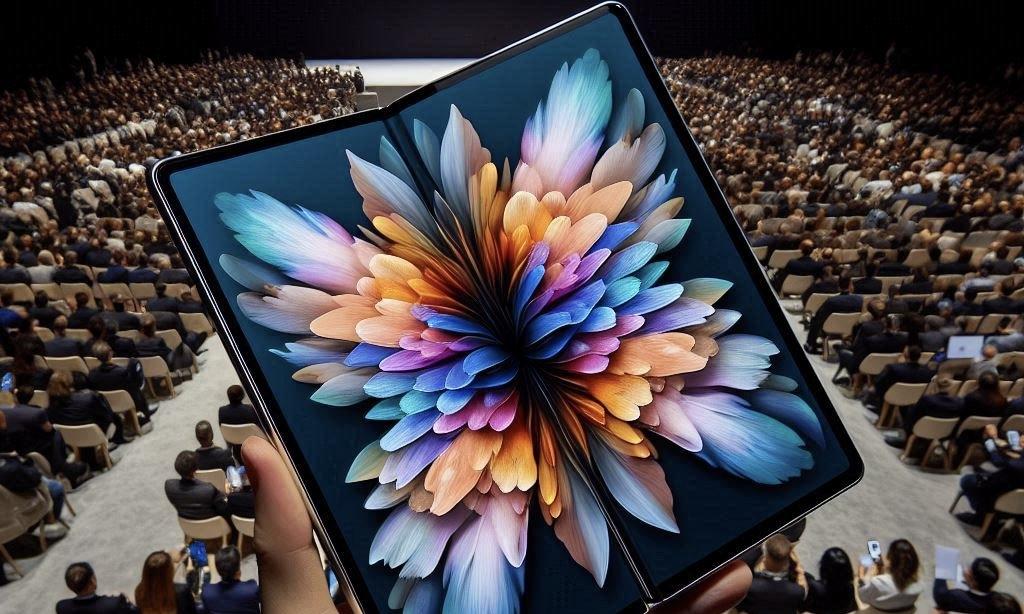
Samsung will unveil the Galaxy Z Fold6 and Flip6 at its second Unpacked event of 2024 in Paris. Despite enhancements, high prices remain a significant barrier to wider adoption in the foldable smartphone market.
Samsung Unveils New Foldable Devices Amidst High Price Concerns at Unpacked Event
Samsung's new iteration of foldable devices will be unveiled this week; however, their exorbitant prices are the primary obstacle to their availability.
The foldable market will be challenging for the world's largest mobile phone manufacturer, as it relinquished its lead for the first time in the first quarter of this year.
On July 10, Samsung, based in Seoul, will present its second Unpacked event of 2024 in Paris. The event is anticipated to feature the Galaxy Z Fold6 and Flip6. The company has not officially confirmed the devices' identities.
Numerous sources and reports indicate that both smartphones will be enhanced with a flat-edged design reminiscent of the Galaxy S24 series, enhanced cameras, and a more potent Galaxy AI platform initially implemented in the S24 devices. It is not anticipated that the Fold6 will include a built-in S-Pen.
The analysts stated that the price point of foldable remains the most significant obstacle for consumers contemplating the transition to the still-niche form factor, despite the token and necessary enhancements. This has impeded the sector's market growth.
Because of their intricate construction, foldable smartphones are more costly than conventional ones. For the past two years, the Galaxy Fold has been priced at $1,799, with Huawei's device being even more expensive.
This is in contrast to the iPhone 15 Pro Max, which costs $1,199, and Samsung's most recent top-tier device, the Galaxy S24 Ultra, which costs $1,299. The Flip offers a more cost-effective alternative at $999, comparable to the entry-level devices from Samsung and Apple's most recent series.
“Despite foldable hardware continually developing … the market has not grown as expected,” Aaron West, a senior smartphone analyst at industry data tracker Omdia, told The National.
“High costs to consumers remain a key obstacle to more foldable market penetration. Any and all new foldable phone releases need to address both this cost and the lack of use cases to make foldable phones more enticing to consumers.”
Furthermore, consumers recognize enhancements in increased durability, software support, camera technology, battery life, screen durability, dust and water resistance, and device weight and thickness reduction.
“Consistent improvements … indicate that foldables are becoming a serious category,” Akash Balachandran, research manager for mobile devices at the International Data Corporation, told The National.
“Foldable smartphones typically fall into the premium and ultra-premium categories, which limit reach and appeal. However, as ASPs [average selling prices] fall, we can expect a significant growth in sales, especially of the flip form factor, where prices are already dropping.”
Foldable Market Shifts: Huawei Overtakes Samsung in Q1 2024, Despite Samsung's Early Dominance
Although foldable smartphones are still a minor category in the overall smartphone market, manufacturers have consistently tried to introduce more as consumer preferences evolve.
According to The National, Samsung has primarily been responsible for the category's prominence. The Galaxy Z Fold was introduced to the general public with the release of the Galaxy Z Fold in 2019. The following year, the company released the Galaxy Z Flip, a more affordable and compact phone, to attract a larger user base.
Since then, Samsung has maintained its dominance in the foldable category, reaching a market share of over 80% approximately two years ago.
Nevertheless, a significant change occurred in the first quarter of 2024: Huawei now holds the largest share in foldables, with approximately 35% of the market. This surpasses Samsung, which had 23%, a figure that has declined significantly from 58% a year ago, according to a May report from Counterpoint Research.
Global Foldable Smartphone Market to Reach 25 Million Units in 2024, IDC Reports
Although industry reports on the future of the foldable smartphone sector concur that growth will persist, the projected figures need to be more consistent.
IDC data indicates that the global foldable smartphone market is anticipated to reach 25 million units in 2024, a 38% increase from the 18.1 million units shipped last year. This figure is expected to increase to 45.7 million by 2028, with a compound annual growth rate of 20.3 percent.
Samsung also competes with other prominent brands with their foldables, such as Google, Motorola, Oppo, and Honor. According to Counterpoint's data in Hong Kong, this erstwhile Huawei sub-brand ranked third in the three months through March.
Huawei's expansion was primarily driven by its success in China, where, according to Mr. West, it was the preferred choice for consumers in the world's second-largest economy. This was despite the absence of Google services.
“Outside of China, Samsung’s biggest competitor is Honor for its ultra-thin book-style foldable phones and Motorola for its more affordable Razr series for flip-style foldable phones,” he said.
Meanwhile, a June report from TrendForce forecasts that Samsung's market share will account for more than half of the market and retain the lead in 2024, with Huawei second with about 31 percent share.
According to the Taipei-based research firm, they would constitute the upper echelon of this year's competition, with shipments anticipated to exceed 17.8 million units.
It was noted that this would represent only 1.5% of the total smartphone market; however, it is anticipated to increase to approximately 5% by 2028.
“It's only a matter of time before consumers no longer see a major compromise in choosing a foldable – but prices need to come down,” Mr Balachandran said.
Photo: Microsoft Bing







