


 Gold Prices Rise Toward $4,650 Ahead of Warsh’s Jackson Hole Speech
  Meta Agrees to $18 Billion Settlement, Tightens Teen Social Media Rules
  OpenAI Data Center Chief Chris Malone Exits Ahead of Planned 2027 Listing
  US PCE Inflation Holds at 3.7% as Fed Rate Decision Looms
  Trian Drops Wendy’s Take-Private Bid Plans, Shares Plunge 14%
  Want to muck around with a real quantum computer? Now you can
  Japan Firms Ramp Up Yen Hedging as Currency Weakness Persists
  Australia Inflation Beats Forecasts, Raising RBA Rate Hike Risk
  Carney’s Trump Tariff Pushback Wins Canadian Support, but Economic Risks Mount
  SoftBank Plans Record $6.3 Billion Bond Sale to Fund OpenAI Investments
  Yindjibarndi Appeals Fortescue Mining Compensation Ruling
  US Stocks Finish Flat as Inflation Data, Nvidia Earnings Keep Investors Cautious
  Asian Currencies Mixed as Aussie Dollar Rises on Hot Inflation
  Nvidia Options Price in $280 Billion Earnings Swing
  Oil Prices Slide on U.S.-Iran Ceasefire Reports, Hormuz Talks
  Nvidia Eyes Perplexity Investment at $30 Billion Valuation


 Add as a preferred source on Google
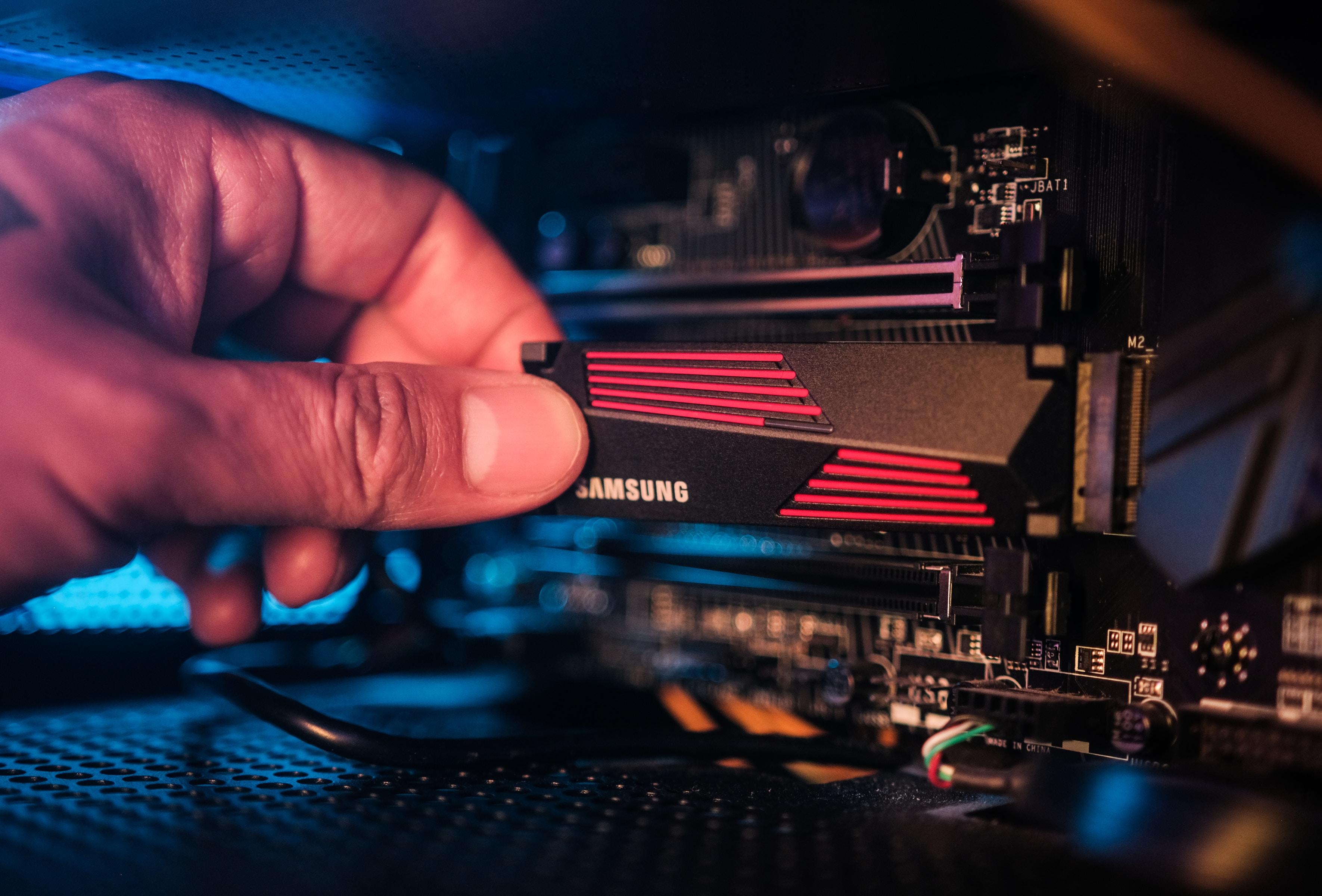
Samsung Electronics leaps into the artificial intelligence (AI) chip market, planning to mass-produce high-bandwidth memory (HBM) chips this year, potentially upsetting current leader SK hynix's market dominance with superior speed and capacity.
To catch up with SK hynix, Samsung is set to mass-produce HBM3 memory chips with 16-gigabyte and 24-gigabyte capacity. These chips are known to have the fastest data processing speeds on the market, clocking in at 6.4 Gigabits per second (Gbps). This speed aids in increasing the learning calculation speed of the server, which is necessary to implement AI services properly.
Samsung is also introducing new memory solutions, such as HBM-PIM, a high-bandwidth memory chip with integrated AI processing power, and CXL DRAM, which overcomes the limitations of DRAM capacity. With these new products and increased presence in the HBM market, Samsung is expected to increase its profitability and gain competitive ground in the sluggish memory chip market.
As AI services gain traction and continue to grow, demands for high-performance and high-capacity DRAM to support these services also increase. HBM chips are the solution to this problem.
Vertical stacking of multiple DRAMs gives HBM chips an edge regarding data processing speed compared to conventional DRAM. However, this advantage comes at a cost - HBM is around two to three times the price of a standard DRAM.
Samsung will launch the next generation of HBM3P in the second half of the year with higher performance and capacity demands from the market. Its products, with a processing speed of 6.4 Gigabits per second (Gbps), could give it an edge in increasing the learning calculation speed of the server. Samsung aims to supply GPU makers in North America starting in Q4 2022.
With the memory chip industry struggling with falling demand, Samsung's move to explore new memory solutions such as HBM-PIM and CXL DRAM is timely. As Samsung introduces new products to the HBM market, it can foreseeably boost its profitability and further establish itself.
TrendForce expects the HBM market to grow at an annual growth rate of up to 45 percent from 2022 to 2025, making this an exciting time in the high-bandwidth memory chip market.
According to industry analysts, the market leader, SK hynix, currently holds around a 50 percent market share, with Samsung accounting for 40 percent and Micron close behind with 10 percent. The HBM market is still new and only accounts for about 1 percent of the entire DRAM market. However, the industry is expected to grow at an annual rate of up to 45 percent from this year until 2025, according to market tracker TrendForce.
In the fourth quarter of this year, Samsung is expected to begin supplying HBM3 to GPU makers in North America. As the market for generative AI services grows, HBM chips used for AI servers are gaining traction in the memory chip industry. With the AI era in full swing, the demand for HBM products is expected to increase dramatically, making Samsung's move into the AI memory chip market well-timed and highly strategic.
Photo: Samsung Memory/Unsplash







