


 What’s so special about Ukraine’s minerals? A geologist explains
  FDA Investigates New Cyclospora Outbreak as U.S. Cases Continue to Rise
  NASA Artemis II: First Crewed Moon Mission Since Apollo Takes Four Astronauts on 10-Day Lunar Journey
  LA fires: Long-term exposure to wildfire smoke is poorly understood − and a growing risk
  Eli Lilly Eyes AtaiBeckley Acquisition to Expand Psychedelic Mental Health Pipeline
  We combed through old botanical surveys to track how plants on Australia’s islands are changing
  AstraZeneca Halts Phase III Volrustomig Lung Cancer Trial After Efficacy Setback
  Novo Nordisk Eyes Turnaround as Oral Wegovy Challenges Eli Lilly in Weight-Loss Drug Race
  Trump Administration Releases New UFO Files and Apollo Mission Records
  Trump Administration to Launch Autism Initiatives Targeting Acetaminophen Use and New Treatment Options
  Neuralink Plans High-Volume Brain Implant Production and Fully Automated Surgery by 2026
  Moderna Wins FDA Approval for mFLUSIVA mRNA Flu Vaccine for Adults 50+
  NASA Resumes Cygnus XL Cargo Docking with Space Station After Software Fix
  Trump Signs Order to Cut Routine Childhood Vaccines


 Add as a preferred source on Google
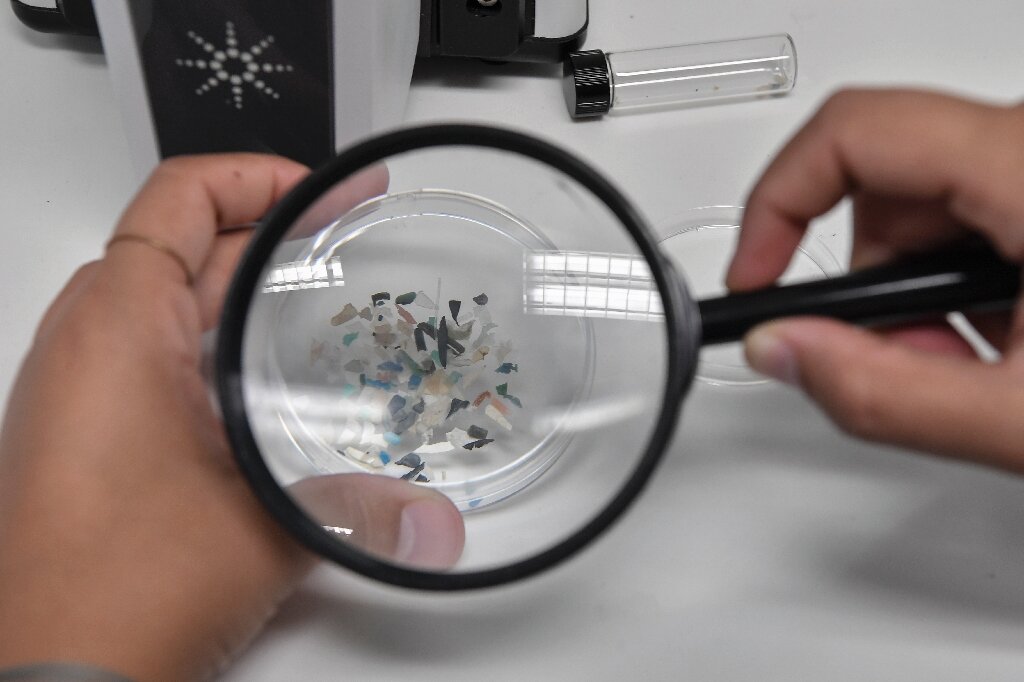
Scientists in the Netherlands have discovered microplastics in human blood for the first time from nearly 80 percent of 22 anonymous, healthy volunteers, warning that the ubiquitous particles could also be making their way into organs.
Half of the blood samples showed traces of PET plastic, widely used to make drink bottles, while more than a third had polystyrene, used for disposable food containers and many other products.
The Dutch study was published in the Environment International journal.
The microplastics, tiny pieces of mostly invisible plastic, have already been found almost everywhere from the deepest oceans to the highest mountains as well as in the air, soil, and food chain.
According to Dick Vethaak, an ecotoxicologist at Vrije Universiteit Amsterdam, it was the first time they detected and quantified such microplastics in human blood, which is proof that we have plastics in our body -- and we shouldn't.
He added that further research is needed to investigate how it could impact health by determining where it is going in the body, if it can be eliminated or excreted, or if it is retained in certain organs, or able to pass the blood-brain barrier.
The study said the microplastics could have entered the body via air, water, or food, and in products such as particular lip glosses, toothpaste, and tattoo ink.
Vethaak added that there could be other kinds of microplastics in the blood that his study did not pick up as it could not detect particles larger than the diameter of the needle used to take the sample.
The study was funded by the Netherlands Organisation for Health Research and Development UK-based Common Seas, which aims to reduce plastic pollution.







