


 UK House Prices Hold Steady in June as Annual Growth Misses Forecasts
  UN Chief Urges Nations to Close $100 Million UNRWA Funding Gap
  Dollar Slips Ahead of Key U.S. Jobs Data as Fed Rate Outlook, ECB, and Iran Talks Shape Forex Markets
  NATO Albania Summit Faces Uncertainty as Trump, Defense Spending Concerns Loom
  Trump Suspends Some Morocco Fertilizer Tariffs to Ease U.S. Supply Shortage
  RBA Minutes Signal Australia Central Bank Remains Ready to Raise Interest Rates if Inflation Persists
  Asian Stocks Mixed as South Korea Slides on Profit-Taking, Japan and China Gain on Strong Factory Data
  Trump Urges Gasoline Retailers to Cut Prices to $2.50 Per Gallon, Warns of Legal Action
  Asian Currencies Slip as Dollar Holds Firm, Yen Near Four-Decade Low Ahead of Fed, Jobs Data


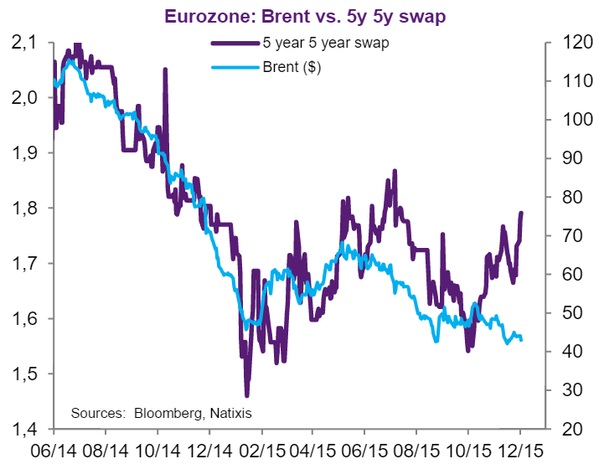
European Central Bank's (ECB) president Mario Draghi, at yesterday's conference cited one of the key argument that stand out against providing larger stimulus has been arguments of hawks that lower oil price has been behind lower headline inflation and pointed that recent decoupling of inflation expectations and oil price could be an indication of end to that.
The figure, from Natixixis, shows that inflation expectation has decoupled since October this year.
Since oil has dropped almost 60%, in just a span of a year, its effect on inflation has been much greater this year. While it is expected to exert its impact over next year too, it will fade due to the base effect. Since consumption has risen sharply, the decoupling might also be pointing to lower impact of oil over inflation.
Nevertheless, it is important to note that this decoupling began in October, when ECB promised more stimulus. So it would be vital to watch out for clues weather its coupling again after yesterday's punitive move.







