


 BMW Targets 3%-5% Auto Margin by 2028 in Recovery Plan
  Ripple and Cardano Expand Blockchain Adoption in Brazil
  Lindt Slashes 2026 Sales Growth Forecast as European Demand Weakens
  Binance Pay Goes Live at PayPay Merchants in Japan
  TD Cowen Starts SpaceX at Buy, Sees AI Compute Driving Growth
  OpenAI Seeks $30 Billion at $1.4 Trillion Valuation
  Aztec Revives zk.money for Private Ethereum Payments
  Google Pays Publishers for AI Search Content in New Pilot
  Hengrui Shares Rise on $2.6 Billion Novo Nordisk Obesity Drug Deal
  Morgan Stanley Launches Digital Asset Lab for Stablecoins and Tokenization
  Apple iPhone 18 Pro Sales Jump 12% in China
  Petrobras Launches Cardano Apps to Track Low-Carbon Fuels
  Robinhood Chain Meme Coins Slide as Stock Token Locks Rise
  DeepSeek, Huawei Partner on Ascend AI Chip Programming Tools
  Goldman Sachs Private Credit Fund Sees Redemptions Ease in Q3
  QNT Whales Move $10M to Exchanges After 400% Rally
  Cboe Extends SPX Options Deal, Eyes Tokenized Contracts


 Add as a preferred source on Google
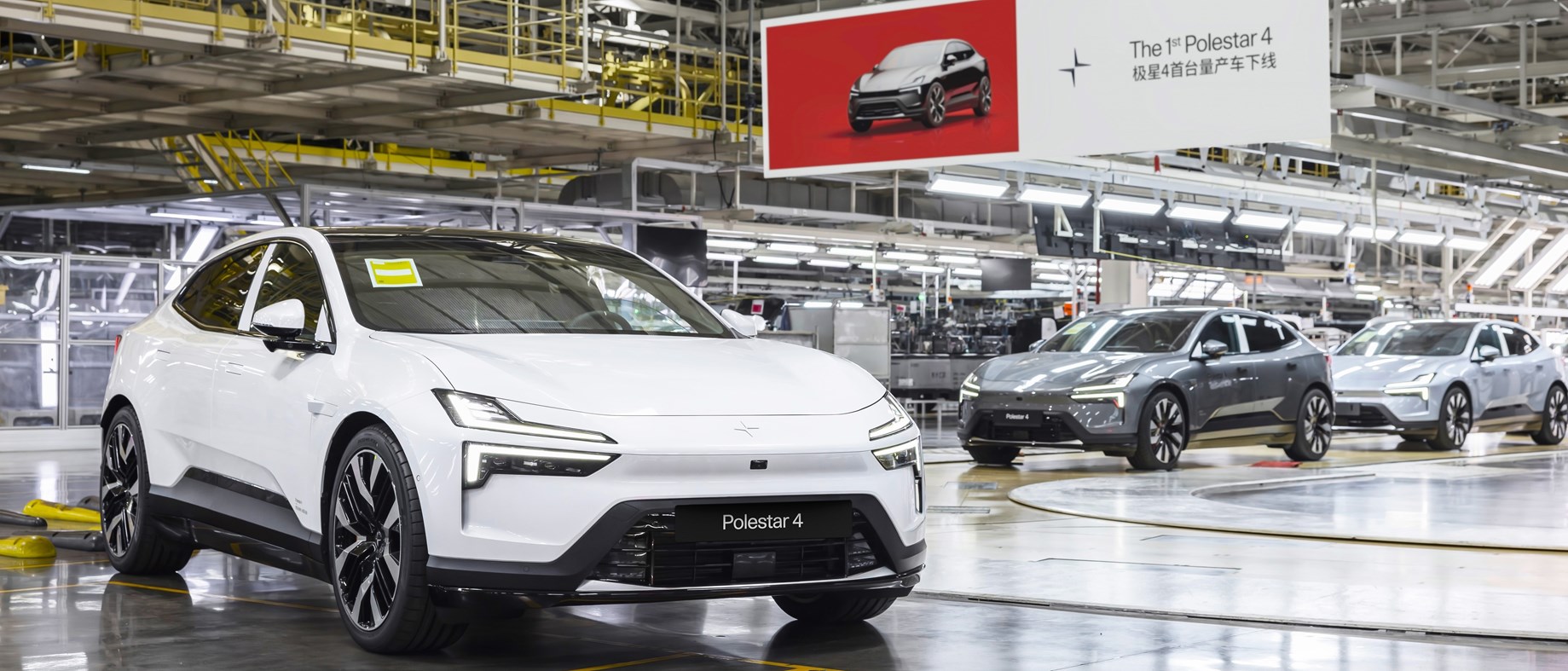
The company announced that Renault Korea's Busan plant is rapidly emerging as a vital production facility in the global electric vehicle (EV) market. It plans to manufacture the Polestar 4 at the Busan plant in the second half of 2025.
Polestar, which became an independent EV brand in 2017 after separating from Volvo's high-performance division, has ambitious plans to target the global EV market by sequentially launching exciting models such as the Polestar 2, a mid-size sedan, the Polestar 3, a mid-size SUV, and the Polestar 4, a coupe SUV.
Busan Plant's Advantages and Technical Expertise
Polestar CEO Thomas Ingenlath stated that production was assigned to Renault Korea's Busan factory due to its 23 years of vehicle manufacturing experience, employing over 2,000 skilled technicians, and convenient proximity to the export port, as per Korea Times.
Motor Mouth reported that the vehicles produced here are expected to be exported to North America.
Established in 1997, Renault Korea's Busan factory prides itself on its world-class quality and productivity. In fact, among Renault Group's 20 global car factories, the Busan facility is consistently recognized as a leader in significant production quality management indicators. These include the number of defects per 100 vehicles produced and the number of defects per vehicle shipped from the factory.
Stellar Performance and Recognition
Renault Korea's Busan factory notably produced the Nissan Rogue from 2014 to 2020 for export to North America. This success alleviated Nissan's initial concerns about quality and led to additional orders, further proving the plant's capabilities.
Additionally, the Busan factory received high accolades in the Harbour Report, ranking eighth among global factories in 2016 and sixth in 2018. Published by global consulting firm Oliver Wyman, the Harbour Report compares and analyzes productivity indicators of car factories worldwide and is widely recognized as an industry standard.
The Polestar 4 - Boosting Operations and EV Production Capabilities
With the initiation of Polestar 4 production, Renault Korea expects to enhance the plant's operation rate in the short term while accumulating valuable expertise in their own EV production capabilities in the long run.
Renault Korea's comprehensive electrification campaign is set to kick off next year. The company plans to produce the next-generation electric car at the Busan factory in 2026, starting with the launch of a hybrid SUV, followed by a hybrid sedan.
Photo: Polestar Newsroom







