


 Oil Prices Fall as Russia Signals Higher Diesel Exports
  Navigating the Crypto Pulse: Weekly Market Resilience and Institutional Inflows
  Evernorth Nasdaq Listing Nears as XRP Price Falls
  Hyperliquid (HYPE) Price Analysis: Can Bulls Push Above $88?
  Oil Prices Surge Above $106 After Deadly Saudi Airport Attack
  RBI Raises Repo Rate to 5.50% in Hawkish Shift on Inflation Risks
  Asian Stocks Plunge as AI Chip Selloff Hits South Korea and Japan
  XRP Ledger Foundation Confirms 100B Supply Safe After Security Fix
  Fed Minutes Signal Another Rate Hike by Year-End
  Bitcoin Price Faces Volatility Ahead of US CPI and Fed Speech
  Gold Prices Rise Above $4,200 as Russia-Ukraine Energy Truce Eases Oil Concerns
  Morgan Stanley Predicts $10 Trillion RWA Market by 2030
  BlackRock’s Rick Rieder Favors Bonds Over Stocks as Treasury Yields Surge
  ECB May Stop Rate Hikes After December, Capital Economics Says
  Trump Demands Powell Resign Over Fed Renovation Cost Overruns
  Wall Street Ends Mixed as Investors Await CPI and Bank Earnings


 Add as a preferred source on Google
Minutes of the Reserve Bank of Australia's (RBA) November 1 meeting where the bank left the cash rate unchanged at a record-low 1.5 percent were released earlier on Tuesday. In its minutes the RBA said that the risks to the global inflation outlook "were more balanced than they had been for some time". The RBA noted that assessing conditions in the housing market had become more complicated.
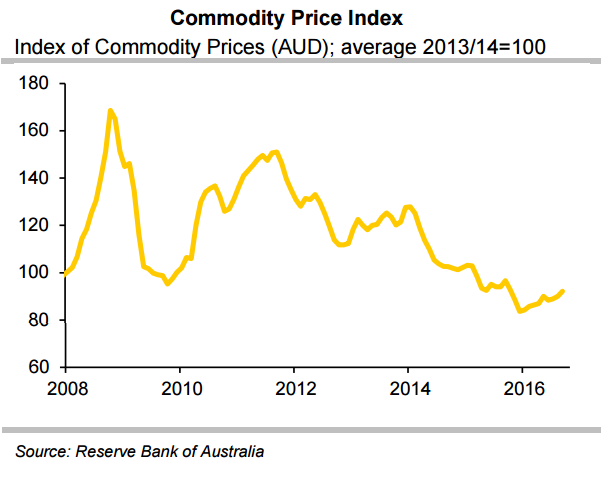
Australia is currently enjoying a windfall as key commodity prices surge, lifting the nation's terms of trade and boosting national income. This is symbolized by the Australian terms of trade that have risen for the first time in two years in Q2. That said, the RBA may likely to look through the recent spike in commodity prices given at least some of the strength is likely to be temporary, although the Bank is likely to be more confident that national income growth is now on an upward trajectory.
November minutes highlighted a number of areas of uncertainty facing the outlook. These included the outlook for the terms of trade and for the Chinese economy. Domestically, there was uncertainty about the outlook for consumer spending and the amount of spare capacity within the labour market. A further rate cut from the RBA is hence less likely in the coming months.
The RBA remains cautious and will closely monitor the labour market in the future. Wage developments remain one of the most important risk factors for its inflation outlook. Australia is struggling with weak inflation which is expected to reach the bottom of RBA's 2 to 3 percent target at the end of 2018. While unemployment has fallen, most of the jobs growth has come from part-time work and the jobless rate of 5.6 percent is dented by falling participation.
"The RBA’s relatively upbeat stance suggests that further rate cuts are unlikely in coming months, unless incoming data diverges significantly from its forecasts. However, in our view, the downside risks to the RBA’s growth and inflation forecasts continue to suggest that further monetary easing will be on the cards over 2017," said St George Economics in a report to clients.
AUD/USD was trading at 0.7554 at around 1220 GMT. FxWirePro's Hourly Australian Dollar Strength Index stood at 14.8167 (neutral), while Hourly USD Strength Index stood at 112.449 (highly bullish). For more details on FxWirePro's Currency Strength Index, visit http://www.fxwirepro.com/currencyindex







