


 Unsustainable – or manageable? We don’t yet know how data centres will impact Australia’s environment
  Who should own the knowledge that underpins AI technology?
  Gold Slides to $4,262 as Hawkish Fed Rate Hike Triggers Technical Breakdown
  China’s robots can run faster than Usain Bolt – now they are being prepared for war
  AI is supercharging money scams – here’s what you can do to protect yourself
  fnny Beta Launches With a Simple Idea: Find an Event, Show Up, Get Rewarded
  Big AI wants to slow down AI research. Is it a safety pause or a strategic retreat?
  Banking scandal rocks Brazil’s politics and the country’s presidential election in October
  Physicists zoom into the birth of cosmic rainstorms with new CERN study


 Add as a preferred source on Google
Newly formed center-right minority government in Portugal has fallen, after a decisive parliamentary vote and now a socialist government, supported by leftist faction of the parliament is set to form government. Portugal's president, Anibal Cavaco Silva will ask, António Costa, the Socialist party leader, to form government.
There lies the problem, this government is against austerity, which risks bringing Portugal to similar position like Greece. Only thing is that Greek's debt burden and loan issued was much greater in size.
To add further, this government will be a coalition of a socialist party, majority of whose ideas were close to fallen government and there are significant differences of ideas between the socialist and the leftist. So stability of the government also remains a key issue.
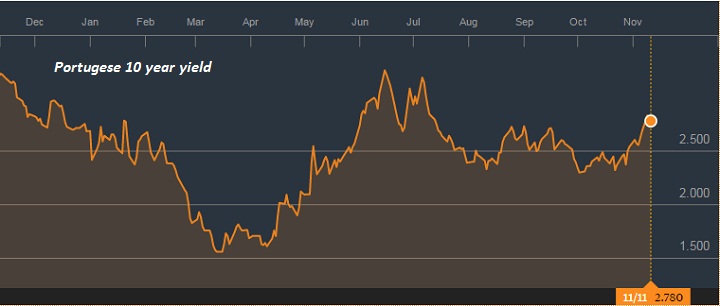
So far market hasn't taken much note of it, especially Euro, which is more focused on policy divergence at the moment. However, rising borrowing cost of Portugal is flashing alarms already.
10 year Portuguese sovereign bond is hovering around 2.8%, a level not seen since July.
So far the leftists have dropped their demand for exit from Euro area and upfront debt restructuring of Portugal's debt and joined the socialist government, but many analysts believe it is only a matter of time before government is held hostage by fresh demands.







