


 Who should own the knowledge that underpins AI technology?
  US Federal Register Drops Alibaba Qwen AI Search Tool
  DOJ Will Investigate AI-Related Crimes, Attorney General Blanche Says
  OpenAI Urges US-Led Global Standards for Frontier AI
  Rosenblatt Starts Nokia at Buy on AI Networking Growth
  Apple Pay Set for India Launch With Axis Bank
  SK Hynix, Intel Discuss U.S. Memory Chip Production Deal
  France Urges Faster AI Push Despite Safety Risks
  Scott Bessent Eyed as Trump’s New AI Czar
  MediaTek Unveils 2nm Dimensity 9600 Pro AI Chip
  Microsoft Stock Upgraded as Stifel Sees Stronger Azure Growth
  NASA, Boeing Discuss Expanding Starliner Missions
  Guterres Urges Stronger Global AI Safeguards Ahead of UN Assembly
  Qualcomm Gains on $60B Amazon AI Chip Deal
  AI is supercharging money scams – here’s what you can do to protect yourself
  Trump Plans Federal AI Force and AI Czar
  Nvidia CEO Jensen Huang Expected at Trump-Xi State Dinner


 Add as a preferred source on Google
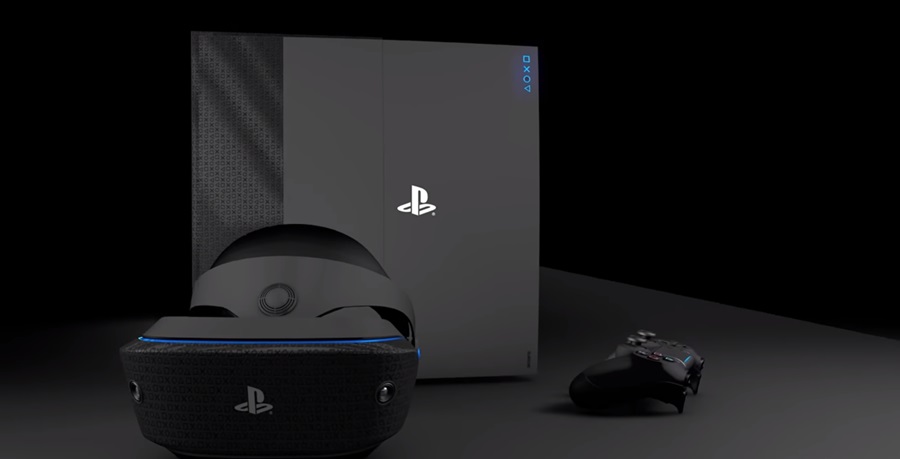
There’s still no news from Sony when they’re planning to release the PlayStation 5. Other than confirmation from the Tokyo-based company that they’re developing the next-gen console, no significant information has been released by Sony after the announcement.
However, a recent patent filing of the company points at a feature that fans have been asking for years: backward compatibility. According to Gear Nuke, the patent’s title is “simulation of legacy bus operation for backward compatibility” and lists Mark Cerny as one of its inventors. Cerny is presumed to be the lead developer of the PlayStation 5.
While there’s no confirmation from Sony just yet, the patent is a strong indication that the next system will be able to play games designed for its predecessors. This makes sense since, upon its release, there will be limited games that will be exclusive for the PlayStation 5. There’s also this statement from Cerny to consider:
“The aim is to make the applications designed for the previous consoles (legacy device) run perfectly on the most powerful hardware, and is focused on eliminating the synchronization errors between the new consoles and the behavior of the previous ones (PS4, PS3, PS2, and PSX),” Cerny explained. ”For example, if the CPU of the new console is faster than the previous one, data could be overwritten prematurely, even if they were still being used by another component.” There’s no doubt that this feature will play an integral role in the sales performance of the PlayStation 5.
As for its release date, nothing has been set in stone just yet. It was initially thought that 2020 could be the year that PlayStation 5 will come out. But new development of this area suggests that this will not be the case.
According to an analysis report done by Rakuten Securities regarding Sony’s finances, the PlayStation 5 will likely come out in 2021. To put briefly, the reason for the assumption is the release of “The Last of Us Part 2” and “Ghost of Tsushima,” both of which are touted to come out in 2020 and will be PS4 exclusives.
Given that this is the case, Sony doesn’t want both systems to compete with each other and affect their sales performance in the market. Thus, moving PlayStation 5 on 2021 makes sense to ensure that the dying PS4 will make a last push in terms of profit before finally passing the torch to the next-gen console.







