


 Qantas Shares Climb as Long-Haul Pilot Deal Eases Strike Concerns
  New Mexico Sues DOJ Over Unredacted Jeffrey Epstein Files Amid Ongoing Investigation
  Palantir Stock Soars as AI Demand Drives Strong Q2 Earnings and Higher 2026 Outlook
  AI Data Center Boom Faces New Risks as Public Backlash and Policy Scrutiny Grow
  Nvidia to Invest Up to $3 Billion in Blackstone-Backed Lancium
  Capital One Says AML Review Led to Closure of Trump Organization Accounts
  Alphabet Stock Slides as Google AI Pioneer Jeff Dean Exits to Launch Discovery Loop
  US Supreme Court Lets $655.5 Million Judgment Against Palestinian Authorities Stand During Appeal
  Meta Ordered to Pay $567M Over Child Safety Violations in New Mexico
  Paramount-Warner Bros. Merger Delayed Until 2027 Amid Antitrust Lawsuit
  Moderna Wins FDA Approval for mFLUSIVA mRNA Flu Vaccine for Adults 50+
  Eduardo Bolsonaro Granted U.S. Green Card Amid Brazil Legal Battle and Tariff Dispute
  Peru Court Frees Former President Ollanta Humala After Conviction Overturned
  SpaceX Targets Starship Flight 14 With First V3 Starlink Satellite Launch
  Lebanon Lawyers Seek Probe Into Banker Over Alleged Netanyahu Dinner in Washington
  Nvidia Seen Beating Q2 Targets as Vera Rubin Cycle Begins
  Apple Stock Slides 7% as Weak Sales Forecast Overshadows Quarterly Earnings Beat


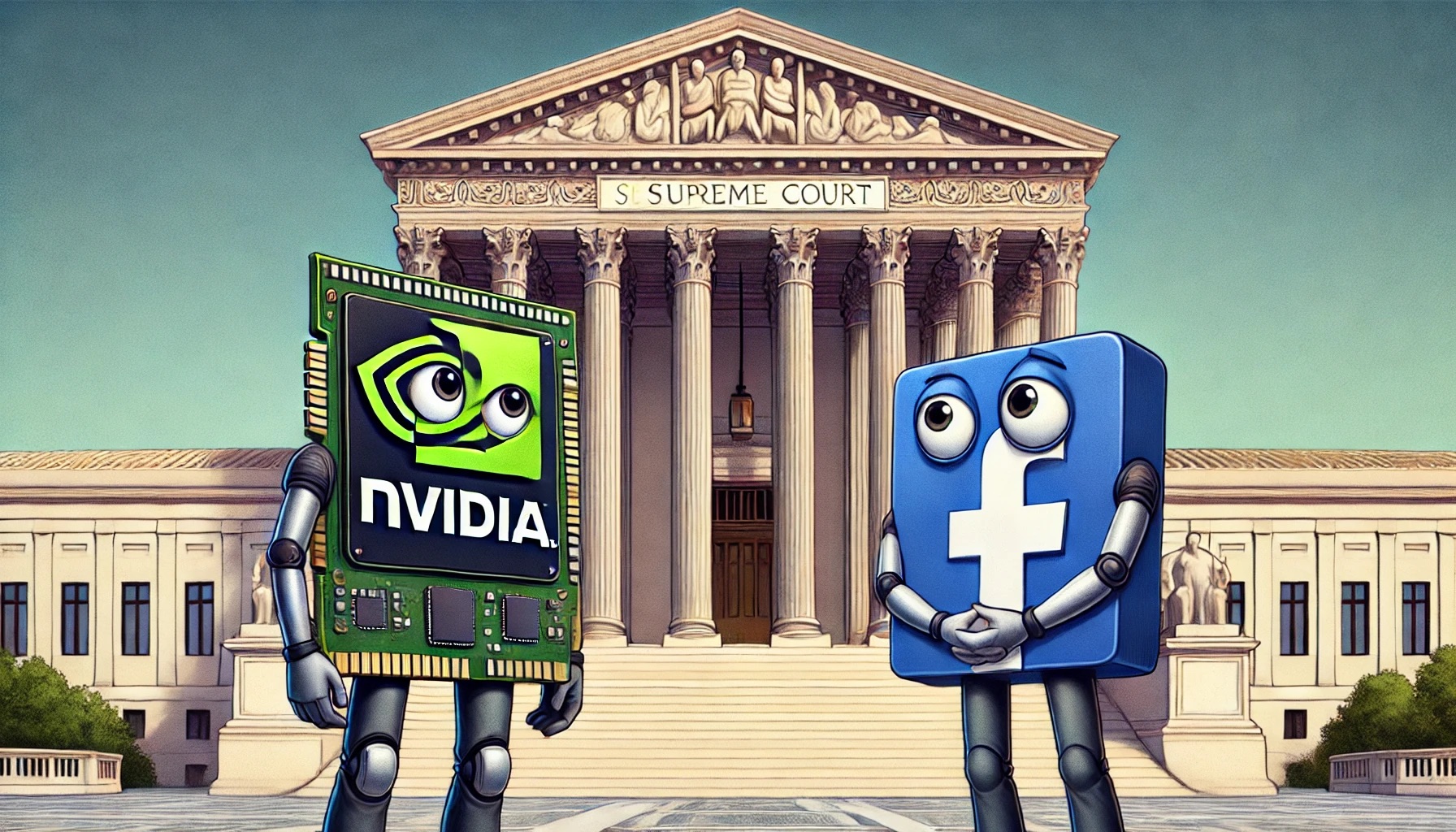
Nvidia and Facebook have petitioned the U.S. Supreme Court to dismiss securities fraud class action lawsuits against them. The tech giants argue that allowing these suits to proceed could significantly alter how private investors hold corporations accountable under federal securities laws.
Supreme Court Set to Hear Facebook and Nvidia's Defense Against Fraud Charges
Reuters reports that two major digital companies, Facebook (owned by Meta) and Nvidia (a subsidiary of AMD), are preparing to have their motions to defend against federal securities fraud charges heard by the U.S. Supreme Court. This might make it more difficult for individual litigants to hold companies accountable.
The justices may be ready to limit the ability of private plaintiffs to enforce federal regulations meant to penalize corporate wrongdoing following three June decisions that undermined federal regulators, including the SEC, which oversees securities fraud.
Facebook and Nvidia may also find "a receptive audience" before the justices, according to Andrew Feller, a former SEC lawyer now in private practice. This is based on the Supreme Court's history of ruling in favor of businesses and limiting the power of federal regulators.
A Business-Friendly Court Majority Could Shift Regulatory Balance
A conservative majority of six justices makes up the Supreme Court.
"I think business interests will continue their recent pattern of aggressively challenging rules intended to hold them accountable, including by challenging the remaining private rights of action," said Feller.
Anyone or any entity can have a "private right of action" if they feel they have a legitimate claim for damages.
Following the approval of individual class action securities fraud claims against Facebook and Nvidia by the San Francisco-based 9th U.S. Circuit Court of Appeals, the companies took their cases to the Supreme Court.
Facebook’s Argument: Disclosure Requirements and Investor Expectations
On Wednesday, the Supreme Court will consider Facebook's request to dismiss a lawsuit that claims the social media giant violated the Securities Exchange Act of 1934. According to MSN, this federal statute mandates the disclosure of business risks by publicly traded businesses by misleading investors.
In a class action lawsuit filed in 2018, Facebook was accused by a group of investors, headed by Amalgamated Bank, of concealing information from its investors regarding a data breach that occurred in 2015 involving the British political consultancy firm Cambridge Analytica. The breach impacted over 30 million Facebook users.
Cambridge Analytica's alleged 2016 usage of fraudulently obtained Facebook user data in relation to Donald Trump's successful presidential campaign prompted a decline in Facebook shares in 2018, which led to the filing of the lawsuit. Part of the goal of the lawsuit is to get investors their money back for the Facebook stock they lost money on.
Cambridge Analytica Scandal Poses Key Legal Questions
The question here is whether Facebook was in violation of law when it presented the possibility of future data breaches as hypothetical rather than detailing the previous breach in its business-risk disclosures.
As Facebook put it in its submission with the Supreme Court, "a reasonable investor would understand (risk disclosures) to be forward-looking and probabilistic in nature." Hence, the company did not feel compelled to disclose that the risk it had warned about had already come to fruition.
Facebook settled for $100 million in 2019 after the SEC filed an enforcement action against the social media giant. The Cambridge Analytica scandal resulted in a separate $5 billion fine for Facebook from the United States Federal Trade Commission.
Public Enforcement Limitations and Private Lawsuit Impacts
"A necessary supplement" to public enforcement efforts, according to Michael Perino, a professor at New York's St. John's University School of Law.
"The SEC is arguably under-resourced given the broad scope of its responsibilities," said Perino. "Securities class action lawsuits effectively deputize private attorneys to bring actions on behalf of aggrieved investors."







