


 Japanese Yen Retreats as Dollar Rises Ahead of Fed, BOJ Rate Decisions
  SK Hynix, Intel Discuss U.S. Memory Chip Production Deal
  Asian Stocks Rise as Investors Brace for Fed Rate Decision
  Nvidia Eyes $10 Billion Investment in Anthropic IPO
  UK Inflation Rises to 3.1% Ahead of BoE Rate Decision
  Asian Stocks Fall as AI Fears and Oil Surge Hit Markets
  MediaTek Unveils 2nm Dimensity 9600 Pro AI Chip
  China Home Prices Fall Again as Property Slump Drags on Growth
  Boeing, SPEEA Reach Tentative Four-Year Labor Deal
  Asian Bank Stocks Slide as BofA Warning and Rising Yields Hit Sentiment
  US Stocks Rise Ahead of Fed Rate Decision
  Saudi Arabia Raises Security Alerts as Houthi Attacks Threaten Oil Routes
  China Industrial Output Beats Forecasts as Exports Support Growth
  Gold Prices Steady as Oil Disruptions Boost Fed Rate Hike Bets
  Samsung, SK Hynix Reject KEPCO’s $18.7 Billion Power Funding Plan
  Databricks to Invest $350 Million in Singapore AI Expansion
  BHP Port Hedland Wage Dispute Heads to Arbitration


 Add as a preferred source on Google
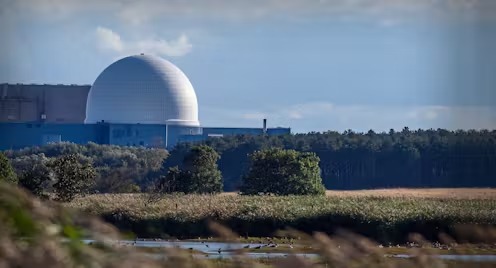

Much of the debate about nuclear power in the month since the Coalition announced its plan to install reactors in seven states has been about cost.
But some things matter more to electricity users than the average price they pay for electricity.
For big industrial users who either buy their power wholesale, or renegotiate their fixed-term price contracts frequently, it is important that the wholesale price is fairly steady.
Nuclear power plants produce power at a fairly steady pace, which leads to a more steady market price. Power systems built around wind and solar produce cheaper power, but with more uncertain output and much greater variability in price.
This greater variability can be smoothed to some extent by adding storage such as pumped hydro and large-scale batteries, but to the extent that it remains, uncertain prices make investments in power-hungry projects harder to justify.
The greater the uncertainty, the more investment moves to other firms, other less energy-intensive industries and other countries.
This has been confirmed in a study of the behaviour of thousands of Chinese firms between 2008 and 2018.
Variable prices cut the value of firms
I presented preliminary results from a project using data from Queensland during Australian Energy Week last month.
Those results suggest that higher volatility in wholesale electricity prices lowers the share price of listed firms in the metals and mining industries.
Intraday price volatility has doubled over the past five to ten years. I find this has cost the firms that suffered it 5% of their share market value.
The metals and mining industries are valued at about A$40 billion, meaning a 5% reduction corresponds to $74 per Australian, each year.
Without nuclear, prices vary more
Now back to nuclear. Since nuclear power can generate electricity regardless of the weather, an advantage it has is lower price volatility.
We can see this by investigating what has happened in other countries when a sizeable proportion of the nuclear capacity has been taken offline.
Two recent examples from Europe illustrate this.
The first is from Germany which shut down three nuclear reactors on December 31, 2021, halving Germany’s nuclear power capacity overnight.
The second example is taken from France. There, stress corrosion cracking was discovered in several reactors and in April 2022, it had taken out 28 of France’s 56 reactors.
In Germany, shutting down the reactors pushed up price volatility by 5% to 15%. France experienced a few extreme price spikes, which also drove up the volatility.
In nearby southern Sweden and Poland, price volatility fell 10% to 25% during the same period.
As we keep expanding wind and solar, it is highly likely that electricity wholesale price volatility will climb further.
If Australia continues to rule out nuclear power, it is necessary to ask what else it can do to keep price volatility in check.







