


 Australia Consumer Sentiment Rises in July as Fuel Price Relief Lifts Confidence
  Asian Currencies Stay Rangebound as Middle East Tensions, Weak China GDP Weigh on Sentiment
  South Korea’s KOSPI Enters Bear Market Despite Remaining 2026’s Best-Performing Major Stock Index
  Dollar Eases as Middle East Conflict, Fed Outlook and Japan Pension Policy Drive FX Markets
  Oil Prices Rise as U.S. Strikes on Iran Raise Strait of Hormuz Supply Fears
  ECB's Kocher Says No Inflation Spillover Yet From Iran Conflict, Warns Risks Remain
  Gold Price Holds Near Record High as Cooling U.S. Inflation Offsets Fed Caution
  Australian Business Conditions Hold Steady as Easing Cost Pressures Face New Oil Price Risks


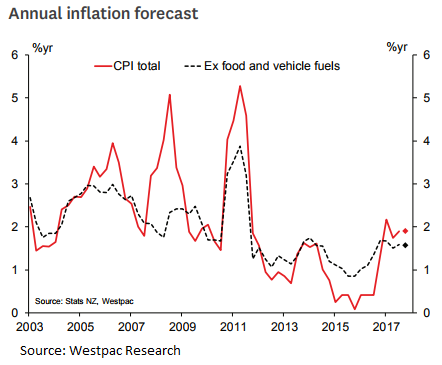
New Zealand’s consumer prices are expected to have risen by 0.4 percent in the December quarter, led by higher fuel prices and other transport costs. This would maintain the annual inflation rate at 1.9 percent, very near to the 2 percent midpoint of the Reserve Bank of New Zealand’s (RBNZ) target range. Excluding the volatile food and fuel categories, annual inflation is seen to remain at a more modest 1.6 percent, Westpac Research reported.
The most significant price increases over the December quarter were related to travel. Petrol prices were up 6 percent over the quarter, and diesel prices rose 10 percent, reflecting a rise in world oil prices and a weaker New Zealand dollar. Petrol prices are at their highest since the September 2015 quarter.
The largest negative contribution will be from a 1.6 percent drop in food prices, led by an 18 percent drop in vegetable prices. This is entirely a seasonal phenomenon – in seasonally adjusted terms, food prices are expected to be up 0.3 percent for the quarter. Food price inflation picked up over 2017, but much of that was due to poor weather playing havoc with some crops.
"Aside from fuel and food, we expect that tradables prices remained subdued. It’s likely that the rise in the New Zealand dollar earlier in 2017 was still suppressing import prices at the end of last year," the report added.
Lastly, FxWirePro has launched Absolute Return Managed Program. For more details, visit http://www.fxwirepro.com/invest







