


 Nvidia Confirms Major OpenAI Investment Amid AI Funding Race
  Palantir Stock Jumps After Strong Q4 Earnings Beat and Upbeat 2026 Revenue Forecast
  Tencent Shares Slide After WeChat Restricts YuanBao AI Promotional Links
  SpaceX Updates Starlink Privacy Policy to Allow AI Training as xAI Merger Talks and IPO Loom
  Sony Q3 Profit Jumps on Gaming and Image Sensors, Full-Year Outlook Raised
  Nvidia, ByteDance, and the U.S.-China AI Chip Standoff Over H200 Exports
  Sam Altman Reaffirms OpenAI’s Long-Term Commitment to NVIDIA Amid Chip Report
  SoftBank Shares Slide After Arm Earnings Miss Fuels Tech Stock Sell-Off
  Google Cloud and Liberty Global Forge Strategic AI Partnership to Transform European Telecom Services
  Oracle Plans $45–$50 Billion Funding Push in 2026 to Expand Cloud and AI Infrastructure
  SpaceX Reports $8 Billion Profit as IPO Plans and Starlink Growth Fuel Valuation Buzz
  Elon Musk’s Empire: SpaceX, Tesla, and xAI Merger Talks Spark Investor Debate
  AMD Shares Slide Despite Earnings Beat as Cautious Revenue Outlook Weighs on Stock
  Global PC Makers Eye Chinese Memory Chip Suppliers Amid Ongoing Supply Crunch
  Amazon Stock Rebounds After Earnings as $200B Capex Plan Sparks AI Spending Debate


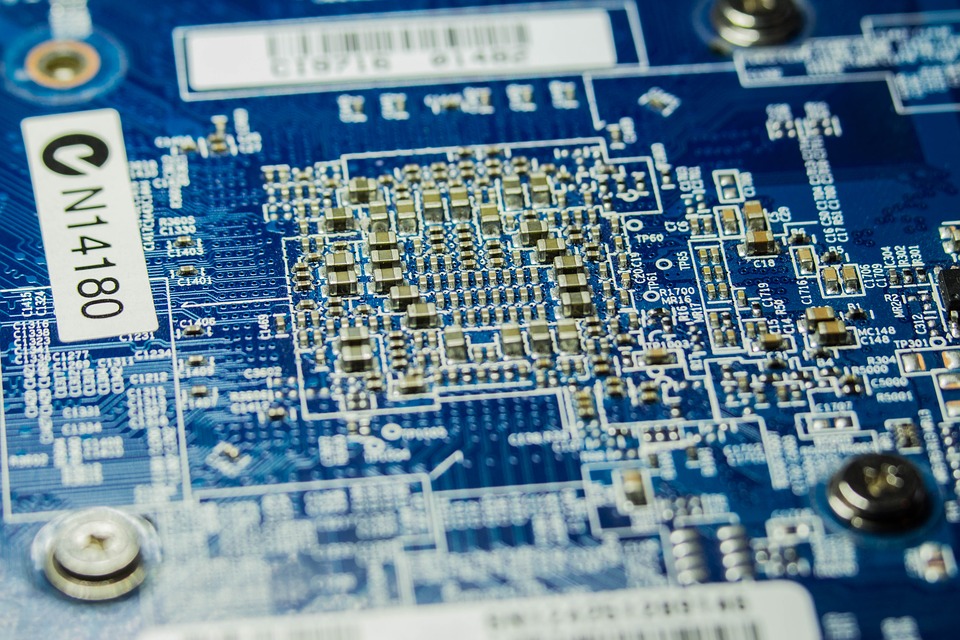
Moore’s Law is basically the concept of transistors inevitably hitting a wall in how small they can shrink and fit into a single space. Now, a discovery might blow that limitation to smithereens thanks to a particular kind of magnetic particle, which could change how memory is stored and what to use to store that memory.
The biggest problem with current memory storage units with regards to Moore’s Law is how their physical materials are literally the defining limitations. This is what engineers at MIT hope to get around with the use of particles called “skyrmions,” which were originally difficult to create at will. The team was led by Geoffrey Beach and according to him, they have managed to do it, Phys.org reports.
With regards to its role in storing data, the particle can be manipulated using electrical fields. By creating them in specific locations, the researchers are now able to store data in the particle without the need for additional energy.
What’s more, it would seem that using “skyrmions” is actually more stable and reliable than conventional magnetic storage. Data can be stored within a space of only several atoms across. This is not possible with current data storage technology.
Before anyone gets too excited, however, there are a few caveats that are worth mentioning. For one thing, it seems there isn’t any way to read the data stored right now, Futurism reports. Storing data using these “skyrmions” would be pointless if they can’t be read. They would be nothing more than glorified hard drives without ports to plug them in with.
Theoretically speaking, a method of reading the data exists, it just needs to be found. This is what the researchers will need to prove if the new method is ever going to make it to market, along with proving that it can be cost-effective.













