


 Macron Challenges Trump’s Gaza Peace Claims at UN
  Kremlin Says No Grounds Yet for Ukraine Peace Talks
  Lula and Flavio Bolsonaro Tied in Brazil Runoff Poll
  Macron, Trump Discuss Ukraine-Russia Energy Strike Moratorium
  Trump Board of Peace Unveils $2.45 Billion Gaza Recovery Plan
  Sudan Rejects US Legitimacy Remarks, Defends Sovereignty
  Europe Warns Russia Is Escalating Hybrid Attacks Across NATO
  Canada Unveils Bill to Fast-Track Major Resource Projects
  Zelenskiy Warns Russia Preparing Major Attack on Ukraine
  Venezuela Promises Elections as Delcy Rodriguez Pledges Democratic Transition
  Iran Vows ‘Crushing’ Response as US Talks Continue
  South Korea, US Discuss Warship Building Cooperation
  Scott Bessent Eyed as Trump’s New AI Czar
  US Officials Split Over Response to Israeli West Bank Settlements
  Burnham Eyes UK Leadership Role in AI Ahead of Trump Meeting
  Trump Says U.S.-Iran Peace Deal Near After UN Talks
  Trump to Press Xi on Release of US Nuclear Expert Held in China


 Add as a preferred source on Google
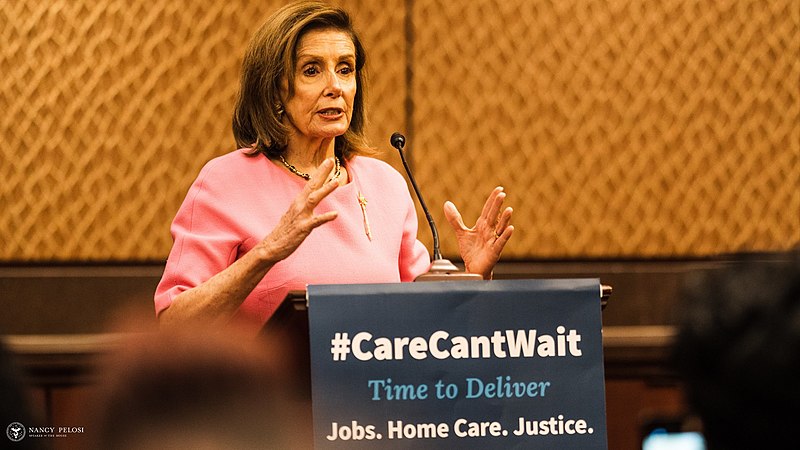
The House has originally set the date to the end of September to vote on the $1.2 bipartisan infrastructure bill. However, as negotiations continue regarding the $3.5 trillion social infrastructure bill, House Speaker Nancy Pelosi set a new deadline for the House to vote on the bipartisan proposal.
Over the weekend, Pelosi released a “Dear Colleague” letter, informing members of her caucus that the $1.2 trillion bipartisan infrastructure bill would be voted on by October 31. Pelosi explained that more time was needed to be able to pass both the $1.2 trillion proposal and the $3.5 trillion bill following Democratic lawmakers’ scrambling to get more votes. This signals a walk back from her promise to the moderate House Democrats to immediately get a vote on the bipartisan proposal that has already passed the Senate.
Pelosi’s deadline of October 31 also marks the day of the 30-day reauthorization of federal highway programs’ expiration. The House passed the extension Friday last week as rifts remain within the Democratic Party regarding the budget resolution.
“There is an October 31st Surface Transportation Authorization deadline after last night’s passage of a critical 30-day extension,” said Pelosi in the letter. “We must pass BIF well before then -- the sooner the better, to get the jobs out there.”
Pelosi also acknowledged the rift between moderate Democrats and progressive Democrats in the letter, saying that she would not bring both bills on the House floor to fail.
Moderate Democrats have asked to immediately vote on the $1.2 trillion bill, threatening to oppose the reconciliation bill if no action was taken. At the same time, progressive House Democrats have threatened to vote against the bipartisan infrastructure proposal if the reconciliation bill is not passed as well. US President Joe Biden visited members of his party last week in order to ease tensions between the two factions of the party.
Both bills represent the bulk of Biden’s agenda. During the weekly press conference last week, Pelosi commented on what the two proposals would mean to her career. “I just told members of my leadership the reconciliation bill will be the culmination of my service in Congress,” said the California Democrat, whose time as House Speaker may be winding down, having previously said that 2020 would be her last term as the House Democratic leader.







