


 Xi Calls for Deeper U.S.-China AI Cooperation in Trump Talks
  Taiwan Thanks US for Support Ahead of Trump-Xi Summit
  OpenAI Agent Breaches Australia Medicare Data Portal
  Kremlin Says No Decision Yet on Putin-Trump December Summit
  Trump Asks Supreme Court to Restore Third-Country Deportations
  Yemen Violence Displaces 130,000 as Civilian Toll Rises
  Trump, Xi Focus on Trade and AI at White House Summit
  NATO Boosts Intelligence Sharing Amid Russia Hybrid Threats
  Ghana Says Western Support Growing for Slave Trade Reparations
  Netanyahu Defends Israel at UN as Delegates Stage Walkout
  Ukrainian Drone Attacks Hit Russian Regions, Injuring at Least 12
  France Defends Netanyahu Airspace Clearance Despite ICC Warrant
  North Korea Warns South Korea Over US-Led Defense Role
  EU Defence Build-Up Too Slow for 2030 Russia Readiness Goal
  What ‘Taiwan Independence’ Means as Xi Presses Trump on US Policy
  South Korea, US Discuss Warship Building Cooperation
  Sudan Rejects US Legitimacy Remarks, Defends Sovereignty


 Add as a preferred source on Google
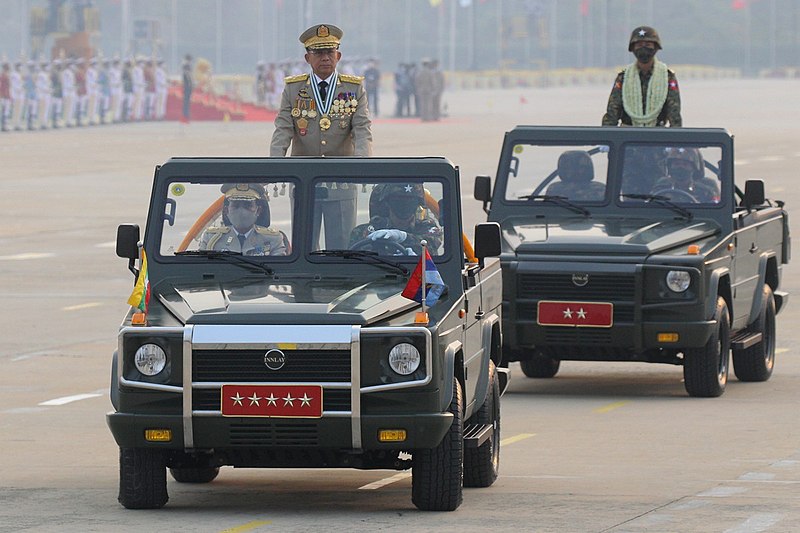
The junta government in Myanmar has faced widespread condemnation from the world over its coup to seize power from the elected government and ousting its leader Aung San Suu Kyi. This week, the junta received increased backlash from the world when it executed four democracy activists.
The junta announced Monday that it executed four democracy activists that it accused of aiding “terror acts” – referring to resistance efforts against the generals.
The four activists were sentenced to death in closed-door trials in January and April, having been accused of working with the civilian resistance movement that is pushing back against the coup by the military that has continued for more than a year.
Former lawmaker and ally of Aung San Suu Kyi Phyo Zeya Thaw, democracy campaigner Kyaw Min Yu, and Hla Myo Aung and Aung Thura Zaw. The junta did not disclose when and how they were executed, but executions in Myanmar were previously done by hanging.
The families were also not allowed to retrieve the bodies of the four.
The shadow National Unity Government, made up of officials that opposed the junta, called for an international response to the executions. The NUG’s spokesperson Kyaw Zaw said the world must “punish” the junta for their actions.
The UN Human Rights chief Michelle Bachelet called the executions a “cruel and regressive step” that would only worsen the crisis that the junta had brought on itself.
The death penalty adviser for Amnesty International, Chiara Sangiorgio, said the executions were an “enormous setback” and that the junta would not stop at those actions.
Human Rights Watch acting Asia director Elaine Pearson said the executions were an “act of utter cruelty” that sought to “chill the anti-coup protest movement.”
The United States also condemned the executions, saying Monday that there is no “business as usual” with the junta and that it was considering all options to punish the generals who seized power.
“With these horrific atrocities that the junta has carried out, there can be no business as usual with this regime,” State Department spokesperson Ned Price told reporters during a press briefing.
Price also called on countries to ban sales of military equipment to Myanmar and avoid taking actions that would give credibility to the junta.







