


 Panama Investigates CK Hutchison’s Port Unit After Court Voids Canal Contracts
  Synopsys Q2 Revenue Forecast Misses Expectations Amid China Export Curbs and AI Shift
  Trump Media Weighs Truth Social Spin-Off Amid $6B Fusion Energy Pivot
  Greg Abel’s First Berkshire Hathaway Shareholder Letter Signals Continuity, Caution, and Capital Discipline
  FAA Plans Flight Reductions at Chicago O’Hare as Airlines Ramp Up Summer Schedules
  Coupang Reports Q4 Loss After Data Breach, Revenue Misses Estimates
  Pentagon Weighs Supply Chain Risk Designation for Anthropic Over Claude AI Use
  Lynas Rare Earths Shares Surge on Strong Half-Year Earnings and Rising Global Demand
  Trump Orders Federal Agencies to Halt Use of Anthropic AI Technology
  Samsung and SK Hynix Shares Hit Record Highs as Nvidia Earnings Boost AI Chip Demand
  Snowflake Forecasts Strong Fiscal 2027 Revenue Growth as Enterprise AI Demand Surges
  BlueScope Steel Shares Drop After Rejecting Revised A$15 Billion Takeover Bid
  Nintendo Share Sale: MUFG and Bank of Kyoto to Sell Stakes in Strategic Unwinding
  Toyota Plans $19 Billion Share Sale in Major Corporate Governance Reform Move
  Netflix Declines to Raise Bid for Warner Bros. Discovery Amid Competing Paramount Skydance Offer
  Amazon’s $50B OpenAI Investment Tied to AGI Milestone and IPO Plans
  Samsung Electronics Stock Poised for $1 Trillion Valuation Amid AI and Memory Boom


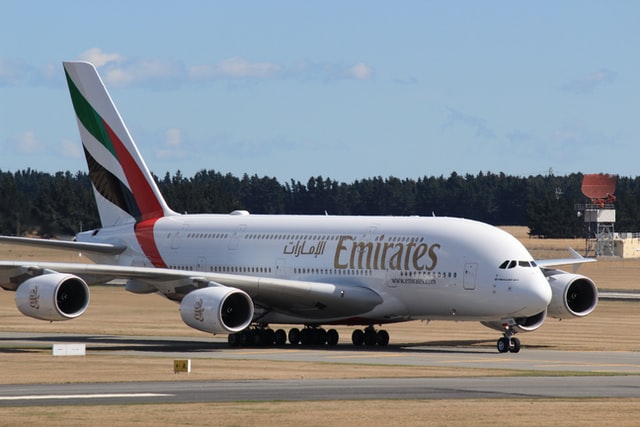
Airlines across the Middle East suspended flights after U.S. and Israeli strikes on Iran triggered widespread airspace closures, severely disrupting global travel. Major aviation hubs including Dubai, Abu Dhabi, Doha, and Tel Aviv faced cancellations, delays, and diversions as tensions escalated and Iran launched retaliatory missile attacks.
Dubai Airports halted operations at both Dubai International Airport and Al Maktoum International Airport until further notice, urging passengers not to travel. Emirates and flydubai temporarily stopped flights, while Etihad Airways suspended departures from Abu Dhabi until 1000 GMT Sunday. Airspace over Iran, Iraq, Kuwait, Israel, and Bahrain was left nearly empty, according to flight tracking data, as airlines scrambled to reroute aircraft.
The impact quickly spread beyond the region. Travelers across Europe were stranded after connecting flights through Doha and Dubai were cancelled. At Paris Charles de Gaulle Airport, passengers bound for Asia were forced to rearrange their plans, while Doha’s Hamad International Airport saw reduced activity with travelers seeking hotel accommodations.
Preliminary data from Cirium revealed that around 24% of flights to the Middle East were cancelled, including nearly half of all scheduled flights to Qatar and Israel and 28% of flights to Kuwait. Aviation experts warn that Middle East airspace closures could remain in place for an extended period, creating logistical challenges for airlines managing stranded aircraft, crews, and passengers worldwide.
European aviation regulator EASA advised carriers to avoid affected airspace. British Airways, Lufthansa, Air France, Iberia, Wizz Air, Cathay Pacific, Qatar Airways, Kuwait Airways, Turkish Airlines, Air India, and others announced suspensions or route adjustments. Virgin Atlantic confirmed it would avoid Iraqi airspace, leading to further rerouting.
The disruption comes as Middle Eastern air routes have grown increasingly important following the Russia-Ukraine conflict. Prolonged instability now threatens global flight operations, increases fuel costs, and raises aviation safety concerns, potentially affecting international travel and airline schedules for weeks.













