


 Italy Investigates Microsoft Over Microsoft 365 AI Subscription Price Hike
  Morgan Stanley Raises Tesla Q2 Delivery Forecast on Strong Europe and China Demand
  US Seizes Nearly 400 Illegal World Cup Streaming Domains in Global Anti-Piracy Crackdown
  Europe Heatwave Creates Growth Opportunity for Carrier, Trane, and Johnson Controls, Citi Says
  Republican Lawmaker Introduces AI Incident Reporting Bill to Strengthen U.S. AI Safety
  China Expands Export Controls, Adds 20 Japanese Companies to Restricted List
  OpenAI IPO Delay Weighs on SoftBank Shares as AI Valuation Concerns Grow
  Morgan Stanley Names BAE Systems Top European Defence Stock Despite Lower Price Target
  Baidu Shares Rally as Kunlunxin Eyes $50 Billion Hong Kong IPO
  SoftBank Shares Slide as OpenAI IPO Delay Concerns Weigh on AI Investment Outlook
  Australia Sues Amazon Over Prime Video Ads and Subscription Terms
  Super Micro Shares Slide After Taiwan Raids Over Alleged Nvidia AI Chip Smuggling Probe
  Anthropic Brings Claude AI Models to Microsoft Azure Foundry With NVIDIA Blackwell GPUs
  Alibaba Shares Fall After Anthropic Alleges Massive AI Model Distillation Campaign
  Lenovo Shares Slide as AI-Driven Memory Demand Signals Higher DRAM and NAND Prices
  Kioxia Targets U.S. Listing as AI Chip Boom Accelerates
  Firmus Partners With Nvidia to Deliver 170,000 AI GPUs in $30 Billion Cloud Infrastructure Deal


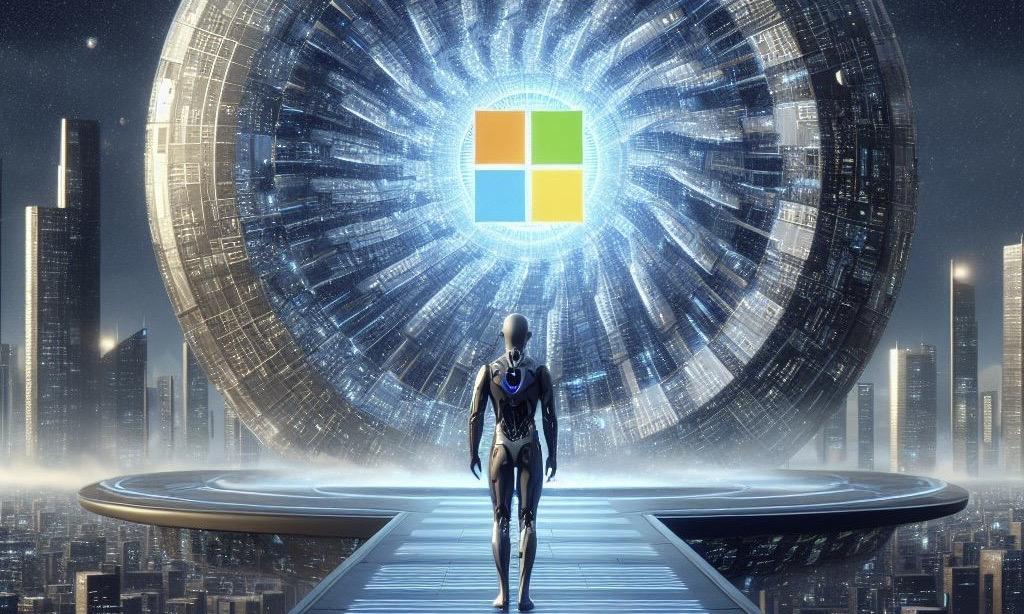
Microsoft and OpenAI are collaborating on a groundbreaking $100 billion project to create "Stargate," a supercomputer that will significantly advance artificial intelligence capabilities. The venture, potentially employing millions of server chips, sets a bold new standard for AI infrastructure.
Stargate: Microsoft and OpenAI's Vision for a $100 Billion AI Powerhouse
According to a Business Insider, Microsoft and OpenAI are developing an unprecedented supercomputer that could cost up to $100 billion and employ millions of specialized server chips.
The US-based supercomputer, dubbed "Stargate," would be the focal point of a five-phase plan centered on several supercomputer installations the companies intend to build in the ensuing six years. The source claimed that Stargate, the plan's fifth phase, might debut as early as 2028 to those connected to the proposal.
The outlet claims that executives at both companies have already drafted plans for the data center project, which would power OpenAI's artificial intelligence.
"We are always planning for the next generation of infrastructure innovations needed to continue pushing the frontier of AI capability," a company representative said.
OpenAI waited to answer a request for comment from BI.
Stargate would be funded by Microsoft, which has already pledged more than $13 billion to OpenAI. Currently, OpenAI powers its generative AI system ChatGPT with Microsoft data centers in exchange for Microsoft having the sole right to resell OpenAI's technology to its clients.
Microsoft insiders informed A source earlier this month that the company's strategy has become increasingly centered around its work with OpenAI. This has caused some to worry that Microsoft is effectively taking on the role of the startup's IT department.
Stargate's Ambition: Balancing High Costs and Advanced AI in Microsoft and OpenAI's Quest
According to the report, the supercomputer might cost as much as the most significant data centers currently in use. The project foreshadows the enormous money invested in the sector as artificial intelligence advances over the next several years.
It is claimed that Stargate can significantly outperform Microsoft's processing power in OpenAI from its data centers nationwide. However, doing so would need at least several gigawatts of power.
However, a source told the outlet that Microsoft's participation in the project depends on OpenAI delivering on its pledge to improve its AI capabilities.
The report claims that the main reason for Stargate's high cost is the effort required to find the necessary server chips. Obtaining sufficient energy sources to power the project may be challenging; sources stated that the two companies have discussed the possibility of using nuclear energy or other alternative power sources.
Due to the extreme demand for AI chips, the market is being controlled by a small group of companies, mainly Nvidia. This year, Altman has signaled that he wants to make his films and has expressed frustration with the "brutal" situation.
Several Stargate-related issues still need to be resolved, including the chip dilemma. According to people familiar with the project, Microsoft needs to figure out how to increase the number of GPUs that can fit into a single rack to improve the performance of the chips. According to the report, the company must also figure out how to keep the chips from overheating.
A source said it's unclear where Stargate would be located or whether it would be built in just one data center or several nearby centers.
Photo: Microsoft Bing







