


 Fed Unveils Stablecoin Rules Under GENIUS Act
  Gold Holds Near $4,275 as Rising Treasury Yields Fuel Fed Rate Hike Bets
  Oil Prices Jump 3% as Houthi Attack Revives Supply Fears
  ECB May Stop Rate Hikes After December, Capital Economics Says
  Dollar Holds Near Two-Month High as Yen Approaches 160
  U.S. Dollar Hits Two-Month High as Oil, Treasury Yields Surge
  Canadian Dollar Faces Pressure as Fed-BoC Policy Gap Widens
  Soybean Futures Slip as Traders Await Trump-Xi Trade Signals
  China Consumer Stocks Near Decade Lows as AI Shares Surge
  Fed’s Hammack Says Bond Yield Surge Is Not Driven by Inflation Fears
  Asian Stocks Fall as Surging Bond Yields Rattle Markets
  Mexico-US Trade Talks Delayed to October as Tariff Negotiations Continue
  US Stock Futures Fall as Treasury Yields Surge Ahead of Trump-Xi Summit
  Germany’s 2026 Growth Outlook Strengthens on Fiscal Spending
  US Stocks Face Jobs, Inflation Test as Fed Rate Hike Bets Rise
  Trump to Ease U.S. Fuel-Economy Standards
  Dollar Falls as Oil Eases, Yen Jumps on Intervention Signals


 Add as a preferred source on Google
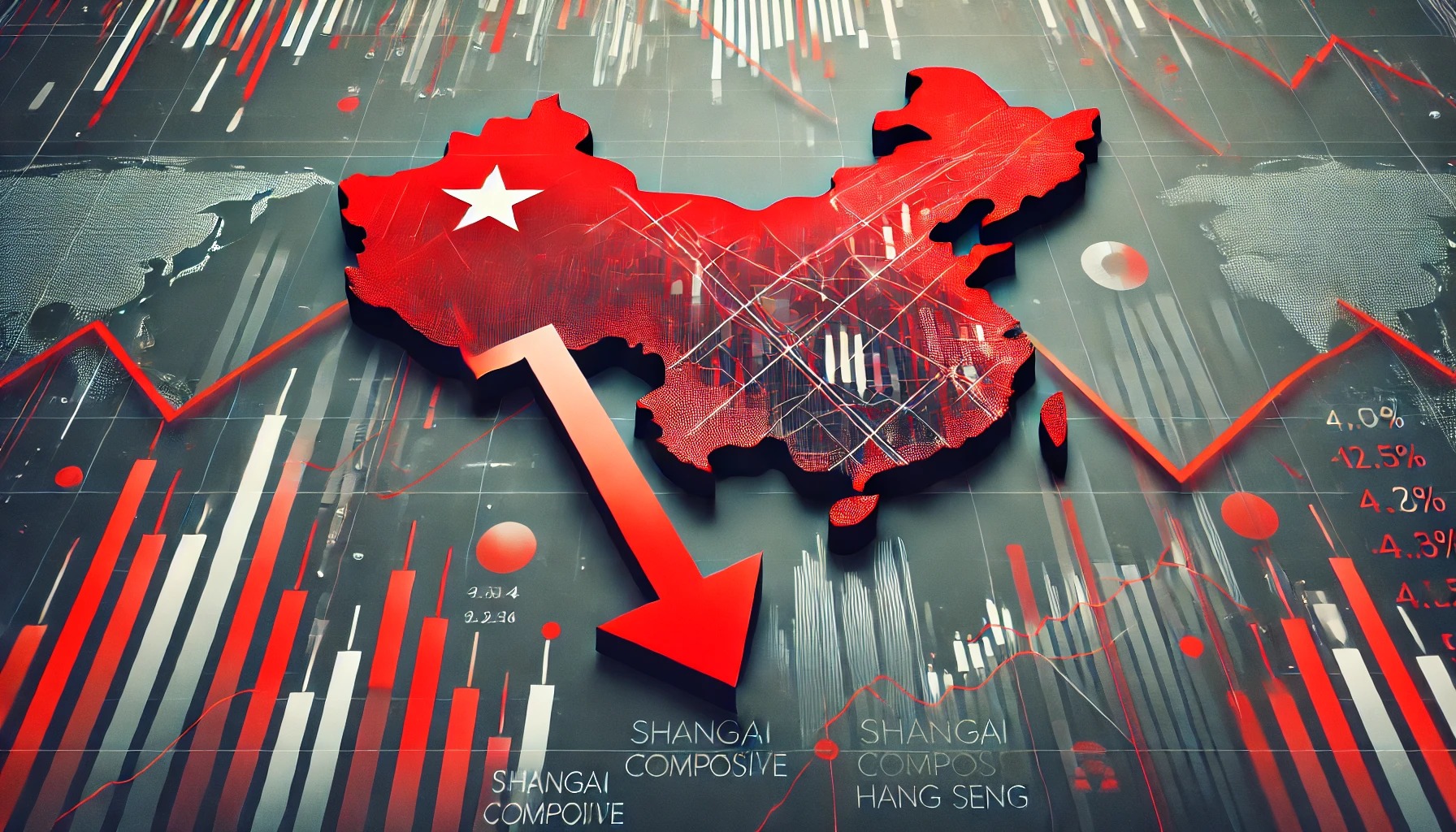
Mainland China’s stock market faced a sharp decline on Wednesday, ending a 10-day winning streak, as government stimulus plans failed to instill confidence in investors seeking an economic revival.
China Stock Market Declines After Holiday Surge
In a marked contrast to Tuesday’s rally, the Shanghai Composite Index dropped 5.3% by 0239 GMT, while the blue-chip CSI300 Index slid 5.8%. This comes after mainland Chinese stocks surged earlier in the week, following the return from a week-long National Day holiday, during which turnover hit a record high of 3.485 trillion yuan (approximately $493.17 billion).
Hong Kong Markets Follow Suit
Hong Kong’s Hang Seng Index, one of the best-performing global markets in recent months, also saw a downturn. After starting the day on a positive note, the index fell by 1.9%, underscoring growing market volatility and concerns over the lack of clear economic stimulus measures from Chinese authorities.
Investor Sentiment Hangs on Expected Stimulus Package
"The market has been eagerly awaiting a fiscal stimulus package, with expectations set around 2-3 trillion yuan," noted Alvin Tan, Head of Asia FX Strategy at RBC Capital Markets. "If the announced package fails to meet these expectations, investor sentiment could rapidly sour."
China’s assets have recently experienced positive momentum, largely fueled by the anticipation of significant fiscal support. However, without a substantial economic boost, market confidence may dwindle.
Tourism and Property Sectors Among Biggest Losers
Tourism stocks were hit particularly hard, with an index tracking the sector’s performance plummeting by 7.8%. Data showed that spending during the Golden Week holidays has yet to recover to pre-pandemic levels, contributing to the market downturn.
Property stocks were another drag on the market, with the CSI 300 Real Estate Index plunging 9.7%. According to Samuel Tse, an economist at DBS, "The impact of recent support measures will take time to unfold. A full recovery in property and consumption, particularly in tier 2 and tier 3 cities, will require additional stimulus and a sustained positive wealth effect from the equity markets."
Global Markets React to China’s Market Movements
The effects of China’s market slump extended beyond its borders. Singapore-traded FTSE China A50 futures fell approximately 1.5%, reflecting growing concerns over the global implications of China’s economic performance.
Key Takeaways
- Mainland China stocks plunged, snapping a 10-day rally.
- Investors are waiting for a fiscal stimulus package expected to be between 2-3 trillion yuan.
- Tourism and property sectors were the biggest losers in the market decline.
- The Hang Seng Index also fell after starting the day positively.
With investors anxiously awaiting news on China’s fiscal policy, the coming days could prove pivotal for both the domestic and international markets.







