


 Trump Plans Federal AI Force and AI Czar
  Microsoft Stock Upgraded as Stifel Sees Stronger Azure Growth
  Goldman Sachs Names Simon Lyons UK Investment Banking Co-Head
  Trump Bans CNN, MS NOW and Politico From White House
  SK Hynix, Intel Discuss U.S. Memory Chip Production Deal
  Big AI wants to slow down AI research. Is it a safety pause or a strategic retreat?
  Japan, U.S. Discuss $19 Billion GlobalFoundries Chip Plant
  Westinghouse Targets $50 Billion Valuation in U.S. IPO
  Petrobras Joins Brazil’s New Diesel Subsidy Program
  Meta Partners With Shopify to Bring Shop Pay Checkout to Muse AI
  SpaceX Nasdaq 100 Weight to More Than Double in Rebalance
  Qualcomm Gains on $60B Amazon AI Chip Deal
  US Northeast Airports Resume Operations After Telecom Outage Disrupts Thousands of Flights
  Apple Pay Set for India Launch With Axis Bank
  Meta CEO Zuckerberg Backs Independent AI Safety Reviews Over Development Slowdown
  DOJ Will Investigate AI-Related Crimes, Attorney General Blanche Says


 Add as a preferred source on Google
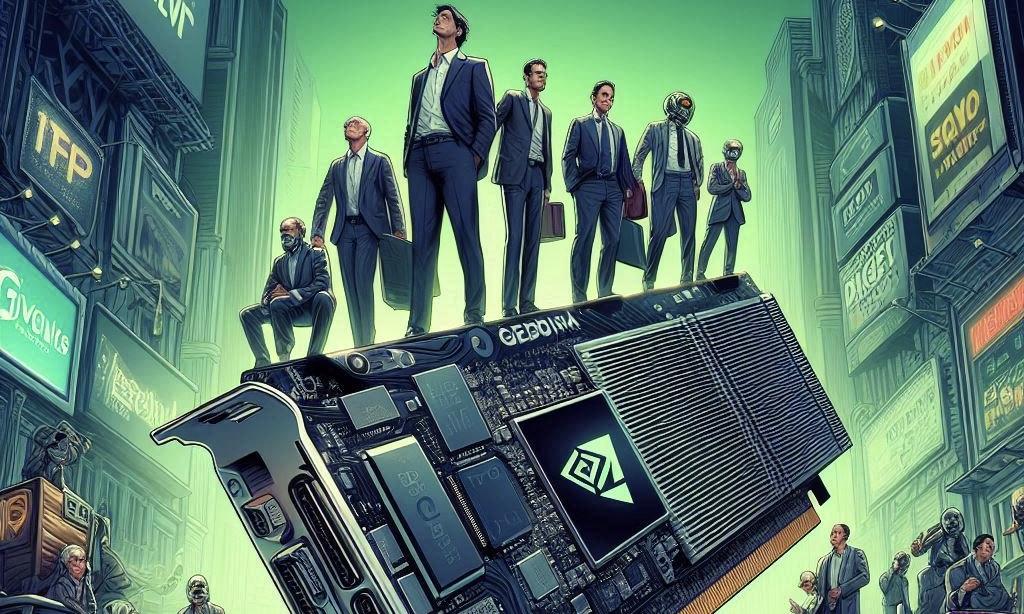
The Magnificent Seven tech stocks saw their market value plummet by over $600 billion during a market sell-off on August 5, with Nvidia experiencing the steepest decline at 7%. Recession fears and weak economic data drove the sell-off.
Major Tech Stocks Plunge Over $600 Billion as Global Sell-Off Extends into August
It was another disastrous day for the equities of major technology companies. Mega-cap tech names have been among the largest losers in a global sell-off that began in earnest last week and continued on August 5 after dragging the market to record highs in the first half of 2024.
According to a report from Morgan Stanley, the "Magnificent Seven," a term inspired by a film that denotes Alphabet, Amazon, Apple, Meta, Microsoft, Nvidia, and Tesla, became the most popular acronym on Wall Street after the group contributed to half of the S&P 500's total gains last year. Nevertheless, the collective market capitalization of the group decreased by over $600 billion, with shares of each of those companies declining by at least 3% by the close of business on August 5.
Wall Street's recession fears were reignited by weaker-than-expected data on the U.S. economy last week, but major tech stocks were already declining. In what the Wall Street Journal called "a stock-market rotation of historic proportions," investors, anticipating a potential Fed rate cut that has not yet occurred, allocated a portion of their tech profits to sectors prioritizing value.
In the interim, chip equities, including AI darling Nvidia, have been significantly affected by geopolitical tensions. The semiconductor manufacturer's shares experienced a 7% decline on August 5 the most significant among the Magnificent Seven. However, they have still more than doubled in value year-to-date.
According to Ted Mortonson of Baird, the tech giants were compelled to exceed their earnings call projections for the second quarter to mitigate the market decline. This did not transpire, as Amazon, in particular, failed to generate revenue and issued a subpar sales forecast last week.
Investors have been apprised of the Magnificent Seven's substantial investment in AI; however, they have yet to receive adequate information regarding its immediate effects on these organizations' revenues. Regulatory pressure has also been increasing, as evidenced by a federal judge's judgment on August 5 that Google has illegally maintained a monopoly over search on Apple iPhone and Android devices.
However, the primary factor contributing to Big Tech's losses on August 5 was a collapse in Japan's Nikkei 225 index, which was extended to U.S. markets at the opening bell. Bloomberg reports that information technology ended the day with a 3.78% decline, the most severe of any sector, despite a partial market recovery during the midday.
Buffett's Apple Stake Sale Sparks Concerns, Analysts Reassure on Market Stability and Tech Dominance
Warren Buffet's Berkshire Hathaway disclosed on August 3 that it divested nearly half of its stake in Apple during the second quarter, which brought Apple's losses to the forefront.
Like numerous analysts, Infrastructure Capital Advisors CEO Jay Hatfield underscored that Buffett's decision did not warrant alarm regarding Apple's sustainability. According to Fortune, Hatfield acknowledged that his organization believed Apple was overvalued at its peak, which exceeded $237. Almost 5% of the iPhone manufacturer's shares declined on August 5, causing the stock to fall below the $210 threshold.
Berkshire analysts long anticipated the Oracle of Omaha's decision to sell Apple's stock, as the value problem was sufficient. Hatfield denied that it is an indictment of the U.S. economy.
“The notion that we’re going into recession because he sold Apple is patently ridiculous,” Hatfield said.
Numerous analysts contend that Apple and the other Magnificent Seven companies possess exceptional market dominance and substantial free cash flows, which can serve as relative safety nets for investors during an economic downturn. The sell-off that occurred on August 5 remained the same.







