


 Canadian Dollar Faces Pressure as Fed-BoC Policy Gap Widens
  Saudi Arabia Seeks Military Support as Houthi Attacks Escalate
  CNN, MS NOW and Politico Sue Trump Over White House Media Ban
  US Backs Musk in Fight Against EU’s €120 Million X Fine
  Pezeshkian Says US Must Choose When Iran War Ends
  Judge Orders Trump to Restore White House Access for CNN, MS NOW and Politico
  Iran Rejects Nuclear Concessions in Hormuz Deal
  U.S. Treasury Yields Surge as 30-Year Hits 22-Year High
  US Supreme Court Revives Trump Administration Voter Citizenship Database
  Japan Private-Sector Growth Slows as Domestic Demand Weakens
  Trump Asks Supreme Court to Restore Third-Country Deportations
  Ukrainian Drone Attacks Hit Russian Regions, Injuring at Least 12
  Fed Unveils Stablecoin Rules Under GENIUS Act
  Wall Street Ends Flat as Oil, Treasury Yields and Fed Jitters Rattle Markets
  What ‘Taiwan Independence’ Means as Xi Presses Trump on US Policy
  Nvidia-Groq AI Chip Deal Faces U.S. Antitrust Probe
  Pope Leo Backs Press Freedom After White House Media Ban


 Add as a preferred source on Google
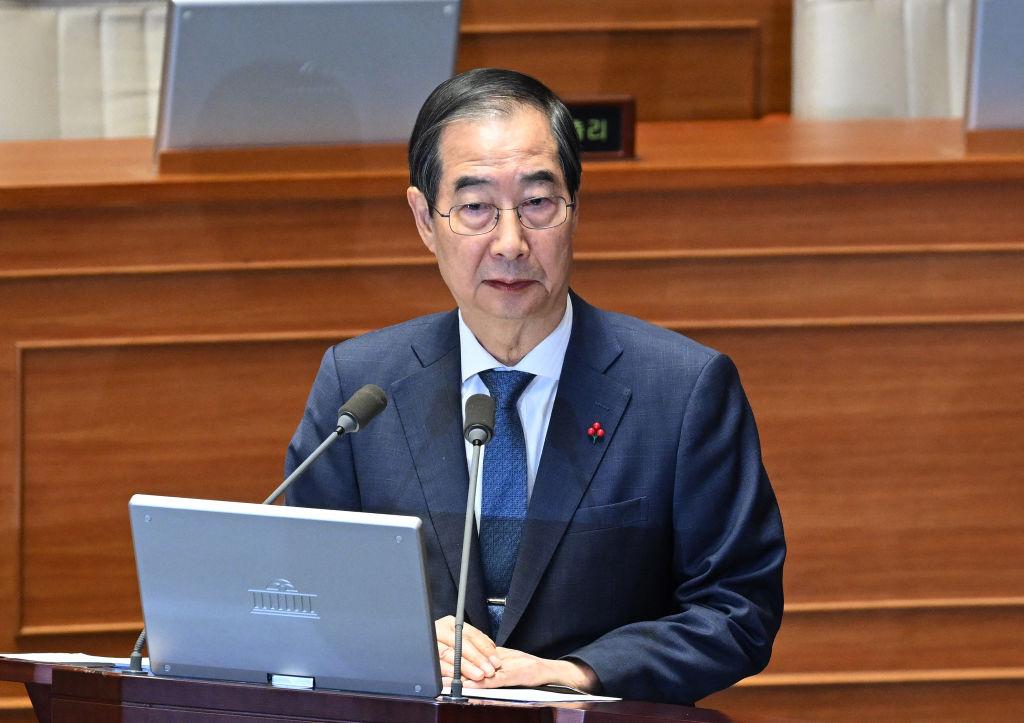
South Korea plunged deeper into political turmoil as parliament impeached acting president Han Duck-soo, marking the first time in the nation’s history that an acting leader has been removed. The move follows the impeachment of President Yoon Suk Yeol earlier this month after his controversial martial law declaration. The unfolding crisis has already rattled markets and raised concerns about the nation’s economic stability.
Impeachment Sparks Unprecedented Political Crisis
Han’s impeachment stems from his refusal to appoint three new judges to the Constitutional Court, a decision that fueled opposition anger. The court, tasked with ruling on Yoon’s impeachment, requires at least six judges to uphold such decisions. With only six judges currently seated, Han’s inaction created the possibility of a single dissenting vote saving Yoon.
Finance Minister Choi Sang-mok has assumed the role of acting president while retaining his cabinet position. He pledged to “minimize confusion in state affairs” but has not clarified whether he will appoint new judges, leaving South Korea’s political future uncertain. Analysts warn that Choi’s refusal to act could result in his own impeachment, prolonging the crisis.
Should the Constitutional Court uphold Yoon’s impeachment, South Korea could face new presidential elections within 60 days. The opposition Democratic Party (DP), led by Lee Jae-myung, is poised to capitalize on the chaos. Lee narrowly lost to Yoon in 2022 and has positioned the DP as a left-leaning alternative advocating for stronger ties with China and North Korea.
Economic Fallout Looms as Markets React
The political uncertainty has already taken a toll on South Korea’s economy. The Bank of Korea reported a sharp drop in consumer confidence, with the composite consumer sentiment index falling by 12.3 points to 88.4 in December—the largest decline since the onset of the COVID-19 pandemic. A reading below 100 signals economic contraction.
South Korea’s GDP growth remains stagnant at 0.1% for the third quarter, with projections for just 2.0% growth this year. Analysts fear the political polarization could deter foreign investment and disrupt the nation’s industrial sector, with critical December PMI and trade data due next month.
The Korean won fell 0.3%, while the KOSPI index dropped 1.0% on Monday. Both have declined approximately 4% since Yoon declared martial law on December 3. Comparisons to Thailand’s prolonged economic stagnation following political upheaval a decade ago have heightened concerns about South Korea’s economic trajectory.
Netizens Voice Concerns Over Leadership Crisis
The crisis has sparked heated discussions online. User @KoreaWatcher tweeted, “Unprecedented chaos in South Korea. Will the Constitutional Court bring stability or deepen the divide?” Another user, @InvestorFocus, warned, “Political instability is a red flag for markets. Investors should brace for more volatility.”
Others expressed frustration with the current leadership. “Han’s refusal to act worsened the situation. Choi must step up or risk further collapse,” posted @CivicEngageK. Meanwhile, @AsiaAnalyst observed, “The DP is poised to benefit from this mess, but will they deliver lasting solutions?”
Optimists offered cautious hope. “A clean election could reset South Korea’s future,” wrote @PolicyOptimist. Conversely, @EconRealist tweeted, “This crisis is a stark reminder of how politics and economics are deeply intertwined.”







