


 Super Micro Shares Slide After Taiwan Raids Over Alleged Nvidia AI Chip Smuggling Probe
  Open-Source AI Models Gain Ground as Enterprises Seek Lower-Cost Alternatives, Citi Says
  Australia Sues Amazon Over Prime Video Ads and Subscription Terms
  Samsung to Invest $90 Billion in South Korea to Expand AI Chip, Display, and Battery Production
  Baige Online Shares Soar 333% in Hong Kong IPO Debut as AI Insurance Demand Lifts Chinese Listings
  Norway Offshore Oil Workers Reach Wage Deal, Averting Strike
  EU Chip Industry Faces Growing Risks From China Export Controls and U.S. Technology Dependence: Report
  Trump Reports $1.4 Billion in Crypto Income as Digital Assets Become Top Wealth Source
  South Korea Alleges Google Abused Android App Store Dominance, Eyes Major Fine
  Baidu Shares Rally as Kunlunxin Eyes $50 Billion Hong Kong IPO
  ShareChat Eyes 2027 IPO After Reaching Operational Profitability, Report Says
  OpenAI Proposes 5% U.S. Government Stake Amid AI Policy Talks
  Meta Stock Jumps as AI Cloud Expansion Challenges AWS, Microsoft, and Google
  Texas Man Charged After Fatal Tesla Full Self-Driving Crash in Katy
  Switch Seeks $2 Billion Funding at Nearly $50 Billion Valuation Ahead of Potential IPO
  Anthropic Restores Claude Fable 5 and Mythos 5 After U.S. Lifts AI Export Controls
  The government is ‘doubling down’ on its social media ban. But bigger penalties for platforms aren’t enough


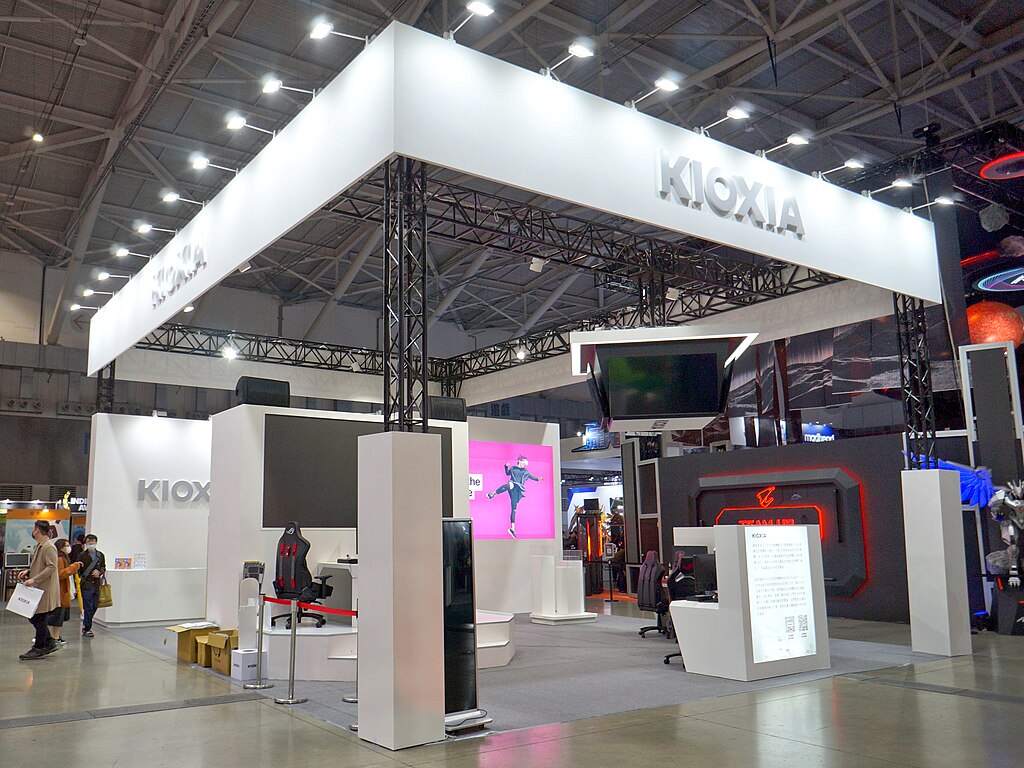
Kioxia is set to mark a major milestone on Friday with a ceremony at its manufacturing facility in northern Japan as the company prepares to begin mass production of its next-generation NAND flash memory chips. The move underscores the chipmaker’s growing role in the artificial intelligence (AI) supply chain, with demand for advanced memory accelerating worldwide.
Once viewed as a symbol of Japan’s declining semiconductor industry, Kioxia has staged a dramatic turnaround thanks to the AI investment boom. The company’s shares have climbed more than sevenfold this year, pushing its market value above $250 billion and surpassing that of Toyota Motor.
Formerly known as Toshiba Memory, Kioxia was acquired in 2018 by a Bain Capital-led consortium for approximately 2 trillion yen ($12 billion) after Toshiba faced financial difficulties. The company pioneered NAND flash memory in the 1980s but struggled during a prolonged downturn in memory prices, delaying its public listing until late 2024.
While early AI demand primarily benefited DRAM manufacturers such as South Korea’s SK Hynix, the rapid expansion of AI inference—where models generate responses to user queries—has significantly boosted demand for high-capacity NAND flash storage.
Industry consultant Satoru Oyama, who previously worked at Tokyo Electron, said memory manufacturers focused heavily on DRAM during the early AI boom, leaving NAND investment behind. As a result, Kioxia has become the primary beneficiary of the current surge in NAND demand.
The company will manufacture its 10th-generation BiCS Flash memory at its Kitakami plant in Iwate Prefecture. The technology was co-developed with California-based Sandisk and is designed to deliver higher performance while reducing power consumption.
According to IwaiCosmo Securities analyst Kazuyoshi Saito, Kioxia holds a two- to four-year technological advantage over competitors in NAND efficiency, largely due to innovations such as wafer bonding technology.
Looking ahead, Kioxia is considering a stock split and plans to list American depositary shares (ADS) on a U.S. exchange early in the fiscal year beginning in April 2027, aiming to broaden its investor base and improve access to global capital markets.
The company is not alone in seeking U.S. investors. SK Hynix is also pursuing a U.S. listing and is targeting a fundraising of up to $29.4 billion, highlighting how leading Asian semiconductor firms are tapping deeper capital markets to support expanding AI-driven growth opportunities.







