


 Pope Leo Backs Press Freedom After White House Media Ban
  Republicans Flood Safe House Races With Cash as Midterm Risks Rise
  Trump to Ease U.S. Fuel-Economy Standards
  Iran Says Diplomacy Only Path to End U.S.-Israel Conflict
  Evan Gershkovich Says FSB Set Trap for 2023 Russia Arrest
  Najib Razak Seeks Stay of 15-Year 1MDB Prison Sentence
  UK PM Burnham to Unveil Economic Vision at Labour Conference
  Iran Awaits U.S. Response on Hormuz Ceasefire Proposal
  OpenAI, Anthropic CEOs Summoned to Australia AI Inquiry
  EU Agrees €6.6 Billion Military Aid Funding for Ukraine
  Putin Says Ukraine Peace Proposals Remain on Table
  Iran Holds Firm on Hormuz Reopening Terms Despite Trump Rejection
  China Says U.S. Shares Responsibility for AI Governance
  Saudi Arabia Seeks Military Support as Houthi Attacks Escalate
  China Agrees to Buy 20 Million Tons of U.S. Coal
  Saudi Arabia, Turkey and Pakistan Plan Urgent Defence Talks Over Houthi Attacks


 Add as a preferred source on Google
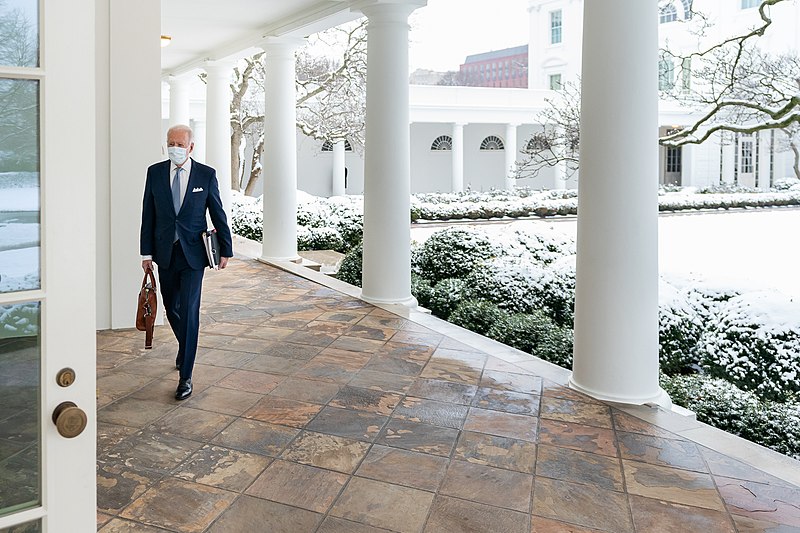
The COVID-19 pandemic has affected many Americans in the country financially as many are unemployed and in danger of losing their homes throughout this time. President Joe Biden announced that he is extending the ban on foreclosures as well as mortgage relief until June.
Biden announced on Tuesday that he would be giving a three-month-extension on the ban of home foreclosures for federally-backed homes. Along with the extension of the foreclosure ban, Biden also extended mortgage relief in an effort to stabilize the country’s housing affordability crisis in the midst of a pandemic. The moratorium on foreclosures was set to expire on March 31 and with the extension, will now be until June 30. This is also the second time Biden has extended the ban after using one on his first day in office shortly after getting sworn in as President.
The administration also announced an enrollment window to request a mortgage payment forbearance that will allow borrowers to pause or reduce mortgage payments until June 30 as well. The program was also expected to end in March. As a result, the federal government will allow borrowers to defer mortgage payments for six months more. Those eligible for the program must have been enrolled in a forbearance plan back in June 2020. There are 2.7 million homeowners enrolled in the program.
The White House released a statement assuring the public of Biden’s commitment to protecting homeownership and housing stability in the midst of a pandemic. The extended protections are partly aimed towards communities of color that have been disproportionately affected throughout this time.
During his town hall in Wisconsin, Biden said he would not get rid of $50,000 of student debt, in response to an audience member calling on him to commit to canceling at least up to the amount. However, Biden noted that he is open to some loan forgiveness and he understands the burden of having student loans, citing the loans that his children accumulated when they studied in private universities. Biden also stressed that he could not erase $50,000 of student debt on his own as it would require congressional action.
“My point is: I understand the impact of debt, and it can be debilitating,” said Biden. “I am prepared to write off the $10,000 debt but not $50 because I don’t think I have the authority to do it.”







