


 Canada Unveils Bill to Fast-Track Major Resource Projects
  Trump Meets Venezuela’s Delcy Rodriguez at UN Assembly
  Trump Administration Plans Faster FDA Reviews for Smoke-Free Nicotine Products
  Sudan Rejects US Legitimacy Remarks, Defends Sovereignty
  Vietnam, US Trade Deal Could Be Signed Soon, To Lam Says
  Marco Rubio to Meet Russia’s Lavrov in New York
  Burnham Eyes UK Leadership Role in AI Ahead of Trump Meeting
  Trump Board of Peace Unveils $2.45 Billion Gaza Recovery Plan
  Venezuela Promises Elections as Delcy Rodriguez Pledges Democratic Transition
  Gaza Faces Evacuation Crisis as War-Damaged Buildings Risk Collapse
  Trump Says ‘Freedom’ Is Coming to Cuba
  China Tightens Fentanyl Rules Ahead of Trump-Xi Summit
  South Korea, US Discuss Warship Building Cooperation
  Trump Says U.S.-Iran Peace Deal Near After UN Talks
  Ghana Says Western Support Growing for Slave Trade Reparations
  US, China Extend Trade Truce to Jan. 10 Ahead of Trump-Xi Summit
  Macron Challenges Trump’s Gaza Peace Claims at UN


 Add as a preferred source on Google
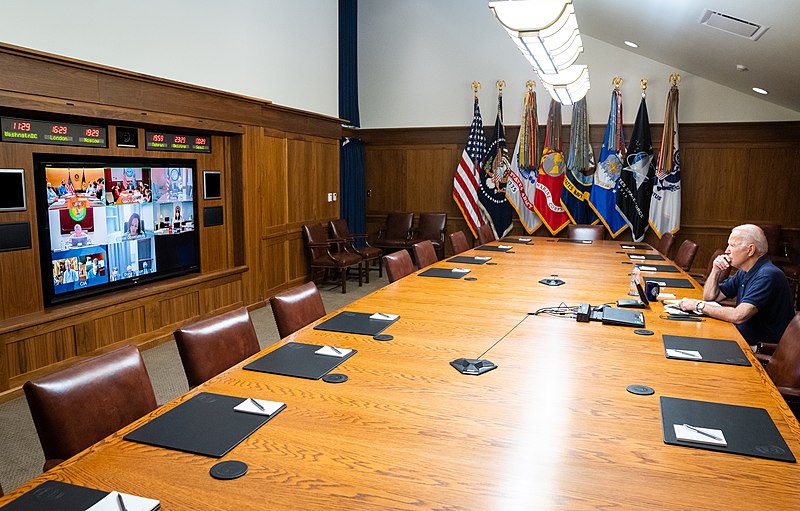
Thousands of Afghans and Americans alike have already been evacuated out of Afghanistan as the Taliban have taken over the country. US President Joe Biden recently said he still hopes to be able to meet the August 31 deadline to complete evacuations and troop withdrawal from Afghanistan.
During the weekend, Biden said he hopes that they would be able to complete evacuations and withdrawals from the war-torn nation by the August 31 deadline. This comes as the insurgent group is already blasting the US for causing the chaos in Kabul, as Afghans attempt to flee the country. The mass evacuation also comes despite the Taliban’s promise for a more moderate regime compared to their reign from 1996 to 2001.
However, the US and its allies have struggled to fly out as many Afghans from the country as possible. The European Union said that it was likely impossible to meet the August 31 deadline to complete evacuations with the number of people looking to leave. This has led to calls for an extension of the deadline, but the Islamic insurgent group has said August 31 is already a “red line” and that Washington is responsible for the chaos at Kabul airport.
“We’ll see what we can do,” said the US leader when reporters pressed him on the calls by allies to extend the deadline. “We have a long way to go and a lot could still go wrong,” added Biden, citing the threats from the insurgent group. The US leader also acknowledged the videos and photos coming from Kabul, saying that the scenes were inevitable when evacuating people from Afghanistan.
In other news, Israeli Prime Minister Naftali Bennett is set to present Biden with a plan in confronting Iran regarding its nuclear program and regional activities without having to return to the 2015 nuclear deal. Bennett will be visiting Biden at the White House this week for their first meeting. People familiar with the matter revealed that Bennett is set to argue that the 2015 nuclear deal is no longer relevant to 2021 and that Iran’s nuclear program has become too advanced for the said deal.
“The heart of the diplomatic discussion would deal with Iran,” said the person familiar with the matter. “When we began to plan the visit, a return to the agreement seemed uncertain. Since then, time has passed, the president in Iran has changed, and things seem far less certain. In our view, it may be that there is no return to the agreement.”







