


 Scott Bessent Eyed as Trump’s New AI Czar
  Trump Board of Peace Unveils $2.45 Billion Gaza Recovery Plan
  Russian Envoy Dmitriev Heads to US for Ukraine Talks
  Trump Says U.S.-Iran Peace Deal Near After UN Talks
  Macron, Trump Discuss Ukraine-Russia Energy Strike Moratorium
  Iran Vows ‘Crushing’ Response as US Talks Continue
  Trump to Press Xi on Release of US Nuclear Expert Held in China
  Zelenskiy Warns Russia Preparing Major Attack on Ukraine
  Burnham Eyes UK Leadership Role in AI Ahead of Trump Meeting
  Marco Rubio to Meet Russia’s Lavrov in New York
  Europe Warns Russia Is Escalating Hybrid Attacks Across NATO
  Sudan Rejects US Legitimacy Remarks, Defends Sovereignty
  US Invites Putin to Miami G20, Opening Door to Trump Summit
  China Tightens Fentanyl Rules Ahead of Trump-Xi Summit
  Macron Challenges Trump’s Gaza Peace Claims at UN
  Vietnam, US Trade Deal Could Be Signed Soon, To Lam Says
  Trump Meets Venezuela’s Delcy Rodriguez at UN Assembly


 Add as a preferred source on Google
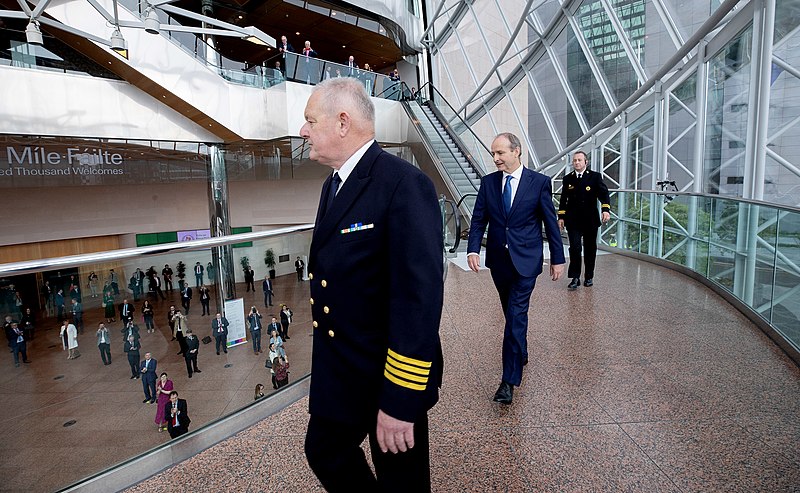
The United Kingdom’s introduction of a law that would unilaterally alter the Northern Ireland protocol has led to some criticism. Irish Prime Minister Micheal Martin voiced his criticism towards the British legislation, urging the UK to resume discussions with the bloc over its potential trade law for Northern Ireland.
Speaking to the BBC, Martin criticized the UK’s proposal to ease trade with the province and that London must resume discussions with the European Union to solve issues surrounding the arrangement.
The UK’s law regarding the province would involve scrapping checks on the rest of UK goods arriving in Northern Ireland while challenging the European Court of Justice to decide on parts of the deal agreed upon by the EU and the UK when Britain left the bloc.
“It’s not acceptable, it represents unilateralism of the worst kind,” said Martin. “We accept fully there are legitimate issues around the operation of the protocol and we believe with serious negotiations between the European Union and United Kingdom government, those issues could be resolved.”
“If this bill is enacted, I think we’re in a very serious situation,” Martin continued. “What now needs to happen is really substantive negotiations between the British government and the European Union.”
Martin noted the legislation would damage Northern Ireland’s economy by introducing a dual regulatory scheme that would increase costs to businesses. The bill has yet to be passed by parliament, which may take some time.
Martin’s comments also follow the European Union’s launching of two legal proceedings against the UK. Last week, the European Commission’s vice president Maros Sefcovic also responded to the UK’s Northern Ireland law, saying the bloc will not renegotiate over the agreement.
Sefcovic said renegotiations with the UK over the agreement would be “unrealistic” and that it would only “bring uncertainty” for people and for businesses in the province.
Tensions between the bloc and the UK have been evident for months after the UK accused the European Union of taking a heavy-handed approach to the import of goods between the UK and Northern Ireland and the customs checks needed to maintain an open border with Ireland, which is a member of the EU.







