


 Trump Open to Chinese Automakers Building Cars in US
  US Immigration Arrests Surge as Deportations Lag Behind
  What is Zionism? The different meanings of a contested term
  Lula, Flavio Bolsonaro Deadlocked in Brazil Election Polls
  BRICS Calls for Restraint as Middle East War Escalates
  Russian Strikes Across Ukraine Kill Nine, Injure Dozens
  Trump Downplays Report Iran Obtained Chinese Satellite Images Before Jordan Attack
  Trump Rejects Calls for Tougher AI Regulation
  Houthis Escalate Saudi Attacks as Red Sea Oil Risks Grow
  Sweden Election: Centre-Left Holds Narrow Lead
  Houthi Red Sea Gains Strengthen Iran’s Leverage Over Gulf States
  Trump Vows to Keep U.S. Ahead of China in AI Race
  Kim Jong Un Pledges Deeper Russia Cooperation
  Philippines Holds Historic Bangsamoro Election Amid Tight Security
  Trump Touts $5,000 Checks if Republicans Win Congress
  China’s Global Times Slams Anthropic CEO’s AI Slowdown Plan as ‘Cold War’ Strategy


 Add as a preferred source on Google
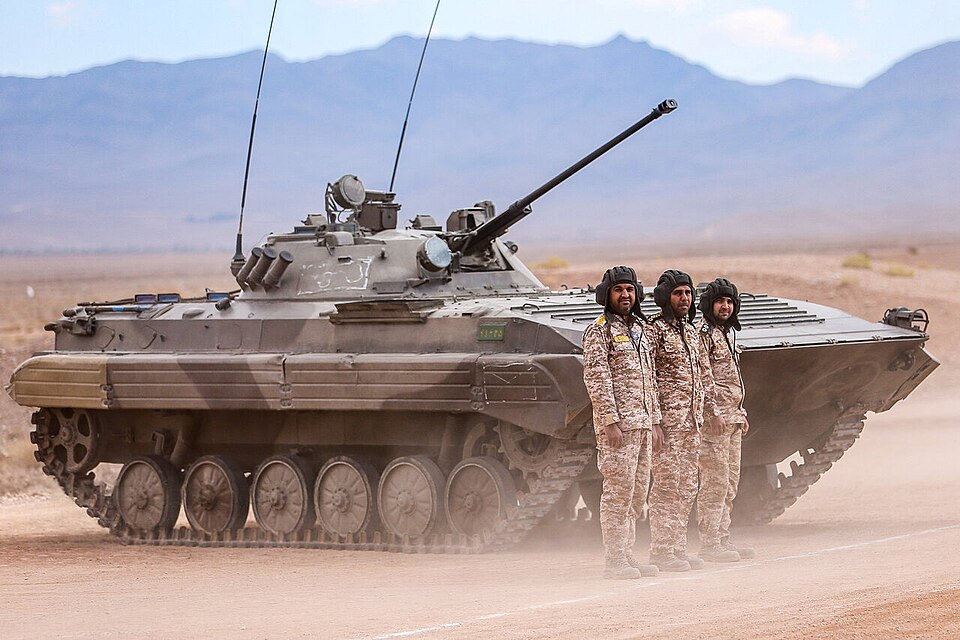
Iran widened its military campaign against U.S. allies in the Gulf on Saturday after the United States carried out a seventh consecutive night of strikes on Iranian military targets, marking another escalation in the conflict following the collapse of last week's ceasefire.
Kuwait faced sustained missile and drone attacks, forcing the suspension of operations at Kuwait International Airport. A desalination plant was also damaged, highlighting growing concerns over attacks on critical civilian infrastructure.
Iran’s Islamic Revolutionary Guard Corps (IRGC) said it struck Camp Arifjan, a U.S. military support facility in Kuwait, and destroyed a radar installation at Ali Al Salem Air Base. Iranian state media also reported strikes on Sheikh Isa Air Base in Bahrain, where U.S. combat aircraft were stationed, along with an intelligence center. The IRGC further claimed it destroyed multiple U.S. aircraft during attacks on the Al Azraq base in Jordan, although Reuters could not independently verify those claims.
The IRGC warned that additional attacks on U.S. allies would continue, accusing Washington of escalating the conflict and vowing retaliation.
The fighting has also disrupted global energy markets. Oil prices climbed more than 4% on Friday, reaching their highest level in over a month as concerns grew over potential supply disruptions through the Strait of Hormuz, a critical shipping route that handles roughly one-fifth of the world's oil trade. The U.S. has said it is enforcing a naval blockade, while Iran claims it is targeting vessels violating its navigation rules.
Civilian infrastructure has increasingly become a target on both sides. Iranian media reported that U.S. strikes damaged power facilities, bridges, and desalination pumps in southern Iran, leaving around 10,000 residents across 20 villages without water. Kuwait also confirmed another attack on a power generation and water desalination facility, the second such incident in two days.
The U.S. Central Command said its latest operations targeted Iranian surveillance systems, underground weapons storage, logistics infrastructure, and maritime capabilities. Meanwhile, U.N. Secretary-General Antonio Guterres expressed concern over the growing attacks on civilian infrastructure across Iran and the wider Gulf region, warning that continued escalation could further destabilize the Middle East and threaten global energy supplies.







