


 Russian Envoy Dmitriev Heads to US for Ukraine Talks
  Europe Warns Russia Is Escalating Hybrid Attacks Across NATO
  Sudan Rejects US Legitimacy Remarks, Defends Sovereignty
  Gaza Faces Evacuation Crisis as War-Damaged Buildings Risk Collapse
  Scott Bessent Eyed as Trump’s New AI Czar
  China Tightens Fentanyl Rules Ahead of Trump-Xi Summit
  US, China Extend Trade Truce to Jan. 10 Ahead of Trump-Xi Summit
  Lula and Flavio Bolsonaro Tied in Brazil Runoff Poll
  Zelenskiy Warns Russia Preparing Major Attack on Ukraine
  US Invites Putin to Miami G20, Opening Door to Trump Summit
  Macron, Trump Discuss Ukraine-Russia Energy Strike Moratorium
  Trump to Press Xi on Release of US Nuclear Expert Held in China
  Venezuela Promises Elections as Delcy Rodriguez Pledges Democratic Transition
  Burnham Eyes UK Leadership Role in AI Ahead of Trump Meeting
  Russian Strikes Kill Eight Across Ukraine as Energy Sites Hit
  Macron Challenges Trump’s Gaza Peace Claims at UN
  Marco Rubio to Meet Russia’s Lavrov in New York


 Add as a preferred source on Google
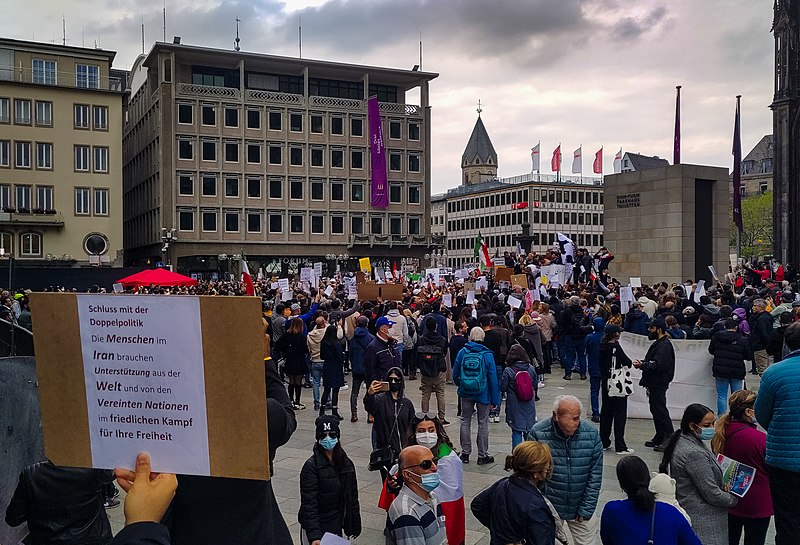
Protests have persisted in Iran over the death of Kurdish Iranian woman Mahsa Amini despite attempts by authorities to crack down on the demonstrations. The Iranian judiciary has indicted 1,000 people for participating in the unrest as it plans public trials.
Iran’s semi-official news outlet reported Monday that the country’s judiciary is set to hold public trials of 1,000 people that were indicted for participating in the unrest as part of Tehran’s efforts to further crackdown on the ongoing protests.
The judiciary said it had yet to sentence a man it said was arrested during what it calls “riots” after getting accused of hitting and killing a police officer with his car while injuring five other officers after a woman who was identified as his mother claimed that her son was sentenced to death at a hearing.
The Tasnim news outlet said that the trials of 1,000 people “who have carried out acts of sabotage in recent events, including assaulting or martyring security guards and setting fire to public property” would take place in a Revolutionary Court, according to the chief justice. The trials are scheduled for this week and will be made public.
It remains to be seen whether the 1,000 indictments that were issued on Monday included the 315 demonstrators the official IRNA news outlet reported Saturday that have been arrested in Tehran, five of which were accused of committing capital offenses.
The ongoing protests mark the biggest show of opposition to Iran’s clerical leaders since the 1979 Revolution. Women and students played a major part in the protests, waving and burning their headscarves. Tehran has blamed the United States and Israel for the unrest, accusing them of trying to destabilize the Islamic Republic.
Despite warnings by law enforcement officials, Iranian university students persisted with sit-down strikes Tuesday in support of the protests that have been going on for seven weeks. The activist HRANA news outlet said the sit-down strikes are taking place in several cities across the country, including the capital, Tehran and Isfahan.
“People risk their lives to go to the streets but the hope that they are able to defeat the regime is much bigger than their fears,” said senior Iran analyst Omar Memarian of the Democracy for the Arab World Now.







