


 Judge Rejects Minnesota Bid to Force ICE Agent Extradition
  Gaza Faces Evacuation Crisis as War-Damaged Buildings Risk Collapse
  EU Defence Build-Up Too Slow for 2030 Russia Readiness Goal
  Kremlin Says No Decision Yet on Putin-Trump December Summit
  Europe Warns Russia Is Escalating Hybrid Attacks Across NATO
  US, China Extend Trade Truce to Jan. 10 Ahead of Trump-Xi Summit
  Venezuela Promises Elections as Delcy Rodriguez Pledges Democratic Transition
  SEC Seeks ISS Client Voting Records in Proxy Adviser Probe
  Trump Administration Prepares Sanctions Against Entire ICC
  Trump, Xi Focus on Trade and AI at White House Summit
  Netanyahu’s Brief US Trip Highlights Strains With Trump
  Abbas Reaffirms November 28 Palestinian Elections
  Russian Envoy Dmitriev Heads to US for Ukraine Talks
  Paramount-Warner Bros $110 Billion Deal Draws Antitrust Backlash
  Brazil Court Suspends Sigma Lithium Mine Operations
  France Defends Netanyahu Airspace Clearance Despite ICC Warrant
  CNN, MS NOW and Politico Sue Trump Over White House Media Ban


 Add as a preferred source on Google
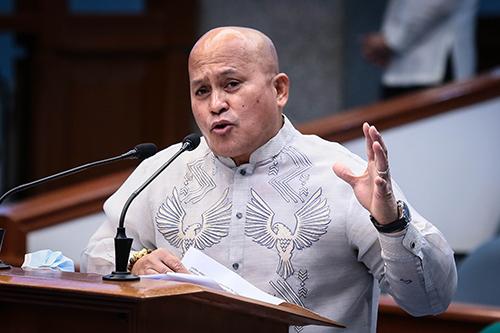
Families of victims killed during the Philippines’ controversial war on drugs renewed calls for justice after dramatic scenes unfolded inside the Philippine Senate involving Senator Ronald “Bato” dela Rosa. The former police chief, who played a central role in ex-President Rodrigo Duterte’s anti-drug campaign, reportedly took refuge inside the Senate to avoid arrest before later leaving the premises.
The tension came after the International Criminal Court (ICC) unsealed an arrest warrant against dela Rosa for alleged crimes against humanity tied to thousands of deaths linked to Duterte’s anti-drug crackdown launched in 2016. Victims’ families said the incident exposed the unequal justice system in the Philippines, where influential politicians appear protected while ordinary citizens suffer.
Llore Pasco, whose two sons were killed during police anti-drug operations in 2017, said seeing dela Rosa receive political protection highlighted the stark contrast between how authorities treated suspected drug users and powerful officials. According to Pasco, poor families were denied due process while many victims were killed without investigation.
Human rights groups estimate that the number of deaths linked to Duterte’s drug war far exceeds the government’s official figure of over 6,000 suspects killed in police operations. Despite widespread criticism from international organizations and local activists, only a limited number of cases have led to convictions in Philippine courts.
The Senate unrest escalated after dela Rosa urged supporters online to gather as reports surfaced that law enforcement officers were preparing to arrest him. Gunshots were later heard inside the Senate complex, causing panic among people in the area.
For relatives of drug war victims, the ICC investigation has become a rare source of hope. Many believe international intervention is the only path toward accountability for killings connected to Duterte’s war on drugs. Victims’ families continue to demand justice, insisting that addiction should be treated as a public health issue rather than answered with violence.







