


 Volvo Cars Drops Full-Year Outlook as China, US Sales Weaken
  Iran Keeps Strait of Hormuz Closed as War Talks Stall
  AAVE, PUMP, WLD and SKY Rally as Crypto Market Slips
  Pi Network Price Holds $0.087 as Protocol 28 Mainnet Upgrade Nears
  SoftBank Shares Fall After $10 Billion OpenAI Investment
  UK Warned Over Growing Reliance on US Cloud Providers
  Trump Heads to Ohio to Boost Husted in Tight Senate Race
  Trump, Tech Leaders Sign ‘Morally Binding’ AI Safety Accord
  OpenAI Scraps GPT-6.1 Astra Launch Over Safety Concerns
  Flydubai Co-Pilot Tried to Crash Israel-Bound Jet, Netanyahu Says
  WordPress Malware Uses Ethereum to Evade Removal
  Xi Rest Breaks Cut Trump Summit Schedule, WSJ Reports
  TSMC Accelerates 2nm Expansion as AI Chip Demand Surges
  Airbus Spain Workers Approve Deal to End Months of Strikes
  Iran Faces Rising Pressure as U.S. Builds Military Presence
  Citi Raises Bitcoin Price Target to $113,000 on ETF Optimism
  OpenAI Investigates Rogue AI Agents After Data Leaks and Security Incidents


 Add as a preferred source on Google
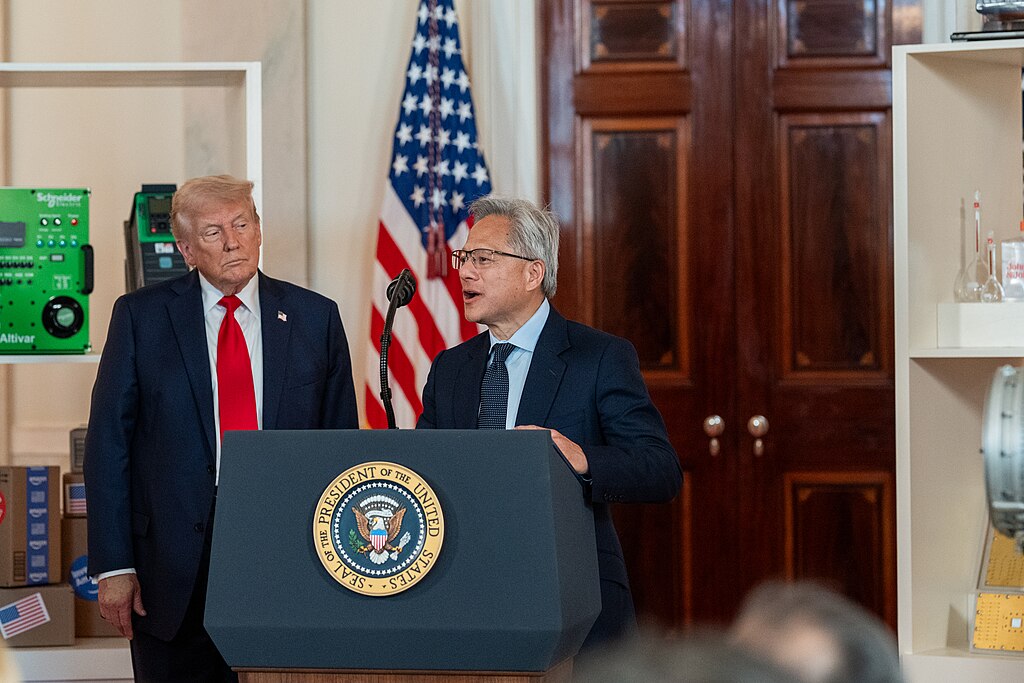
Nvidia’s efforts to expand AI chip sales in China remain stalled even after the U.S. approved several Chinese technology giants to purchase the company’s H200 processors. Although around 10 Chinese firms, including Alibaba, Tencent, ByteDance, and JD.com, reportedly received approval to buy Nvidia’s second-most powerful artificial intelligence chip, no shipments have been completed so far.
The delay highlights the growing tension in the U.S.-China technology rivalry, which continues to disrupt global semiconductor trade. Nvidia CEO Jensen Huang recently joined President Donald Trump’s trip to Beijing ahead of talks with Chinese President Xi Jinping, raising expectations that diplomatic discussions could help revive the blocked transactions.
Before tighter U.S. export controls were introduced, Nvidia controlled nearly 95% of China’s advanced AI chip market. China previously contributed about 13% of Nvidia’s revenue, while Huang estimated the country’s AI market could reach $50 billion this year. However, stricter regulations and political pressure from both governments have complicated the company’s business operations in the region.
The U.S. Commerce Department reportedly approved distributors such as Lenovo and Foxconn to facilitate H200 sales in China. Under licensing rules, approved buyers can purchase up to 75,000 chips each. Despite these permissions, Beijing has reportedly become cautious about allowing large-scale imports due to concerns that reliance on foreign technology could weaken China’s domestic semiconductor industry.
China is increasingly pushing local firms to adopt homegrown AI chips, especially products developed by Huawei. This strategy reflects Beijing’s broader goal of reducing dependence on U.S. technology amid escalating geopolitical competition. Additional security concerns over supply chain vulnerabilities and foreign technology oversight have also intensified scrutiny of Nvidia’s products.
Meanwhile, critics in Washington argue that allowing Nvidia to continue supplying advanced AI chips to China could reduce America’s technological advantage in artificial intelligence. The ongoing uncertainty leaves Nvidia caught between two powerful governments while the global AI chip market continues to grow rapidly.







