


 Hyundai CEO Warns Chinese Automakers Could Disrupt US Market
  AI is supercharging money scams – here’s what you can do to protect yourself
  Nvidia CEO Jensen Huang Expected at Trump-Xi State Dinner
  US Federal Register Drops Alibaba Qwen AI Search Tool
  Japan, U.S. Discuss $19 Billion GlobalFoundries Chip Plant
  DOJ Will Investigate AI-Related Crimes, Attorney General Blanche Says
  MediaTek Unveils 2nm Dimensity 9600 Pro AI Chip
  Trump Plans Federal AI Force and AI Czar
  Big AI wants to slow down AI research. Is it a safety pause or a strategic retreat?
  US Northeast Airports Resume Operations After Telecom Outage Disrupts Thousands of Flights
  SK Hynix, Intel Discuss U.S. Memory Chip Production Deal
  SoftBank Launches $11 Billion Bond Sale to Fund OpenAI Investment
  Meta CEO Zuckerberg Backs Independent AI Safety Reviews Over Development Slowdown
  Rosenblatt Starts Nokia at Buy on AI Networking Growth
  Physicists zoom into the birth of cosmic rainstorms with new CERN study
  OpenAI Urges US-Led Global Standards for Frontier AI
  Who should own the knowledge that underpins AI technology?


 Add as a preferred source on Google
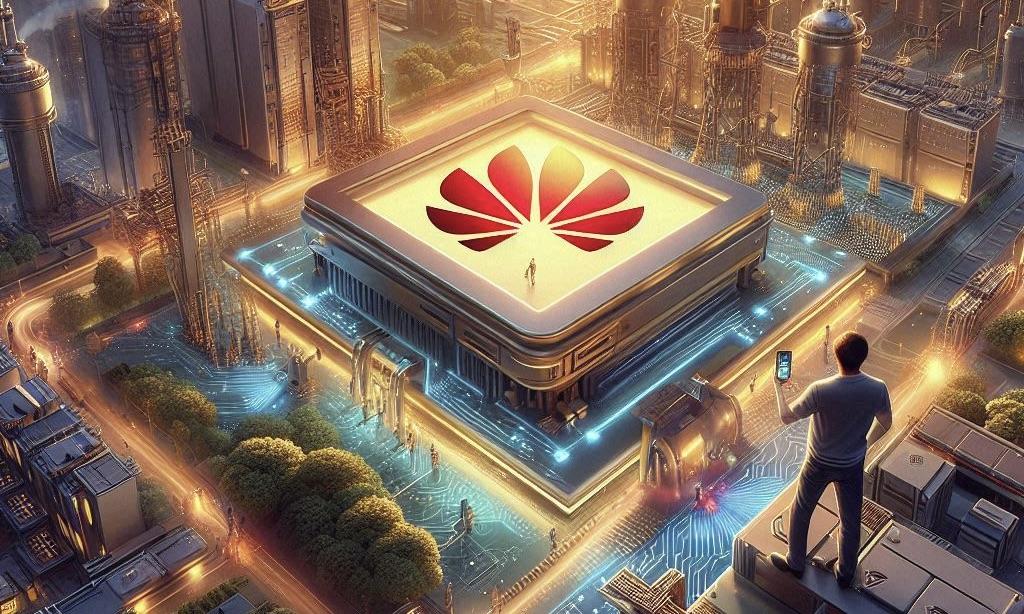
Huawei has invested $1.66 billion in a new R&D facility near Shanghai to develop advanced chipmaking tools. This effort aims to achieve self-sufficiency amid U.S. trade restrictions, highlighting Huawei's innovation and determination.
Huawei and SMIC Advance 5nm Chip Development, Investing in R&D to Overcome EUV Restrictions
SMIC, and Huawei have jointly made significant strides in developing the 5nm process for future chipsets. However, as a Chinese company, Huawei faces a technological barrier if it relies solely on existing DUV machinery. To overcome this, Huawei is investing substantially in an R&D facility to produce advanced machinery comparable to leading companies, as it cannot obtain cutting-edge EUV chipmaking tools from companies such as ASML.
Huawei's unwavering pursuit of self-sufficiency stands as a testament to its resilience in the face of the U.S. trade embargo, which has significantly limited the company's access to advanced chipmaking tools.
According to Wccftech, this journey, though challenging, is being met with a spirit of innovation and determination. According to Nikkei, a new R&D center is being constructed near Shanghai, with the primary objective of creating competitive chipmaking tools with the machinery manufactured by ASML, Canon, and Nikon. Huawei's foundry partners, SMIC and Hua Hong, are also facing restrictions in acquiring tools that enable them to manufacture circuits using the 14nm FinFET and 16nm FinFET processes.
Huawei Invests $1.66 Billion in R&D Facility, Emphasizes Local Talent to Boost Self-Sufficiency
Despite the challenges, Huawei is making significant strides in its self-sufficiency journey. The company has invested a substantial ¥12 billion, or $1.66 billion, to date in the R&D facility, a testament to its commitment. This facility, upon completion, will be a colossal structure, covering an area equivalent to 224 football fields and housing over 35,000 employees. Huawei's attractive compensation packages are designed to attract the most talented semiconductor professionals, underscoring the company's unwavering commitment to its self-sufficiency journey.
Huawei's commitment to its local community is evident in its efforts to recruit local talent. As only some Chinese companies can recruit U.S. citizens who are green card holders, Huawei is compelled to focus on local talent. This commitment to the local community is a crucial part of Huawei's strategy, and it is this strategy that will help preserve its winning trend on its home ground, at least in the interim.
Photo: Microsoft Bing







