


 Volkswagen Approves 50,000 More Job Cuts in Major Restructuring
  GSM Eyes US, Europe Expansion Ahead of 2028 Hong Kong IPO
  Lenovo Shares Fall After Dropbox Security Breach Exposes ID Vulnerability
  US Tech Giants’ AI Bond Boom Raises Euro Zone Borrowing Risks
  Lynas Rare Earths Shares Rise After Takeover Talks Revealed
  Tesla Cybercab Rides Launch in Austin as NHTSA Reviews Rollout
  Shein Shares Drop 5% After Weak Hong Kong IPO Debut
  ByteDance Secures $29.6 Billion Loan to Boost AI Investment
  CATL Shares Fall as Hungary Plant Faces Safety Halt
  Microsoft to Reveal Azure Revenue in Major Reporting Shake-Up
  Tesla Cybercab Launch Puts Robotaxi Ambitions in Focus
  Fast Retailing Shares Drop as Uniqlo Japan August Sales Fall
  Anthropic Nears $15 Billion Credit Deal Ahead of IPO
  OpenAI Launches GPT-6 Astra With Advanced AI Agent Capabilities
  Honda Targets $9.4 Billion in Cost Cuts as China EV Competition Intensifies
  Qantas Near-Miss Raises Sydney Air Traffic Controller Fatigue Concerns


 Add as a preferred source on Google
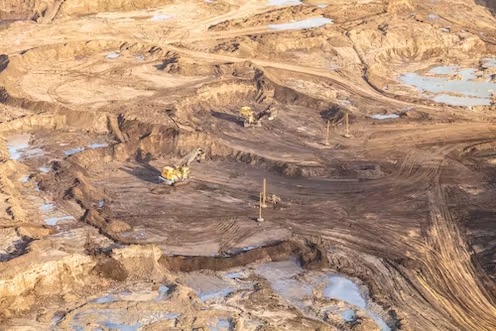

The political response to the climate crisis remains largely inadequate in the face of heat waves, hurricanes, floods and forest fires that are accelerating and intensifying.
The political inertia can be explained, among other things, by the stranglehold of fossil fuel interests on political decision-makers, and the strong influence polluting industries have on the spheres of power in North America.
These industries use two types of discourse to secure their interests. First, they discredit and marginalize ecological issues. Just think, for example, of the actions taken by oil and gas companies against climate policies, such as in Seattle, Wash., where they hired lobbyists to torpedo pro-environmental policies adopted by the city, and simultaneously paid Instagram influencers to promote gas.
Secondly, industry acts to convince people that their polluting activities are compatible with managing the climate and environmental crises. These rebranding strategies are part of a wider objective of “greenwashing” extractive activities. Over the past three decades, the five biggest U.S. oil companies have spent more than US$3 billion on marketing and donations to boost their communications with the general public and political decision-makers.
Making citizens responsible for curbing the climate crisis
One particularly significant rhetorical strategy the oil industry has adopted is to place responsibility for climate change mitigation and adaptation on the individual.
By putting the burden of reducing pollution and greenhouse gas emissions — and consequently the fight against climate change — on individuals, oil companies and their political allies are taking the onus off themselves to make changes to their fossil fuel production, consumption and exploitation practices.
As a doctoral student in political science and a specialist in climate change adaptation, I have examined the interests, ideas and institutions that shape and restrict our adaptation practices. For the past three years, I have been analyzing environmental discourses in Louisiana to explain why climate policies are moving so slowly.
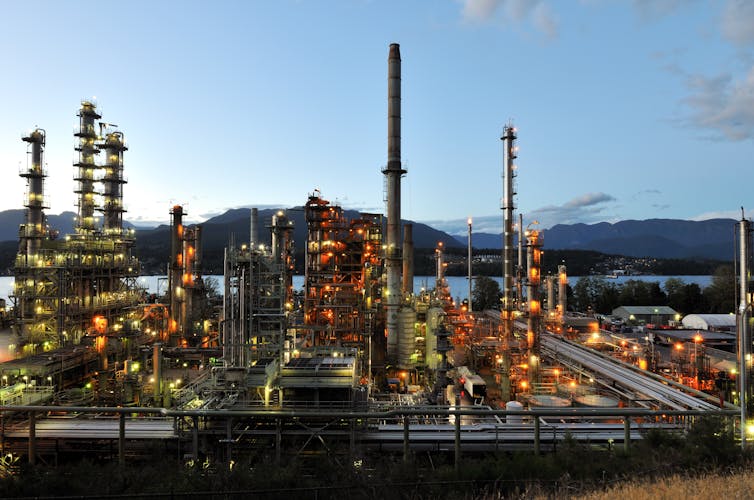
An oil refinery in Burnaby, B.C. (Shutterstock)
The carbon footprint as a symbol of industry marketing
The most obvious expression of this strategy of placing responsibility on the individual is the creation of the carbon footprint. Born of a communications strategy by the giant British Petroleum in the early 2000s called “Beyond Petroleum,” the carbon footprint measures the impact of individual consumption on greenhouse gas emissions.
Through numerous advertisements promoting the importance of individual action in the climate crisis, BP has succeeded in shifting responsibility for the climate problem onto the consumer. This, in turn, removes the industry’s responsibility for finding solutions and reducing carbon emissions.
BP’s “Beyond Petroleum” campaign was also designed to encourage individuals to adopt a more sustainable lifestyle while maintaining their consumption levels. This strategy contributes to what researchers Karl Smerecnik and Valerie Renegar of San Diego State University and Southwestern University call capitalistic agency.
By endorsing the environmentalist image and removing themselves as the source of the problem, oil giants limit people’s ability to think about other forms of environmental action beyond consumption, and thus, economic growth. It confines the individual and his or her responsibility towards climate change within the logic of the market, reducing the possibilities for systemic transformation.

A gas station of the multinational British Petroleum (BP), in Cordoba, Greece. (Shutterstock)
ExxonMobil and Total also engage in the same strategies. They emphasize greenhouse gas emissions as a problem of demand, not supply, creating an imaginary concept around the individual as a consumer and the sole stakeholder responsible for mitigating climate change.
This communication strategy legitimizes the continued production of fossil fuels and serves to protect the industry from restrictive environmental regulations by pointing the finger at growing demand.
Louisiana’s “green” and community-based oil industry
My doctoral research on the political discourses and practices of adaptation in Louisiana shows that fossil fuel industries rely on this rhetorical and marketing logic. “Greenwashing” enables them to turn their role on its head and present themselves as genuine environmental saviours by investing in coastal restoration and promoting an eco-responsible, community-based industry.
Lobbyists for major oil companies like ExxonMobil and advocacy groups like the Louisiana Mid-Continent Oil & Gas Association, as well as their political partners in the Louisiana Senate and House of Representatives, insist on the “green” nature of fossil fuels.
This rhetoric conveys the idea that preserving extractive activities is a benefit for the United States and for the fight against climate change. According to this line of reasoning, American oil and gas have a better carbon footprint than oil and gas produced internationally. They, therefore, help reduce global emissions in the face of growing consumer demand.
The “green” fossil fuel narrative is also gaining momentum in the legislative spheres of other states, ensuring the stranglehold of these industries on local economies.
Referring to the ecological activities of oil companies in Louisiana as a true “Cajun environmental movement,” lobbyists solicit local identities and citizen support in an effort to preserve their operating activities. This other form of individualization targets climate policies, particularly those of the Biden administration, as a direct attack on the interests and well-being of local populations.
A veritable “oil culture” has thus emerged through community investment (for example, Shell’s long-standing funding of the Jazz and Heritage Festival in New Orleans, or of local hurricane recovery operations). It also highlights the entanglement of Cajun identities with the historical development of the local oil industry.

Hip-hop singer Big Freedia performs at the New Orleans Jazz and Heritage Festival 2023, April 28, 2023. Shell has been funding the festival for years. (Shutterstock)
Using individual responsibility to reinforce political inertia
In Louisiana in particular, individualization can be seen in the popular support for extractive activities and the rejection of restrictive regulations or environmental movements. Positioned as true environmental and community protectors, oil and gas industries maintain their influence in legislative spheres through political lobbying and the support of public opinion. In this way, they manage to stave off any reconsideration of their operating practices.
Large-scale individualization, whether through BP’s campaigns or French President Emmanuel Macron’s appeal to schoolchildren to plant trees, reverses responsibility for the fight against climate change. It encourages the political inertia that continues to protect the interests of polluting industries.







