


 Ecuador Backs U.S. Sinking of Vessels in Pacific Anti-Drug Operation
  Trump Threatens Bombardier U.S. Sales Ban
  Merz Rejects AfD Alliance After Saxony-Anhalt Surge
  Israel Strikes Southern Lebanon After Hezbollah Drone Attack
  Bolivia Military Barracks Explosion Kills Nine
  Russia Seeks to Claw Back Soldier Bonuses After Crimes
  Australia Plans New Rules Giving Users Control Over Social Media Feeds
  Trump’s Arlington Arch Project Faces New Court Restrictions
  Cuba Says No US Talks as Blockade Costs Hit $8.1 Billion
  Sara Duterte Posts Bail Over Grave Threats Case
  Jefferies Names 6 Top India Stock Picks Across Key Sectors


 Add as a preferred source on Google
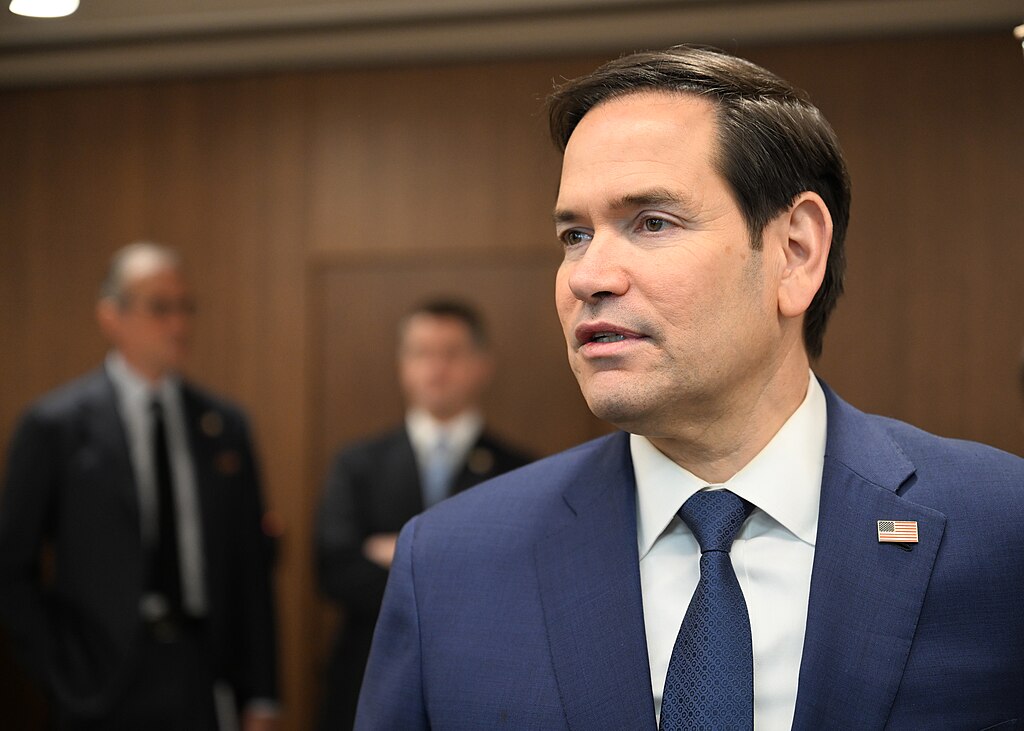

At the Munich security conference, US secretary of state Marco Rubio spoke more warmly about the transatlantic relationship than US vice-president J.D. Vance at the same venue last year. However, faced with the presidency of the erratic Donald Trump, the need for Europe to do more to protect its security remains urgent.
In a later speech in Munich Kaja Kallas, vice-president of the European Commission and the EU’s high representative for foreign affairs and security policy, spoke of the “need to reclaim European agency”.
Meanwhile, UK prime minister Keir Starmer announced he wants closer relations with Europe, a decade after Brexit, stating: “there is no British security without Europe, and no European security without Britain. That is the lesson of history, and is today’s reality as well.”
People often use the word “Europe” when they are referring to the European Union. Doing so overlooks non-EU countries, like the UK, that are also part of Europe and share an equal stake in the continent’s security.
Whereas the EU is a political body, Europe is an idea. It might be the name of a continent, but the word Europe rarely refers only to geography. When Giorgia Meloni, the Italian prime minister, stated that Europe has “lost itself”, and when Ursula von der Leyen, the president of the European Commission, spoke of the “European way of life”, they were referring to the people of Europe and the sense that they have customs and values in common that distinguish them from the rest of the world. French president Emmanuel Macron was doing the same when he used the phrase “European civilisation”.
What are these values that supposedly unite Europeans? In some quarters, the emphasis is on secularism. The 2007 Lisbon Treaty declared that the EU “is founded on the values of respect for human dignity, freedom, democracy, equality, the rule of law and respect for human rights”. However, the lack of mention of the continent’s Christian heritage was contested. Viktor Orbán, the prime minister of Hungary, is one of the most vocal advocates of the idea that European culture is Christian.
These different ideas about what Europe is and what constitutes European culture have long histories. When the Reformation of the 16th century divided Catholics and Protestants, shared hostility towards the Muslim Ottoman Empire, which controlled much of the Balkans and was continuing to expand, provided a sense of overarching unity.
The more secular understanding of Europe developed in the 17th and 18th centuries. The thirty years’ war (1618-48) ended with peace negotiations that did not involve the Pope, as had previously been the norm. Increasingly, Europe’s political culture, not just its religion, was regarded as its most distinctive feature. In the words of French philosopher Voltaire, Europe was “a kind of great republic” sharing “the same principle of public law and politics, unknown in other parts of the world”.
Even today’s tensions between national identities and Europeanism are nothing new. The 19th century was a period of national awakening, with the formation of a unified Italian state in 1861 and the unification of the state of Germany in 1871. At the same time, philosopher Friedrich Nietzsche argued that “Europeans are becoming more similar to each other” and French author Victor Hugo predicted a “united states of Europe”.
With the swift Nazi advances in western and eastern Europe in the early years of the second world war, the German press claimed in November 1941 that “the United States of Europe has at last become a reality”. After Nazi Germany’s defeat in 1945, this notion of the continent united under the domination of one nation was superseded by a commitment to cooperation. This led in 1951 to the formation of the European Coal and Steel Community and in 1957 to the European Economic Community, which eventually morphed into the European Union with its motto of “united in diversity”.
National interests and international alliances
Today it is people from non-EU countries who are often the most vigorous defenders of so-called “European values”. Since October 2024 Georgians have been protesting the authoritarianism of their government, carrying the EU flag alongside the national one and placards that read “we are Europe”. And while European leaders discuss how to respond to the threat posed by the Russian Federation, Ukrainians are fighting for their lives and strengthening European security by doing so.
Russia’s first attack on Ukraine – in Crimea in 2014 – came in the aftermath of former president Viktor Yanukovych’s downfall following protests triggered by his rejection of closer ties with the EU.
Through their actions, Ukrainians and Georgians emphasise national autonomy as part of a wider values-oriented European identity, rather than pitting nationhood against Europeanism.
If Europe is to face up to challenges and defend itself without the guarantee of US support, EU and non-EU countries must find ways to work together. For this we need a shared vision about what unites disparate nationalities and underpins European cooperation. Historically, ideas about what Europe is and what Europe stands for have been shaped in western and central Europe. It is time to look to lessons from the eastern borderlands where, as the examples of Ukrainian and Georgian resistance show, values of freedom and democracy are being lived in practice.

Niall Oddy does not work for, consult, own shares in or receive funding from any company or organisation that would benefit from this article, and has disclosed no relevant affiliations beyond their academic appointment.








