


 Fertile land for growing vegetables is at risk — but a scientific discovery could turn the tide
  Google Pushes Gemini AI Overhaul as Sergey Brin Targets Model Supremacy
  Australia’s Corporate Leaders Face Parliament Over KPMG Client Data Scandal
  ASX Faces Legal Action Over Failed Blockchain CHESS Project
  Lake beds are rich environmental records — studying them reveals much about a place’s history
  How is Antarctica melting, exactly? Crucial details are beginning to come into focus
  SpaceX Shares Surge as Wall Street Backs AI Growth Potential
  Aviva First-Half Operating Profit Jumps 24% as Direct Line Deal Boosts Growth
  CBA Posts Record A$10.98B Profit Despite Cautious Outlook
  European Stocks Rise as U.S. Inflation Data Eases Fed Rate Hike Fears
  European Stocks Steady as U.S.-Iran War, Euro Zone Data Keep Investors Cautious
  Burkina Faso and Mali’s fabulous flora: new plant life record released
  Ford to Move Some Lincoln Production From China to U.S. in 2030
  Samsung, SK Hynix Shares Surge on Report of Potential Temasek Investment


 Add as a preferred source on Google
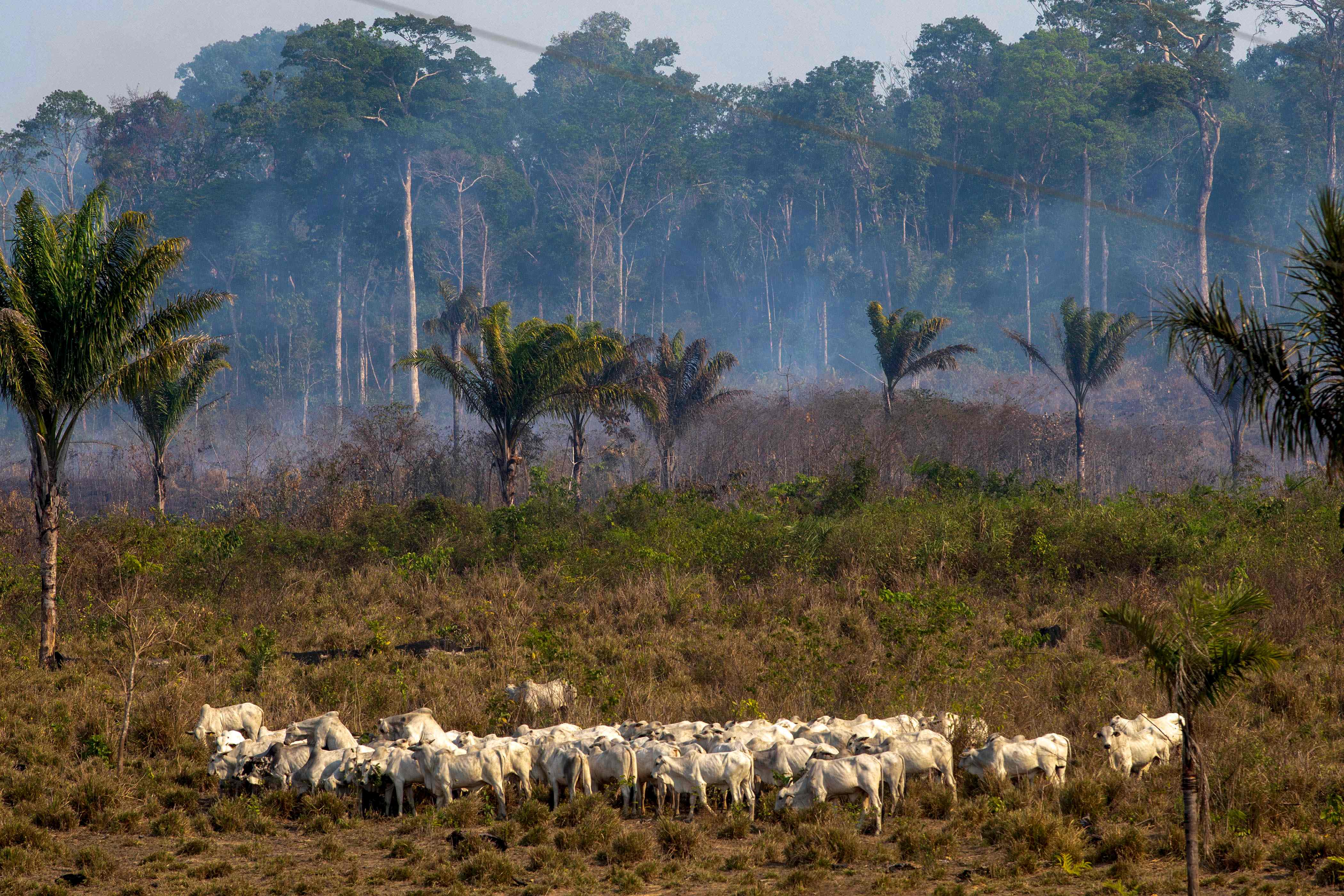
A new report from sustainability organization Slow Factory Foundation and Stand.earth found that cattle farmers who produce leather for fashion brands such Nike, Adidas, H&M, Zara, and Coach are intensifying the deforestation of the Amazon rainforest.
The organization tracked down the leather exports and customs data and identified two main industries buying it: the auto industry for car seats and the fashion industry for shoes, handbags, and accessories.
The group also identified dozens of fashion brands that source hides from Amazon.
Greg Higgs, who led the study as director of research at Stand.earth, noted that cattle farming was a big part of the problem because ranchers clear the forests to create land for cows to graze.
While cutting down trees for cattle farming is illegal, the practice is unregulated.
Higgs says small-scale farmers, many living below the poverty line, shouldn't be blamed.
Rather, the fault belongs to the companies who are buying their hides.
According to the United Nations trade data, about 20 percent of leather is derived from the Brazilian Amazon.
The Amazon rainforest is crucial in fighting global warming because its trees absorb millions of tons of carbon dioxide annually.
Thus, by sourcing leather from the Amazon rainforest, fashion brands contribute to the problem.
The study's authors suggested that the fashion labels could change this by choosing more sustainable leather alternatives.
Adidas, Nike, and Coach all said that they are against Amazon deforestation and are part of the Leather Working Group, a nonprofit that certifies that leather is sustainably sourced.
However, the LWG only rates tanneries on their ability to trace leather back to slaughterhouses, not farms.
Meanwhile, H&M claims it has banned leather from Brazil since 2019 but admitted that it could be hard to trace the leather in its supply chain.







