


 Nintendo Shares Slide After Earnings Miss Raises Switch 2 Margin Concerns
  Baidu Approves $5 Billion Share Buyback and Plans First-Ever Dividend in 2026
  Amazon Stock Rebounds After Earnings as $200B Capex Plan Sparks AI Spending Debate
  Nvidia Nears $20 Billion OpenAI Investment as AI Funding Race Intensifies
  SpaceX Updates Starlink Privacy Policy to Allow AI Training as xAI Merger Talks and IPO Loom
  Anthropic Eyes $350 Billion Valuation as AI Funding and Share Sale Accelerate
  TSMC Eyes 3nm Chip Production in Japan with $17 Billion Kumamoto Investment
  Oracle Plans $45–$50 Billion Funding Push in 2026 to Expand Cloud and AI Infrastructure
  Google Cloud and Liberty Global Forge Strategic AI Partnership to Transform European Telecom Services
  AMD Shares Slide Despite Earnings Beat as Cautious Revenue Outlook Weighs on Stock
  Elon Musk’s Empire: SpaceX, Tesla, and xAI Merger Talks Spark Investor Debate
  SpaceX Prioritizes Moon Mission Before Mars as Starship Development Accelerates
  Nvidia Confirms Major OpenAI Investment Amid AI Funding Race
  Global PC Makers Eye Chinese Memory Chip Suppliers Amid Ongoing Supply Crunch
  Palantir Stock Jumps After Strong Q4 Earnings Beat and Upbeat 2026 Revenue Forecast
  SpaceX Reports $8 Billion Profit as IPO Plans and Starlink Growth Fuel Valuation Buzz
  Nvidia CEO Jensen Huang Says AI Investment Boom Is Just Beginning as NVDA Shares Surge


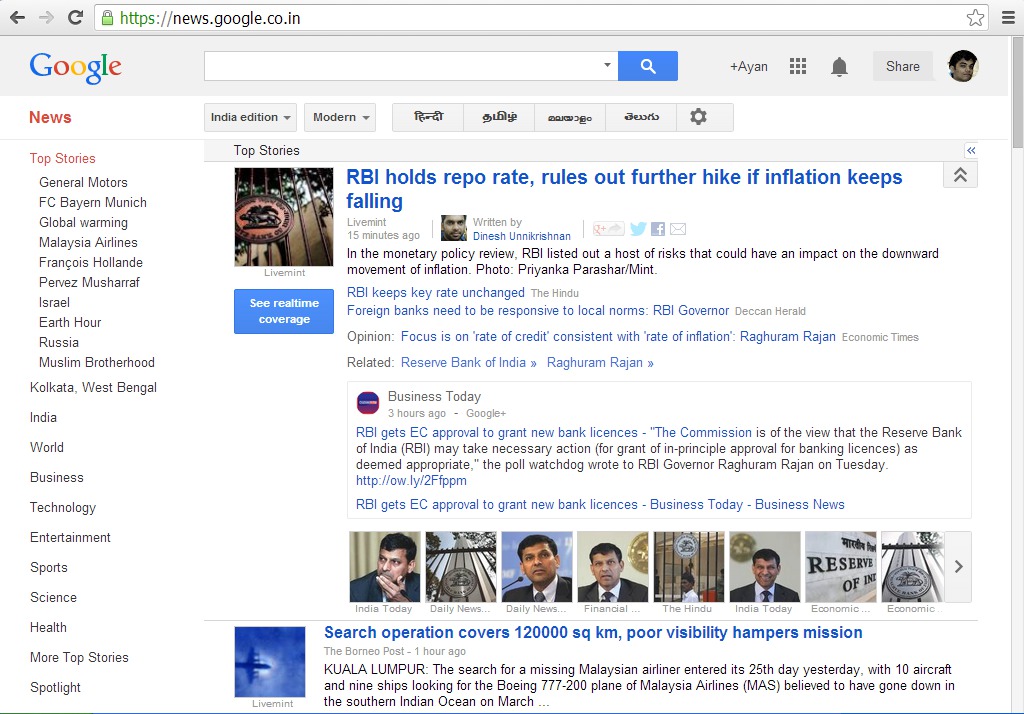
For over a decade, Google has been contending with major publications on the matter of free content. Now, the tech firm is scuttling one of its search engine rules called “first click free,” which is meant to provide users a few free contents before getting slammed by a paywall. This will help bigger publishers draw in revenue without having to give articles or news coverage away for free.
Many of the bigger publishing companies these days survive via subscription fees, ranging from weekly to yearly. For over a decade, readers were able to skirt some of the responsibilities of paying these fees by simply searching for headlines via Google, The Washington Post reports. After a while, users inevitably run into a paywall once they have used up their free articles.
During this time, publishers were at the mercy of Google, which determined how many free articles should be provided in order to gain the benefits of its massive search engine. With these recent changes, the publishing companies will now get to decide how many free articles to give away.
As for how this will affect the readers, many of them will not likely notice the changes for a while. Only those who regularly visit particular news outlets will be able to tell that the subscription format has changed.
On top of giving publishers more control over their content, Google will also apparently provide them with new online payment tools, Bloomberg reports. This will ensure that they will be able to offer transparent and unbiased content, which would not normally be the case when relying on advertisers.
The majority of the focus in talks between Google and publication firms, however, is the matter of speeding up load times. With ever increasing internet speeds, there is really no excuse to subject users to long hang times.













