


 Asian Stocks Surge to Record Highs as Wall Street Rally Offsets Oil Price Concerns
  U.S. Stock Futures Edge Higher as Ceasefire Extension and Intel Earnings Lift Sentiment
  Foreign Investors Drive Surge in Japanese Stocks Amid AI Rally and Improved Risk Sentiment
  Stock Futures Dip as S&P 500, Nasdaq Hit Record Highs Amid Rising U.S.-Iran Tensions
  Iran Tightens Grip on Strait of Hormuz as Oil Prices Surge
  Oil Prices Steady as U.S.-Iran Talks Ease Tensions Despite Strait of Hormuz Disruptions
  New Zealand Labour Backs India Free Trade Deal, Boosting Chances of Parliamentary Approval
  US and EU Strengthen Critical Minerals Partnership to Reduce China Dependence
  Gold Prices Edge Higher Amid Middle East Tensions and Ceasefire Uncertainty
  Nikkei Retreats After Brief 60,000 Break as Profit-Taking and Geopolitical Risks Weigh
  Iran-Pakistan Diplomacy and Strait of Hormuz Tensions Push Oil Prices Above $100
  Oil Prices Surge Amid Escalating U.S.-Iran Conflict and Strait of Hormuz Tensions
  Dollar Gains as Middle East Tensions and Rising Oil Prices Support Safe-Haven Demand
  Indian Cotton Yarn Exports Surge as China Demand Rises Amid Global Supply Disruptions
  Japan Inflation Rises in March Amid Energy Price Surge and Middle East Tensions
  Asian Markets Mixed as Oil Prices Rise Amid Middle East Tensions and Ceasefire Uncertainty
  Indonesia Fiscal Deficit Outlook: Fitch Signals Flexibility Amid Middle East War Risks


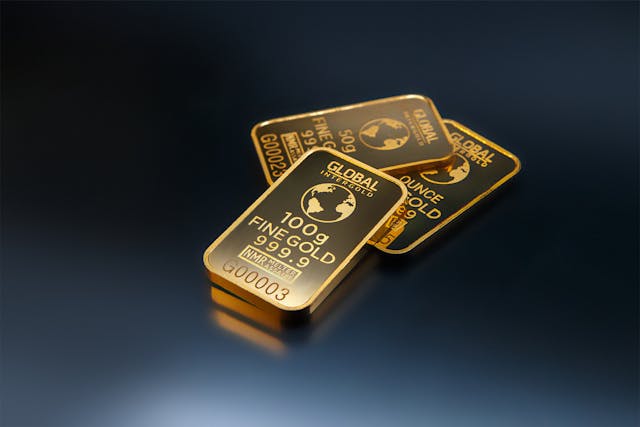
Gold prices saw a modest increase on Friday, supported by a weaker U.S. dollar and renewed geopolitical developments involving the United States and Iran. Despite this slight rebound, the precious metal remains on track for a weekly decline as rising oil prices fuel concerns about inflation and prolonged high interest rates.
Spot gold rose by 0.3% to close at $4,710.57 per ounce, while gold futures settled slightly higher at $4,725.40 per ounce. The uptick in gold prices was largely driven by a softer dollar, which typically enhances the appeal of dollar-denominated commodities like gold for international investors. As the greenback weakened, market participants shifted toward riskier assets such as equities, reducing demand for the dollar’s safe-haven status.
Investor sentiment improved after signals emerged that the U.S. and Iran are preparing for a second round of diplomatic talks. Iran’s Foreign Minister Abbas Araghchi confirmed plans to visit key regional partners, including Pakistan, Oman, and Russia, to discuss bilateral and regional developments. Meanwhile, the White House announced that U.S. officials, including Special Envoy Steve Witkoff and Jared Kushner, will travel to Pakistan for further negotiations. These developments boosted optimism in financial markets, contributing to the dollar’s decline and supporting gold prices.
However, gold’s overall performance this week has been weighed down by a sharp increase in oil prices. Benchmark crude contracts recorded their strongest weekly gains since early March, driven by escalating tensions in the Strait of Hormuz and ongoing disputes between the U.S. and Iran. Higher oil prices have intensified fears of an inflationary surge, prompting expectations that central banks may maintain or even raise interest rates.
Since gold does not yield interest, it often underperforms in high-rate environments. Analysts warn that persistent geopolitical uncertainty and rising inflation pressures could continue to limit gold’s upside in the near term, keeping investors cautious despite short-term gains.







