


 China Resumes US Soybean Purchases After Trump-Xi Summit
  US Condemns China Sanctions on Taiwan Allies Belize and Paraguay
  Trump Denies Russia and China Are Helping Iran in U.S. Conflict
  Flavio Bolsonaro Backs Brazil’s 40-Hour Workweek Reform Ahead of Runoff
  IMF Maintains 2027 Global Growth Forecast at 3.4% Amid Rising Risks
  Wall Street Closes Lower as Bank Earnings and AI Concerns Weigh
  Wall Street Ends Mixed as Investors Await CPI and Bank Earnings
  Trump Denies China, Russia Are Helping Iran in War
  IMF Warns US Debt Crisis Needs Fiscal Action, Urges China to Boost Consumption
  Jordan Bardella Antisemitism Allegations Threaten Le Pen’s Campaign
  Trump Plans White House Shake-Up of Key AI Safety Agency
  India Voter List Protests Reach Supreme Court as Opposition Demands Election Chief's Resignation
  Philippines Current Account Deficit Seen at $19.1 Billion in 2026
  Gold Prices Mixed Ahead of US Inflation Data and Fed Rate Outlook
  Italy’s Meloni Warns US-Russia Diesel Deal Could Weaken Ukraine Sanctions
  Most Americans Oppose Election Betting on Prediction Markets, Poll Finds
  Fed’s Williams Sees One More Rate Hike in 2026, None in 2027


 Add as a preferred source on Google
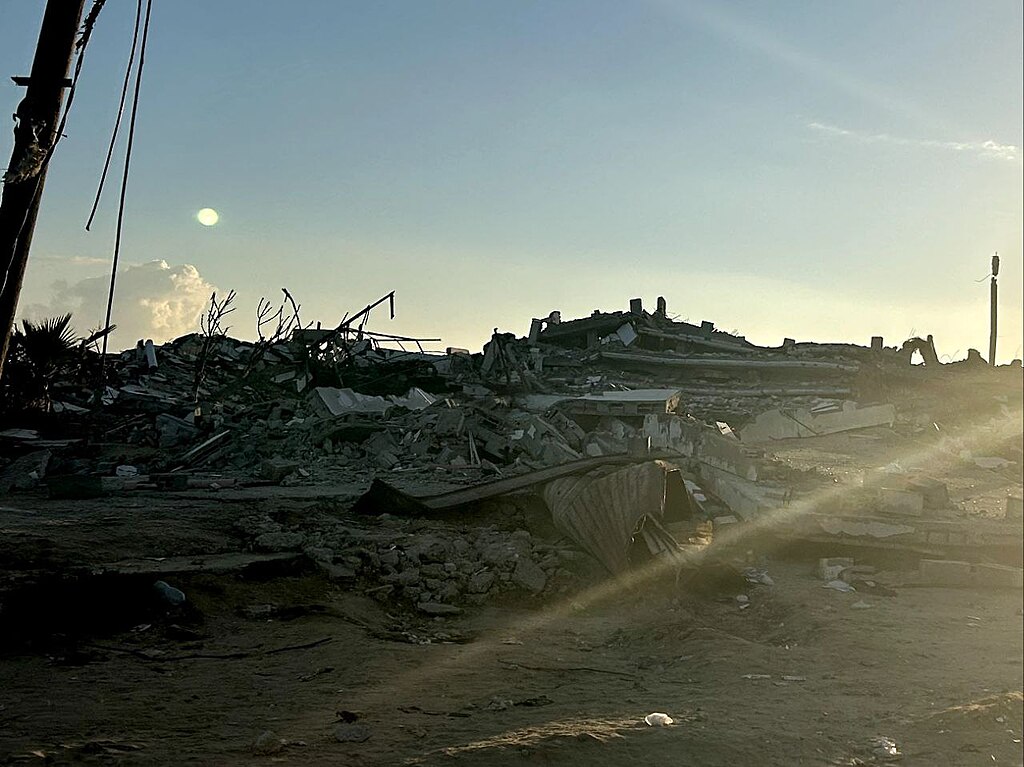
Gaza’s olive harvest has plunged dramatically as widespread destruction of agricultural land leaves farmers struggling to recover their livelihoods, even a year after a ceasefire ended major fighting.
In central Gaza, 60-year-old farmer Haidar Abu Middain surveys the remains of his family’s once-thriving olive orchard. The 900-dunum (220-acre) property previously produced between 1,100 and 1,500 tons of olives annually, providing income for his extended family and supplying local markets.
Today, nearly half the orchard lies beyond the Israeli-controlled “yellow line,” while most of the accessible farmland has been bulldozed. Only 20 to 30 olive trees remain standing.
Abu Middain estimates this year’s harvest will yield just two 16-liter drums of olive oil, compared with as many as 900 drums before the war.
The devastation reflects a broader collapse in Gaza’s agricultural sector. According to local agriculture authorities, only approximately 150,000 of Gaza’s original two million olive trees have survived.
Officials expect olive production to fall to around 5,000 tons, compared with the previous annual average of 40,000 tons. Olive oil output is projected to decline from 5,000 tons to just 700 tons.
The severe shortage has driven olive oil prices to nearly $500 per drum, roughly three times their pre-war level, making the essential food product unaffordable for many Palestinian families.
Gaza’s olive oil processing industry has also suffered extensive damage. Only seven olive presses remain operational, down from approximately 40 before the conflict.
In Deir al-Balah, olive press operator Fawaz Zidan described business as nearly nonexistent because so many orchards have been destroyed.
Despite the destruction, some families continue their traditional olive harvest in the few surviving groves.
Khalil Mansi and his relatives recently gathered olives in Deir al-Balah, preserving a longstanding family tradition amid the devastation.
For agricultural workers, however, employment opportunities have nearly disappeared.
Ahmed Khader, 38, said olive harvesting previously provided two to three months of seasonal employment. Now, even a single day of paid work offers much-needed financial relief.
The collapse of Gaza’s olive industry highlights the lasting economic and humanitarian consequences of the war, threatening agricultural livelihoods, local food supplies, and a deeply rooted Palestinian tradition.







