


 Oil Prices Fall as Trump Ceasefire Claim Shifts Market Focus to U.S. CPI
  Asian Currencies Steady as Dollar Nears 18-Month High Ahead of US CPI
  Trump Defends Russian Diesel Deal Amid US Sanctions Backlash
  Gold Prices Mixed Ahead of US Inflation Data and Fed Rate Outlook
  European Auto Stocks Rise as EU-China Trade Deal Targets Hybrid Imports
  IMF Maintains 2027 Global Growth Forecast at 3.4% Amid Rising Risks
  RBA Signals More Rate Hikes as Inflation Risks Rise
  US Dollar Index Falls as Fed Signals Caution, Indian Rupee Surges
  Gold Prices Rise Above $4,200 as Russia-Ukraine Energy Truce Eases Oil Concerns
  Fed’s Williams Sees One More Rate Hike in 2026, None in 2027
  Philippines Current Account Deficit Seen at $19.1 Billion in 2026
  Nasdaq Falls as Oil Prices Surge Ahead of Bank Earnings
  Oil Prices Fall as Russia Signals Higher Diesel Exports
  Oil Prices Surge Above $106 After Deadly Saudi Airport Attack
  UK Finance Minister Healey Calls for Fiscal Discipline Amid Global Risks


 Add as a preferred source on Google
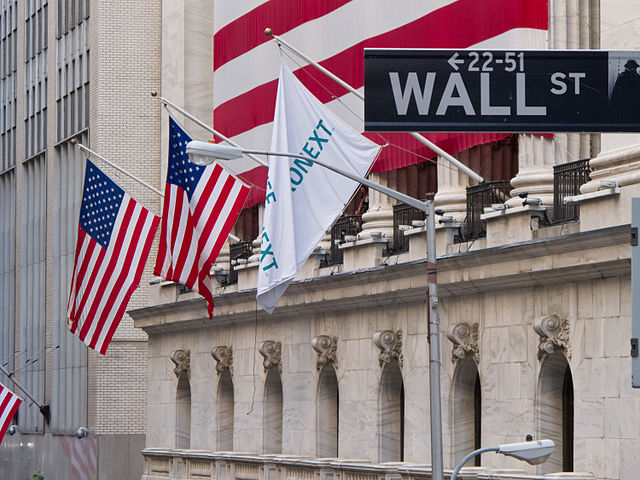
Wall Street stocks ended slightly lower on Tuesday, October 13, as mixed bank earnings and growing concerns over Chinese artificial intelligence competition pressured investor sentiment ahead of key U.S. inflation data.
The S&P 500 finished nearly unchanged at 7,806.26, while the Nasdaq Composite declined 0.2% to 27,204.38. The Dow Jones Industrial Average dropped 0.4% to 51,670.99, reversing an earlier gain of nearly 0.9%.
Technology stocks faced renewed selling pressure, particularly in the semiconductor sector. Micron Technology extended its losing streak to four sessions following reports of technological advances by China's ChangXin Memory Technologies. South Korea's technology-heavy KOSPI also plunged 5.5%.
Concerns about Chinese AI competition intensified after Intel CEO Lip-Bu Tan highlighted the significantly lower operating costs of Chinese AI models. Broadcom CEO Hock Tan separately questioned whether companies investing heavily in artificial intelligence could generate sufficient returns.
Investors also assessed quarterly earnings from major U.S. banks.
JPMorgan Chase reported weaker-than-expected quarterly profits but raised its 2026 net interest income forecast to approximately $106.2 billion. Its shares declined 0.8%.
Citigroup reported a 40% increase in net income to $5.25 billion, although its stock plunged 5.6%. Wells Fargo shares fell 3.1% despite a 5% increase in net interest income, while Goldman Sachs gained 0.2% after exceeding earnings expectations.
Healthcare stocks added pressure to the Dow. Johnson & Johnson dropped nearly 6% as disappointing medical device sales overshadowed stronger quarterly results. UnitedHealth slipped 0.2% despite raising its annual earnings guidance.
Meanwhile, U.S. Treasury yields showed mixed movements following the Columbus Day holiday. The benchmark 10-year yield declined to 5.209%, while the 30-year yield fell to 5.561%. The two-year yield remained near 4.789%.
Oil prices also fluctuated amid Middle East supply concerns. Brent crude declined 0.5% to $106.13 per barrel, while West Texas Intermediate rose 1% to $94.67.
Investors are now awaiting Wednesday's U.S. consumer price index report, which could influence expectations for Federal Reserve interest rate policy.
With stock valuations elevated, upcoming corporate earnings and inflation figures will be crucial in determining whether Wall Street can sustain its record-setting rally.







