


 BNB Price Faces Pressure as DOJ Investigates Binance
  Gold Prices Slide as Rate Cut Prospects Diminish; Copper Gains on China Stimulus Hopes
  China’s Growth Faces Structural Challenges Amid Doubts Over Data
  Deutsche Bank CEO Urges Faster German Economic Reforms
  RBA Hikes Interest Rate to 4.60% as Inflation Risks Rise
  Cardano Hits Five-Year Transaction Record as ADA Price Falls
  Hong Kong’s Second Solana ETF Launches With Lower Fees
  Morgan Stanley Predicts $10 Trillion RWA Market by 2030
  Indonesia Surprises Markets with Interest Rate Cut Amid Currency Pressure
  Ripple-Backed Evernorth Set for Nasdaq Debut With 473 Million XRP
  Oil Prices Dip Slightly Amid Focus on Russian Sanctions and U.S. Inflation Data
  Fed’s Williams Signals One More Rate Hike Before Year-End
  Lithium Market Poised for Recovery Amid Supply Cuts and Rising Demand
  NEAR Price Surges 11% as Trading Volume Doubles
  Mexico's Undervalued Equity Market Offers Long-Term Investment Potential


 Add as a preferred source on Google
With continued USD weakens, USDCNY dipped to the 6.75 level this morning, i.e. back to the level seen in October. The PBoC set the USDCNY fixing rate at 6.7451, the lowest in nine months. Chinese authorities are again in control of their currency.
On the one hand, capital outflows have been easing due to administrative measures, and China has increased its holdings of US Treasuries for the fourth consecutive month, according to recent TIS data.
On the other hand, the market has gradually turned around their expectations and believes that the CNY weakness, if there is any, will be moderate. Of course, the market only has a very short memory, which means that it could easily forget what it had believed in the past.
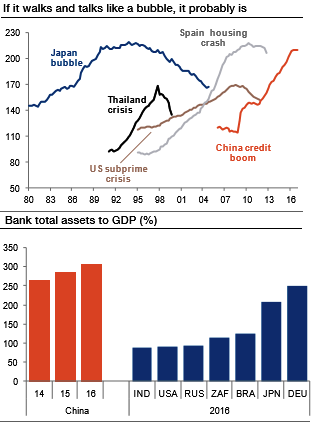
China is a source of angst for global investors with non-financial corporate debt at 166% of GDP compared with 97% a decade ago (refer above chart).
The bursting of a debt bubble in China would have far-reaching negative implications for emerging markets either via the risk sentiment channel or through commodity prices, global growth, and the global supply chain.
History tells us that credit booms lead to bubbles and to eventual crises. In China’s case, the risks are compounded by the large size of the banking system relative to GDP (refer above chart).
It is unclear if, or when, the bubble will burst in China, but it is the major medium-term risk factor for the entire EM currency complex.







