


 Tencent Shares Slide After WeChat Restricts YuanBao AI Promotional Links
  Baidu Approves $5 Billion Share Buyback and Plans First-Ever Dividend in 2026
  Oracle Plans $45–$50 Billion Funding Push in 2026 to Expand Cloud and AI Infrastructure
  Nintendo Shares Slide After Earnings Miss Raises Switch 2 Margin Concerns
  SoftBank Shares Slide After Arm Earnings Miss Fuels Tech Stock Sell-Off
  Australian Scandium Project Backed by Richard Friedland Poised to Support U.S. Critical Minerals Stockpile
  TrumpRx Website Launches to Offer Discounted Prescription Drugs for Cash-Paying Americans
  Amazon Stock Rebounds After Earnings as $200B Capex Plan Sparks AI Spending Debate
  SpaceX Prioritizes Moon Mission Before Mars as Starship Development Accelerates
  SoftBank and Intel Partner to Develop Next-Generation Memory Chips for AI Data Centers
  TSMC Eyes 3nm Chip Production in Japan with $17 Billion Kumamoto Investment
  FDA Targets Hims & Hers Over $49 Weight-Loss Pill, Raising Legal and Safety Concerns
  Global PC Makers Eye Chinese Memory Chip Suppliers Amid Ongoing Supply Crunch
  SpaceX Seeks FCC Approval for Massive Solar-Powered Satellite Network to Support AI Data Centers
  Instagram Outage Disrupts Thousands of U.S. Users
  Alphabet’s Massive AI Spending Surge Signals Confidence in Google’s Growth Engine
  Elon Musk’s SpaceX Acquires xAI in Historic Deal Uniting Space and Artificial Intelligence


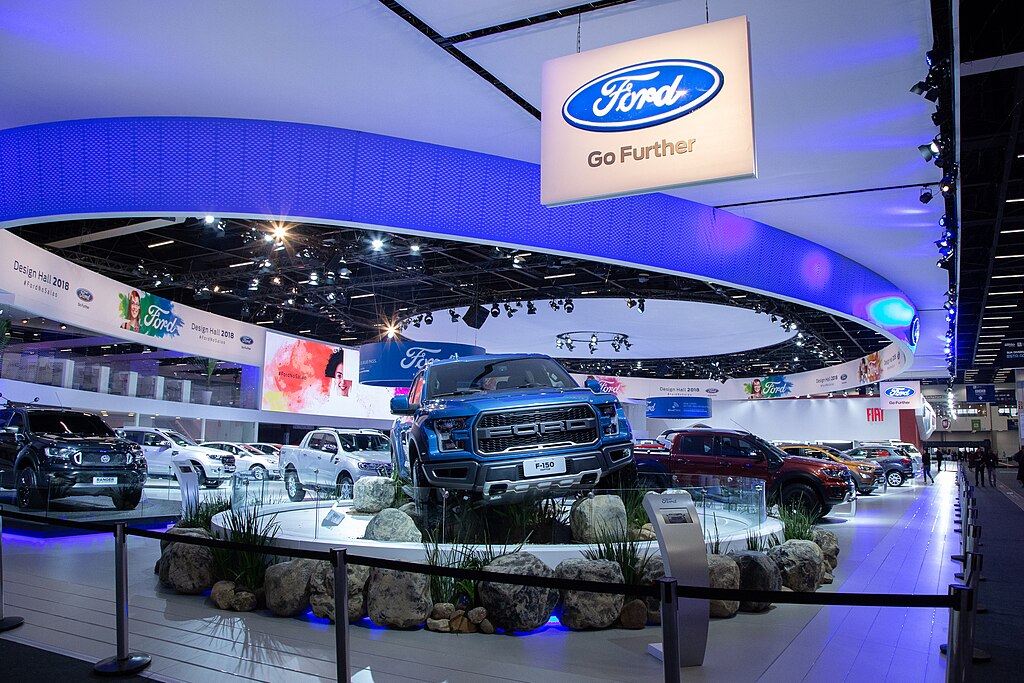
Ford Motor Company has announced plans to bring Level 3 driver-assistance technology to market by 2028, marking a significant step toward hands-free and eyes-off driving on select highways. The advanced system will allow drivers to disengage from active driving under specific conditions, positioning Ford among a small group of automakers pursuing higher levels of vehicle autonomy.
The Level 3 autonomous driving system will debut on Ford’s next-generation electric vehicle platform, currently being developed by a specialized team in California. This new EV architecture is designed to support advanced software and digital capabilities not available on Ford’s existing models. The first vehicle built on the platform is expected to be a midsize electric pickup truck launching in 2027, with a targeted starting price of around $30,000, making advanced EV technology more accessible to a wider audience.
Ford has not yet confirmed which model will be the first to receive the Level 3 driver-assistance software. According to Doug Field, Ford’s chief EV, digital, and design officer, the technology will be offered as a paid option rather than standard equipment, and pricing details are still under development. Ford is evaluating different business models, including one-time purchases or subscription-based pricing, with an emphasis on affordability.
Unlike Tesla, which relies solely on cameras, Ford plans to incorporate lidar technology to enhance safety and reliability for its Level 3 system. The company is also moving toward in-house development of advanced driver-assistance systems to reduce costs, improve quality, and deliver faster software updates.
In addition to autonomous driving, Ford revealed plans for an AI-powered assistant launching as a mobile app in early 2026, followed by in-vehicle integration. This AI assistant will support practical tasks such as analyzing cargo space from photos, highlighting Ford’s broader push into artificial intelligence, connectivity, and software-driven vehicle features.
With growing competition from Mercedes-Benz, General Motors, and other automakers, Ford’s strategy underscores the increasing importance of advanced driver-assistance systems, autonomous driving, and AI technology in shaping the future of electric vehicles and mobility.













