


 NASA, Boeing Discuss Expanding Starliner Missions
  Qualcomm Gains on $60B Amazon AI Chip Deal
  US Federal Register Drops Alibaba Qwen AI Search Tool
  Volvo Cars Plans 13 New Models by 2030 to Boost Sales
  Guterres Urges Stronger Global AI Safeguards Ahead of UN Assembly
  SpaceX Nasdaq 100 Weight to More Than Double in Rebalance
  Rosenblatt Starts Nokia at Buy on AI Networking Growth
  FCC Approves Foreign Investment in $110B Paramount-Warner Bros. Deal
  Physicists zoom into the birth of cosmic rainstorms with new CERN study
  LVMH-Hermès Dispute Deepens Over Secret 2002 Share Deal
  Burnham Eyes UK Leadership Role in AI Ahead of Trump Meeting
  Europe can’t achieve space sovereignty alone. Here’s why
  SK Hynix, Intel Discuss U.S. Memory Chip Production Deal
  Meta Partners With Shopify to Bring Shop Pay Checkout to Muse AI
  Apple Pay Set for India Launch With Axis Bank
  fnny Beta Launches With a Simple Idea: Find an Event, Show Up, Get Rewarded


 Add as a preferred source on Google
The year 2015 has been a spectacular one for the financial sector. One of the most prominent developments has been that global financial institutions have started embracing blockchain technology. Yet another is the buzz around fintech companies.
Fintech, as the name suggests, refers to any kind of technology relating to the financial sector, ItProPortal explains. While earlier fintech was limited to PCs and software used by financial companies and institutions, it has become a very broad term with the rapid adoption of the Internet, smartphones and mobile applications. Mobile payments system, cryptocurrencies, crowdsourcing, and even social media platforms have taken the fintech revolution to the next level.
“Investment in fintech had grown from $4.05 billion in 2013 to $12.2 billion by the start of 2015” – ItProPortal
According to a recently published article on The Globe And Mail, the fintech companies are now aiming to offer alternative finance – financing arrangements at competitive rates to small businesses and consumers. Small businesses world over they find that banks always cannot meet their needs and hence they look to these sources of alternative finance.
“Fintech is surfing a wave of market-driven need. In the B2C space there are so many areas where existing providers have exited the market and created product vacuums that there is a real demand for new solutions. Capital markets players need solutions to the various regulatory challenges amongst others”, Financial News quoted Mark Beeston, a managing partner at Illuminate Financial Management.
However, unlike banks, these start-up companies do not undertake the much required credit checks and shorten their turnaround time by putting together technology, statistics and complex algorithms to accelerate the loan-approval process. Some loans are even approved within minutes, with funds credited to the bank account by the end of the day.
Needless to say, this increases the risk of subprime lending. Talib Contractor writes that the smaller loans may be unsecured –backed by only the borrowers’ creditworthiness rather than hard collateral – which increases the risk of fraud and more personal and business bankruptcies.
StatsCan estimates that business bankruptcies have fallen 0.7 percent in the third quarter of 2015 compared with the same quarter the previous year, however, if the trend of offering small business loans without diligent credit checks is followed, the number could change soon.
“The problems that we’re starting to see in the small business lending market, to me, are extremely troubling,” said Michael Barr, former assistant secretary of the US Treasury, at the August 10 launch of the Small Business Borrowers’ Bill of Rights. “And they are, in some respects, reminiscent of some of the problems in the subprime mortgage sector that we saw in the leadup to 2008, though obviously on a smaller scale.”

- News

- Economy

- Central Banks
- Investing
- Research
- Roundups
- Digital Currency
- Insights
- Technical Analysis
- Technology
- Business
- Law
- Health
- Nature
- Fintech
- Science
- Topic
- Opinions
- ©Econometrics LLC . All Rights Reserved.
Fintech Companies: Alternative Finance Or Subprime Lending?
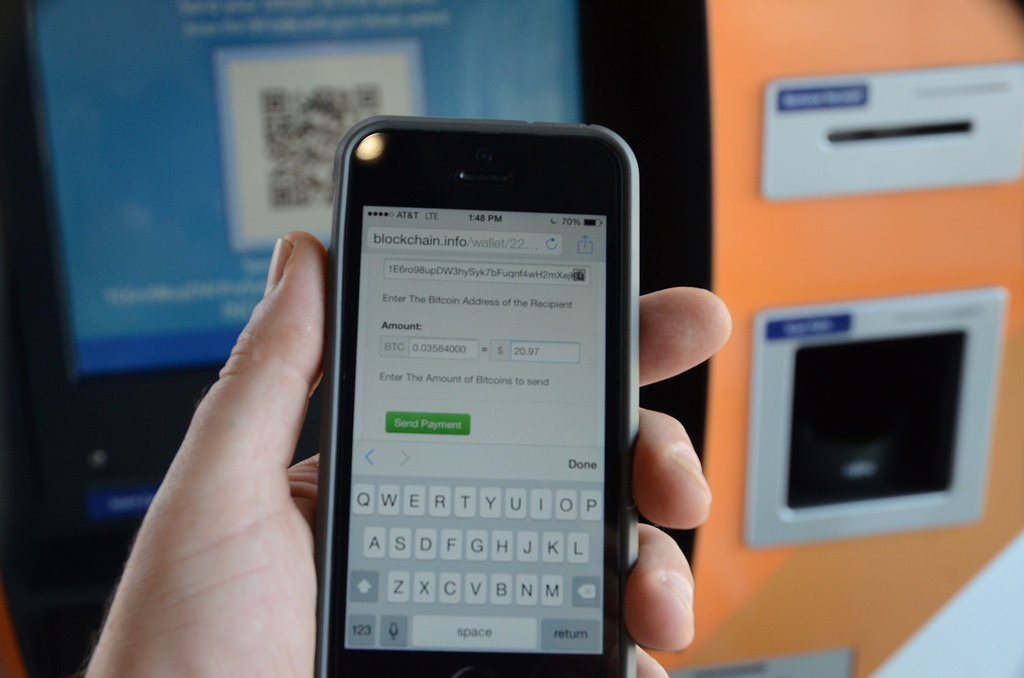
Using Blockchain.info's Bitcoin web wallet on an iPhone to send money to a Expresscoin / Robocoin Bitcoin ATM. The ATM is at Locali in Venice, California. (flickr/BTC Keychain)
Monday, December 14, 2015 6:32 AM UTC
Editor's Picks



- Market Data
Most Popular




