


 RBI Uses $10 Billion Currency Swaps to Drain Excess Rupee Liquidity
  US Dollar Hits Two-Month High as Fed Rate Hike Bets Rise
  Vietnam, US Trade Deal Could Be Signed Soon, To Lam Says
  Gold Prices Rise as Oil Slide Eases Fed Rate Hike Fears
  Gold Prices Fall as Treasury Yields Rise on Fed Rate Hike Bets
  US 10-Year Treasury Yield at 6% Emerges as New Market Risk Threshold
  Japan Private-Sector Growth Slows as Domestic Demand Weakens
  Russian Envoy Dmitriev Heads to US for Ukraine Talks
  US Stock Futures Rise as Meta Muse Fuels AI Rally
  European Stocks Slip as Iran Tensions Offset Strong Eurozone Data
  Canada Unveils Bill to Fast-Track Major Resource Projects
  Oil Prices Extend Losses as U.S.-Iran Talks Ease Supply Fears
  US, China Extend Trade Truce to Jan. 10 Ahead of Trump-Xi Summit
  South Korea, US Discuss Warship Building Cooperation
  Asian Currencies Mixed as Dollar Holds Near Two-Month High
  Gold Drops Over 1% as Dollar, Treasury Yields Surge on Fed Rate Hike Bets
  Yen Weakens as Dollar Gains on Widening US-Japan Rate Gap


 Add as a preferred source on Google
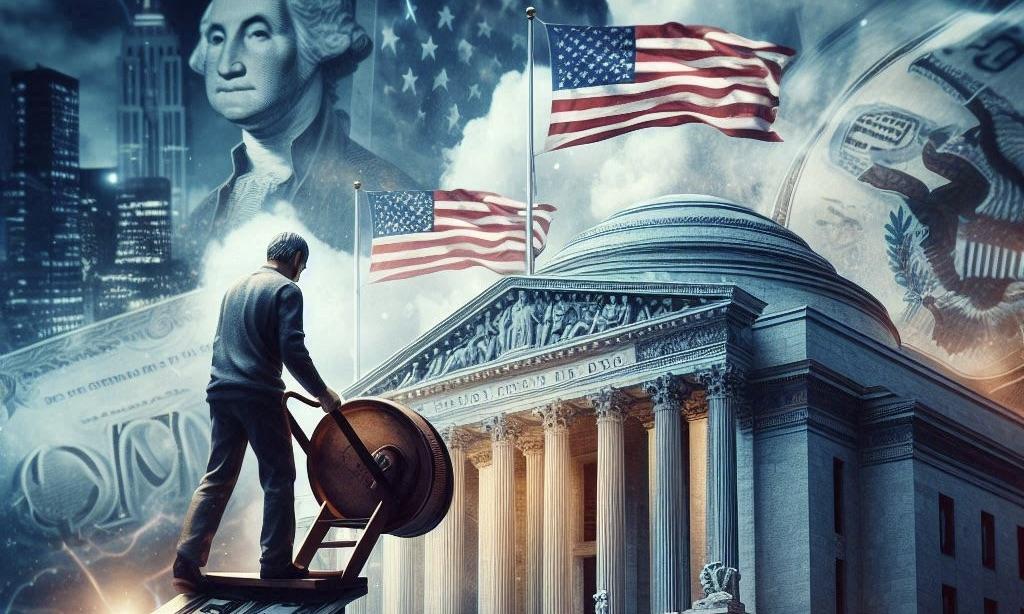
On July 31, the Federal Reserve kept its primary interest rate at 5.5% but indicated potential cuts in September due to signs of economic slowdown and weakening labor-market conditions.
Federal Reserve Signals Potential Rate Cuts Amid Economic Slowdown, Keeps Rates Steady at 5.5%
Officials from the Federal Reserve stated on July 31 that the organization still needed to prepare to reduce its primary interest rate despite indications that the economy is experiencing a slowdown.
However, the Federal Open Market Committee's most recent statement contained modifications to its language, acknowledging the increasing signs of economic weakness. According to NBC News, these indicate a greater willingness to reduce borrowing costs despite maintaining rates of approximately 5.5%.
It is important to note that the FOMC observed a slight decline in labor-market conditions.
“Job gains have moderated, and the unemployment rate has moved up but remains low,” it said in the statement on July 31.
The unemployment rate has reached its highest point since February 2018, at 4.1%. However, it remains below the threshold that would indicate a recession.
The Bureau of Labor Statistics reported on July 30 that the hiring rate in the economy has slowed to a level not seen since 2014, even though termination activity remained subdued in June. There has been a recent increase in the proportion of unemployed workers without employment for 27 weeks or more, with approximately 1.5 million individuals falling into this category.
However, the FOMC reiterated on July 31 that it would not alter its stance "until it has gained greater confidence that inflation is moving sustainably toward 2 percent," a stance that Fed officials have previously maintained.
Omair Sharif, the founder and president of the Inflation Insights research group, stated in a note to clients following the statement's release that the Federal Reserve had taken a "baby step" toward a reduction that traders have predicted will occur in September.
"I expect that further good news on the inflation front in July should set up the Chair to deliver a more meaningful signal that a rate cut in September is very likely," Sharif wrote.
Similarly, Seema Shah, the chief global strategist at Principal Asset Management financial group, stated, "opens the door to the September cut that everyone is expecting."
Fed Chair Jerome Powell acknowledged in remarks following the statement's release that a rate cut "could be on the table for September." Still, he also stated that monetary policymakers "just need to see more good data."
Powell acknowledged in his most recent testimony to Congress that central bank officials had initiated reducing rates, stating that "acting too late or too little could unduly weaken economic activity and employment."
The Federal Reserve establishes interest rates, influencing the cost of borrowing money for products and services for consumers and businesses.
For the past two years, it has fought inflation by maintaining elevated interest rates, essentially fighting fire with fire. The cost of financing economic demand has been reduced, thereby slowing the rate at which prices have increased.
Former Fed Officials Urge Immediate Rate Cuts as Economic Weakness Persists, Wall Street Anticipates September Relief
Currently, the Federal Reserve is indicating that the elevated rates have effectively addressed inflation and that persisting with them could result in unwarranted harm to the economy as a whole.
Data from the financial services company CME Group indicates that Wall Street traders have indicated for weeks that a September rate cut is a virtual certainty.
However, influential former Federal Reserve officials have begun advocating for a more expedited timeline. This month, Bill Dudley, a former president of the New York Federal Reserve, stated that a rate reduction should occur before September. In a Bloomberg News op-ed, Dudley noted that he had "changed his mind"because unemployment has continued to rise and that all households except the affluent have exhausted their immediate post-pandemic financial reserves.
"Although it might already be too late to fend off a recession by cutting rates, dawdling now unnecessarily increases the risk," Dudley wrote.
This week, Alan Blinder, a former Federal Reserve vice chair during the Clinton administration, stated in a Wall Street Journal op-ed that the moment to implement cuts is now.
"Why wait?" Blinder asked, declaring the two-year fight against pandemic-induced inflation over as "the economy seems to be simmering down."
Reducing rates would merely prevent a detrimental economic consequence; companies have indicated that there are also advantages.
Particular weakness has been observed in sectors particularly susceptible to consumer credit and interest rates, such as the housing and automotive markets. Companies in these sectors have indicated that they anticipate a resurgence in sales once interest rates decline.
“There is now a higher probability of interest rate relief beginning in September,” said Dave Foulkes, CEO of Brunswick Corp., a boat-making specialist. While new cuts would most likely have only a minor impact on 2024 results because peak season will have passed, they’d be “a potential tailwind for 2025.”
The results of the Federal Reserve will disclose the results of the Market Committee meeting on July 31.







