


 Apple Pay Set for India Launch With Axis Bank
  U.S. Issues Cuba Health Alert as Illnesses Rise
  SEC Seeks ISS Client Voting Records in Proxy Adviser Probe
  Meta Partners With Shopify to Bring Shop Pay Checkout to Muse AI
  fnny Beta Launches With a Simple Idea: Find an Event, Show Up, Get Rewarded
  Telix to Acquire Germany’s ITM in $1.65 Billion Radiopharma Deal
  US Judge Dismisses Imran Ahmed Deportation Lawsuit
  Supertanker Orders Surge as US-Iran War Reshapes Oil Trade
  SpaceX Nasdaq 100 Weight to More Than Double in Rebalance
  US Resumes Immigrant Visa Processing for Hungary, Poland
  Volkswagen Shares Slide After 2026 Profit Outlook Cut
  Nvidia-Groq AI Chip Deal Faces U.S. Antitrust Probe
  Paramount-Warner Bros $110 Billion Deal Draws Antitrust Backlash
  ICE Agent Arrested in Minneapolis Over Venezuelan Man Shooting
  Trump Bans CNN, MS NOW and Politico From White House
  OpenAI Urges US-Led Global Standards for Frontier AI
  Synthetic data could ease people’s concerns about privacy breaches. But who gets to create it?


 Add as a preferred source on Google
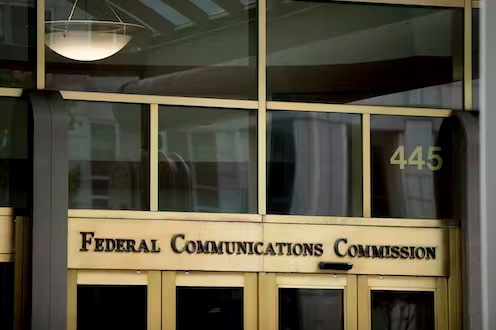
The Federal Communications Commission (FCC) has officially approved Charter Communications’ $34.5 billion acquisition of Cox Communications, clearing the way for one of the largest cable and broadband mergers in U.S. history. The deal, first announced in March 2025, unites two major telecommunications providers as they compete more aggressively with streaming platforms and mobile network operators.
Once finalized, the merger will create the largest cable TV and broadband provider in the United States, with approximately 38 million subscribers, surpassing current market leader Comcast. Charter, which operates under the Spectrum brand, will invest billions of dollars to upgrade Cox’s broadband infrastructure. The company told regulators the upgrades will significantly increase internet speeds across Cox’s service areas and accelerate network improvements beyond what Cox could achieve independently.
As part of the FCC’s approval conditions, Charter committed to expanding its $20-per-hour minimum starting wage to Cox employees and to bringing more jobs back to the United States. FCC Chair Brendan Carr stated that the transaction is expected to give customers access to lower-priced service plans and improved high-speed internet options.
Cox Communications currently serves 6.3 million customers with broadband, cable television, voice, and wireless services. Under the agreement, Charter will assume roughly $12.6 billion of Cox’s net debt and other obligations, contributing to the transaction’s total enterprise value of $34.5 billion. The companies anticipate generating $500 million in annual cost savings within three years after the deal closes, which is expected by mid-2026.
In line with recent FCC approvals involving Verizon, AT&T, T-Mobile, and Paramount, Charter also agreed to modify its diversity, equity, and inclusion programs to comply with federal policy changes introduced in early 2025.
Following the merger’s completion, the combined company will rebrand as Cox Communications within a year, while Spectrum will remain the primary consumer-facing brand.







