


 Goldman Sachs Forecasts Fed Rate Hike as Inflation Risks Rise
  FxWirePro- Major Pair levels and bias summary
  FxWirePro- Major Crypto levels and bias summary
  Asian Stocks Steady as AI Shares Rebound Ahead of Fed Decision
  Japan Producer Inflation Eases to 7.6% in August
  Asian Currencies Subdued as Yen Weakens Ahead of Fed, BOJ Decisions
  Dollar Rises as Fed Hike Bets Weigh on Asian Currencies
  UK Economy Grows 0.4% in July, Beating Forecasts


 Add as a preferred source on Google
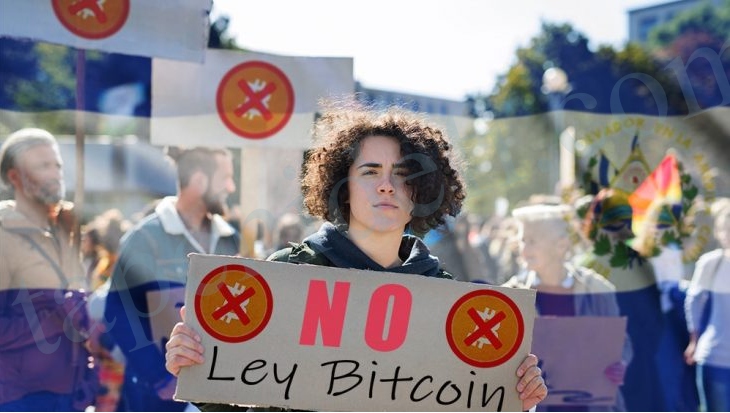
El Salvadorans protested on the streets Friday against the adoption as an official currency of Bitcoin, putting it on a level with the US dollar.
Workers, veterans, and pensioners voiced their concerns about the use of cryptocurrency, especially if it would be relied on to pay for pensions and welfare instead of the US dollar.
El Salvador's lawmakers voted to adopt Bitcoin as legal tender in June, with the law taking effect on September 7.
El Salvadoran president Nayib Bukele has touted Bitcoin adoption as a way to facilitate remittance payments from those living abroad.
However, the use of cryptocurrency as legal tender has been criticized by the International Monetary Fund (IMF) for its volatility and lack of relationship with the real economy.
Stanley Quinteros, a member of the Supreme Court of Justice worker's union, said that they were concerned about the coin's drastic fluctuation, with its value uncontrollably changing from one second to another.
El Salvador's neighboring countries are waiting to see the adoption of Bitcoin as parallel legal tender reduces the cost of remittances, an important income source for millions.
Dante Mossi, the executive president of the Central American Bank for Economic Integration (CABEI), identified Guatemala, Honduras, and El Salvador as the countries that would benefit the most gain if Bitcoin adoption lowers the cost of sending remittances.
He added that if it goes well for El Salvador, other countries will probably seek its adoption, too.
Mossi dubbed the plan an "out of this world experiment" to increase financial inclusion in a region where people are bereft of bank accounts or credit cards, and rely on remittances from relatives living in the US.
CABEI's technical assistance for El Salvador on implementing the cryptocurrency is an important show of support after the World Bank declined to help due to environmental and transparency drawbacks.







