


 Best Gold Stocks to Buy Now: AABB, GOLD, GDX
  FxWirePro: Daily Commodity Tracker - 21st March, 2022


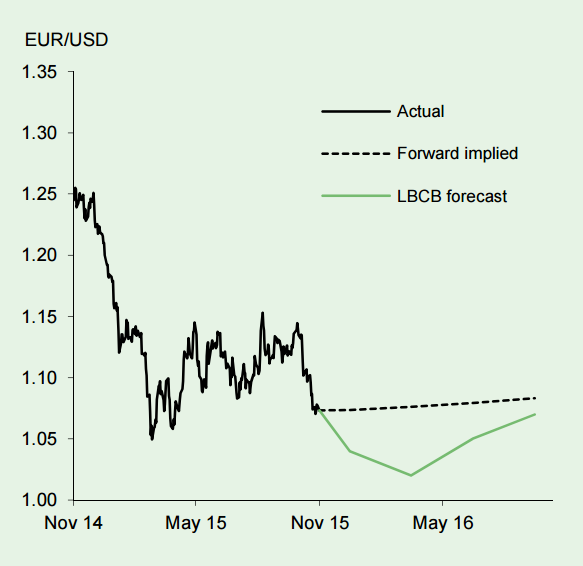
Having reached a recent high of around 1.15 in mid-October, EUR/USD has fallen sharply over the past month, hitting a low below 1.0650. Conflicting news on US and euro area monetary policy have pulled the euro and the US dollar in opposing directions. In the US, the surprise strength of the October employment report has been seized upon as sufficient grounds for the Fed to raise interest rates next month for the first time since June 2006.
At the same time, the ECB has hinted that further policy stimulus (both QE and a policy rate cut) may be on the cards when it revisits its growth and inflation forecasts next month. Although financial markets are now broadly priced to both these outcomes, it is believed that the prospect of heightened ECB/Fed policy divergence leaves the euro vulnerable to further downside over the coming months.
"We target a move in EUR/USD to 1.04 by end year and to 1.02 by end March, but a move below parity cannot be ruled out. Thereafter, we are constructive on the euro on fundamental grounds, but amid rising US interest rates, the prospect of any significant euro recovery through 2016 is, we believe, limited. We target a rise back to 1.10 by the end of next year", notes Lloyds Bank.

- News

- Economy

- Central Banks
- Investing
- Research
- Roundups
- Digital Currency
- Insights
- Technical Analysis
- Technology
- Business
- Law
- Health
- Nature
- Fintech
- Science
- Topic
- Opinions
- ©Econometrics LLC . All Rights Reserved.
EUR/USD Outlook
Tuesday, November 17, 2015 10:09 PM UTC
Editor's Picks



- Market Data
Most Popular




