


 BOJ Hawk Signals Faster Interest Rate Hikes Amid Inflation Risks
  China Keeps Loan Prime Rates Unchanged for 13th Straight Month as Policymakers Prioritize Credit Demand Recovery
  BOJ Raises Interest Rates to 1% as Inflation Pressures Persist
  FxWirePro: Daily Commodity Tracker - 21st March, 2022
  Supreme Court Backs Lisa Cook, Defends Federal Reserve Independence Against Trump Firing Attempt
  Malaysia Central Bank Moves to Support Ringgit Amid Foreign Fund Outflows


Eurozone's economic growth will strengthen modestly in 2016 moving higher from this year. There might be an ease in consumer spending and exports growth, but a pick-up in business investment should balance this ease.
There is a cautious recovery in residential and public investment, which should lend further support and also there will be a modest growth in goverment spending. But the growth outlook will be wieghed on by EA's rising debt burden and rigidity in the structure.
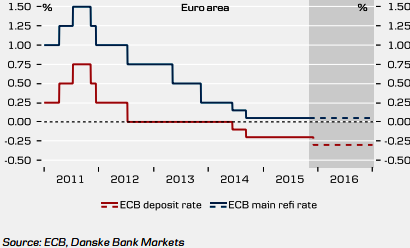
"ECB might likely implement deposit rate cuts, in line with other two rate cuts, with the first being the cut into negative territory. The risk is seen as skewed towards the ECB cutting the deposit rate more aggressively in an attempt to send a strong signal that it is committed to complying with its mandate of maintaining inflation below, but close to 2%", says Danske Bank.
A larger rate cut could be also seen as the ECB is looking at the experiences in other countries like Sweden, Denmark, e tc. The deposit cut is likely to be accompanied by a strengthening of the ECB's forward guidance.

- News

- Economy

- Central Banks
- Investing
- Research
- Roundups
- Digital Currency
- Insights
- Technical Analysis
- Technology
- Business
- Law
- Health
- Nature
- Fintech
- Science
- Topic
- Opinions
- ©Econometrics LLC . All Rights Reserved.
ECB likely to cut the deposit rate by 10bp
Wednesday, November 4, 2015 7:15 AM UTC
Editor's Picks



- Market Data
Most Popular




