


 Bill Ackman Eyes New Fund to Bet Against Market Complacency
  Annie Altman Amends Sexual Abuse Lawsuit Against OpenAI CEO Sam Altman
  MATCH Act Targets ASML and Chinese Chipmakers in New U.S. Export Crackdown
  Anthropic Fights Pentagon Blacklisting in Dual Federal Court Battles
  Alibaba Shares Slide as Jefferies Slashes Price Target Over AI Spending and Business Losses
  Abbott Laboratories Ordered to Pay $53 Million in Premature Infant Formula Lawsuit
  China vs. NASA: The New Moon Race and What's at Stake by 2030
  Bank of America Identifies Top Asia-Pacific Semiconductor Stocks Poised for AI-Driven Growth
  OpenAI Executive Shake-Up Ahead of Anticipated 2026 IPO
  Disney Plans to Cut 1,000 Jobs Amid Ongoing Restructuring Efforts
  Elon Musk Ties SpaceX IPO Access to Mandatory Grok AI Subscriptions
  LG Electronics Posts Record Q1 Revenue Amid Strong Demand and Cost Improvements
  SpaceX Eyes Historic IPO at $1.75 Trillion Valuation
  Britain Courts Anthropic Amid US Defense Department Dispute
  NASA's Artemis II Mission: First Crewed Lunar Journey Since Apollo
  Australia's Social Media Ban for Under-16s Sparks Global Movement


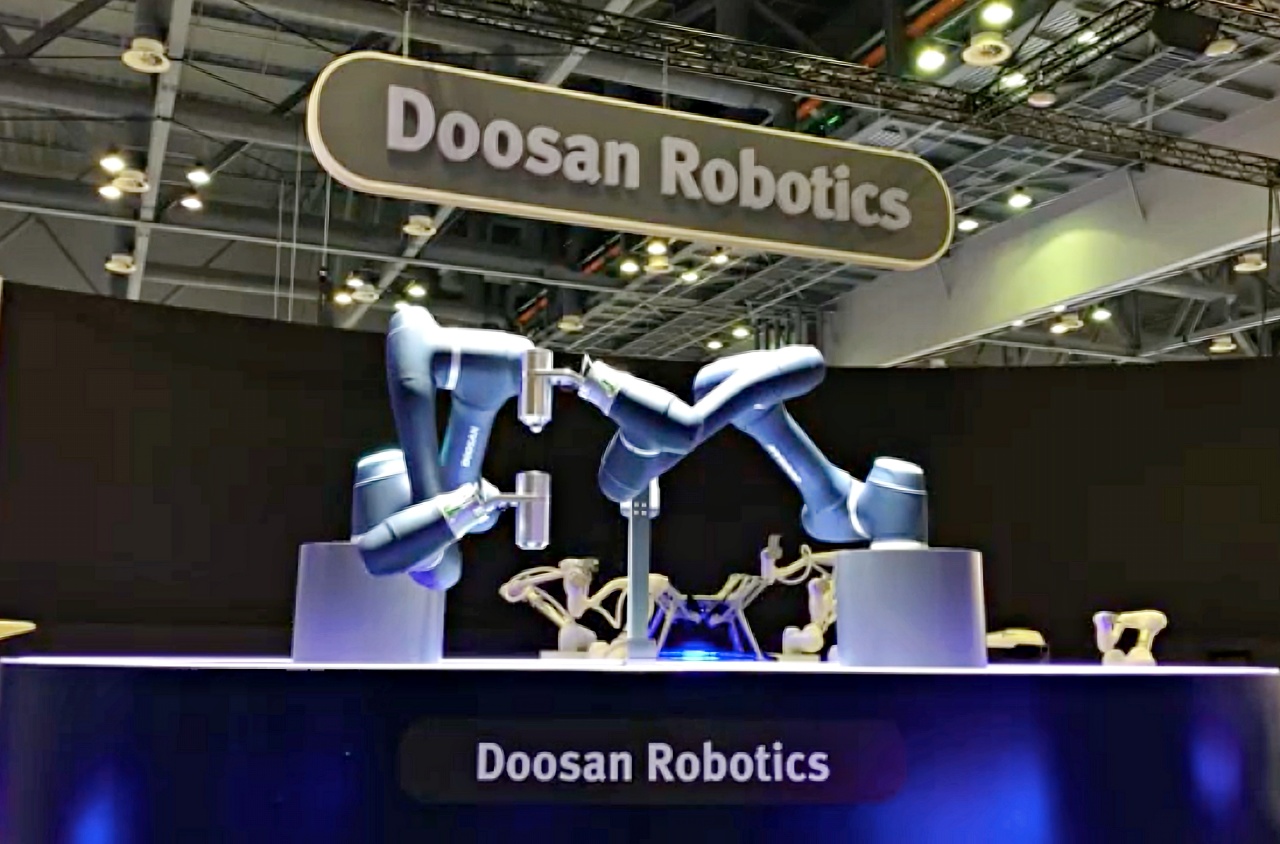
Doosan Robotics and LG Electronics have developed an automatic charging machine for electric vehicles. The companies’ collaborative project is now being tested in South Korea.
Doosan Robotics and LG Electronics’ pilot testing for the EV charging robot comes after they have completed the development of an automated charging solution for electrified cars.
Pilot Operation of Automated Charging Station
According to The Korea Herald, the system uses state-of-the-art collaborative robots to simplify the EV charging system and process. This method combines LG Electronic’s 100-kilowatt fast chargers with Doosan’s highly competent collaborative robotics technology to replace the manual system of holding the large charging cables that drivers usually find a hassle.
LG Electronics and Doosan revealed they started testing the EV charging robots late last week at the LG Science Park in Seoul’s Gangseo-gu district. The park is an urban research and development (R&D) complex where more than 20,000 individuals work for eight LG affiliates, startups, and other partner companies.
How the Charging Robot Works
As usual, the EV is parked manually in the charging area. The car is fitted with a camera that transmits information to the charging system, and then the driver completes the authentication.
Once done, the AI-based 3D vision camera installed on the collaborative robot determines the location of the EV charging port. The robot will connect the charging cable to the unit, and charging will begin.
Once the battery is full, the robot will remove the charger and return it to its original position. The driver will be automatically charged for the service.
“We implemented the solution by installing high-performance torque sensors on the six joints of the collaborative robot to precisely control external forces and secure the industry’s highest level of safety-related certification,” Yonhap News Agency quoted Doosan Robotics as saying in a statement.
The company’s chief executive officer, Ryu Jung Hoon, also stated, “This solution is a technology that is difficult to implement to the extent that it can only be developed if the sensitivity, precision, and safety of collaborative robots are all secured. We will respond to the rapidly growing electric vehicle charging market.”
Photo by: Doosan Robotics Media Library/YouTube







