


 SoftBank Launches $11 Billion Bond Sale to Fund OpenAI Investment
  US Northeast Airports Resume Operations After Telecom Outage Disrupts Thousands of Flights
  Oil Prices Ease as Iran Tensions Clash With Diplomacy Hopes
  Australia Unemployment Hits Five-Year High Despite Strong Jobs Growth
  SK Hynix, Intel Discuss U.S. Memory Chip Production Deal
  Japan, U.S. Discuss $19 Billion GlobalFoundries Chip Plant
  Databricks to Invest $350 Million in Singapore AI Expansion
  Westinghouse Targets $50 Billion Valuation in U.S. IPO
  Dollar Hits Two-Month High as Fed Rate Hike Bets Rise
  OpenAI Urges US-Led Global Standards for Frontier AI
  Oil Prices Surge as U.S.-Iran Diplomacy Hopes Fade
  Gold Prices Rise as Oil Slide Eases Fed Rate Hike Fears
  Guterres Urges Stronger Global AI Safeguards Ahead of UN Assembly
  Anthropic’s Claude Discovers CRISPR-Like Enzyme System
  Tencent Launches TenPayGo Payment App for Foreign Tourists in China
  DOJ Will Investigate AI-Related Crimes, Attorney General Blanche Says


 Add as a preferred source on Google
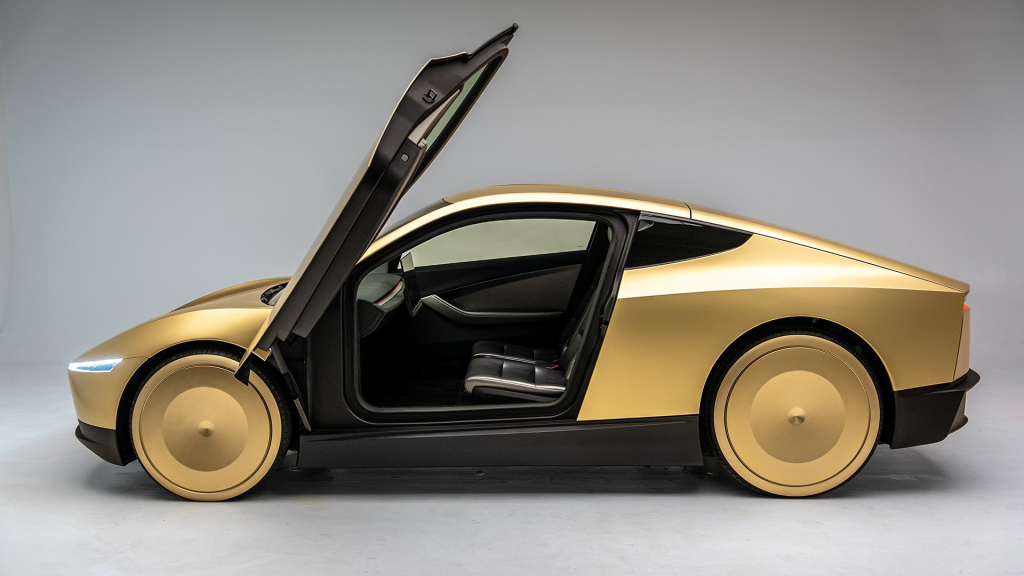
Tesla’s Cybercab, unveiled by the company’s lead engineer, pushes self-driving innovation with a compact two-seat design, half the parts of a Model 3, and impressive storage capacity. This efficiency-focused robotaxi sets a new standard for rideshare technology.
Tesla Cybercab's Two-Seat Design: A Solution for Efficiency
According to Teslarati, several intriguing details on the forthcoming autonomous robotaxi were recently divulged by Eric E., Lead Engineer at Tesla Cybercab. These encompass the Cybercab's two-seat layout, its effectiveness, and its unexpectedly sparse component count.
Because most kilometers driven today are with just one or two people, the Lead Engineer for Tesla's Cybercab says that the Cybercab is a two-seater. If more people need a robotaxi, Tesla could easily accommodate them with its other, larger vehicles, such as the Model Y.
“One of the questions we get constantly with this product is why is it two seats? There’s a couple reasons why it’s two seats. One is 82% of miles driven today are with two or fewer passengers. This product is meant to be of extreme efficiency. We worked really hard to deliver that. And the efficiency isn’t just on an energy consumption base. It’s on the concept of cleaning, it’s also on the concept of reliability and service as well,” Eric E. pointed out.
Half the Parts of a Model 3: Tesla’s Engineering Feat
Additionally, the Cybercab Lead Engineer clarified that the self-driving car will be manufactured with minimal components due to Tesla's emphasis on the robotaxi's efficiency.
Cybercab components are similar to those of a Model 3 sedan, according to Eric E. Considering the Model 3 is already among the most aerodynamic cars available, this is rather astounding.
“Two seats unlocks a lot of opportunity aerodynamically. It also means we cut the part count of Cybercab down by a substantial margin. We’re gonna be delivering a car that has roughly half the parts of Model 3 today. It also means when you need to clean the car as a rideshare asset, you really don’t have to worry about navigating multiple doors, multiple seats. You really just have what looks like a bench seat, easy to clean automatically,” the Tesla engineer observed.
Spacious Trunk Defies the Cybercab’s Compact Size
Other noteworthy design details of the Cybercab were also revealed by Eric E., including the fact that, for such a diminutive robotaxi, it has an enormous trunk.
A number of golf bags, two standard carry-ons, and two standard checked bags can all fit in the Cybercab's trunk simultaneously. It can also accommodate a foldable wheelchair and, depending on their size, a few bicycles.







