


 Sony Q3 Profit Jumps on Gaming and Image Sensors, Full-Year Outlook Raised
  Alphabet’s Massive AI Spending Surge Signals Confidence in Google’s Growth Engine
  Amazon Stock Rebounds After Earnings as $200B Capex Plan Sparks AI Spending Debate
  Anthropic Eyes $350 Billion Valuation as AI Funding and Share Sale Accelerate
  Nvidia Confirms Major OpenAI Investment Amid AI Funding Race
  Tencent Shares Slide After WeChat Restricts YuanBao AI Promotional Links
  SpaceX Updates Starlink Privacy Policy to Allow AI Training as xAI Merger Talks and IPO Loom
  SpaceX Reports $8 Billion Profit as IPO Plans and Starlink Growth Fuel Valuation Buzz
  Nintendo Shares Slide After Earnings Miss Raises Switch 2 Margin Concerns
  SoftBank and Intel Partner to Develop Next-Generation Memory Chips for AI Data Centers
  Oracle Plans $45–$50 Billion Funding Push in 2026 to Expand Cloud and AI Infrastructure
  Jensen Huang Urges Taiwan Suppliers to Boost AI Chip Production Amid Surging Demand
  Nvidia Nears $20 Billion OpenAI Investment as AI Funding Race Intensifies
  TSMC Eyes 3nm Chip Production in Japan with $17 Billion Kumamoto Investment
  Sam Altman Reaffirms OpenAI’s Long-Term Commitment to NVIDIA Amid Chip Report
  Baidu Approves $5 Billion Share Buyback and Plans First-Ever Dividend in 2026


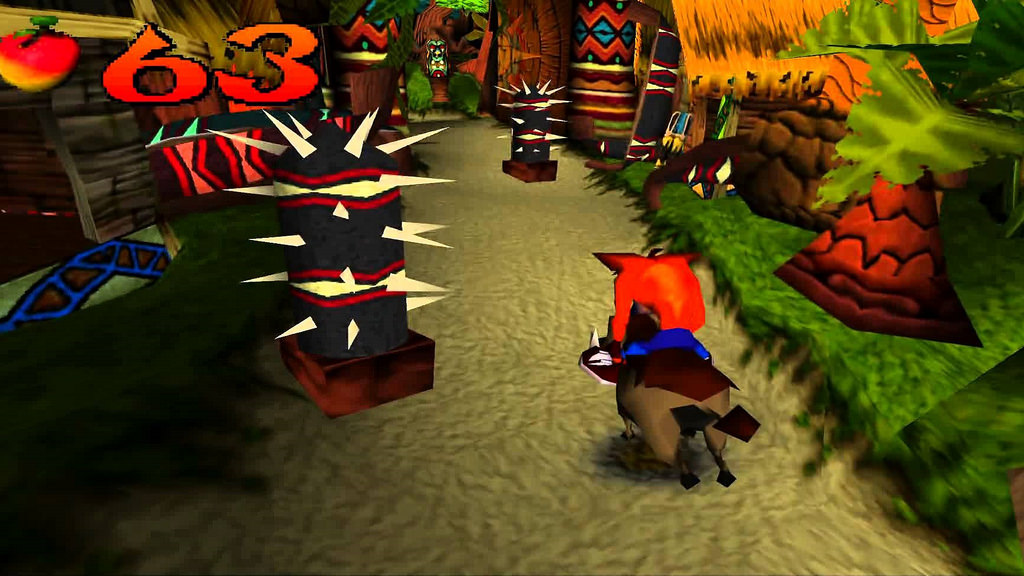
Anyone who played the Crash Bandicoot series on the original PlayStation will likely remember how difficult the games were with fondness. When the remastered versions of the series came out, players were reminded of just how hard the titles could be. Recently, however, the developers behind the slicker Crash games admitted that they are actually harder than the original.
In a hilarious blog post over at Activision, Vicarious Visions admitted that the physics for the new games are a little different than those of the original titles. This is largely due to the fact that the source code for the original games could not be found, which forced the developers to come up with new ones from scratch in a few places.
With regards to the jumps in the N.Sane Trilogy, for example, the developers admitted that players would need to be considerably more precise with their timing. What’s more, it seems that this is just how it is now.
“Our game engine features a different collision system than the original game, and combined with the addition of physics, certain jumps require more precision than the originals. Much like the handling, we iterated on collision and physics throughout development to make it fair to all players and as faithful to the original games as possible,” the post reads.
Despite these problems, however, what the developers achieved with the remastered games is nothing short of incredible, Ars Technica reports. The programmers and designers basically had to eyeball many of the original trilogy’s movements and mechanics in order to emulate them as closely as possible.
What’s more, all three original Crash Bandicoot games had slightly different animations and physics that the developers had to contend with. That the remastered versions came at a price tag of $40 is more than enough reason for forgiving the difference in difficulty.













