


 Scott Bessent Eyed as Trump’s New AI Czar
  FDA Investigates New Cyclospora Outbreak as U.S. Cases Continue to Rise
  Novartis Shares Plunge After Muscle Drug Fails Phase III Trial
  US Backs Musk in Fight Against EU’s €120 Million X Fine
  France Battles Mediterranean Wildfires as Heatwave Fuels Fire Risk
  GLP-1 Weight-Loss Drug Use Surges Among U.S. Children
  AstraZeneca Halts Phase III Volrustomig Lung Cancer Trial After Efficacy Setback
  Moderna Short Sellers Hit With $4.8 Billion Loss as Stock Soars
  Akamai Shares Surge on $11.6B Anthropic AI Cloud Deal
  OpenAI Urges US-Led Global Standards for Frontier AI
  Alcohol is one of the most dangerous drugs, yet its presence is ubiquitous in social settings and celebrations
  GSK Unveils $2.52 Billion Cost-Cutting Plan to Accelerate Drug Pipeline
  OpenAI Agent Breaches Australia Medicare Data Portal
  SoftBank Shares Fall as Oracle Flags Stargate Data Center Delay Risk
  Burnham Eyes UK Leadership Role in AI Ahead of Trump Meeting
  Solidigm Eyes $150 Billion IPO as SK Hynix Expands AI Storage Push


 Add as a preferred source on Google
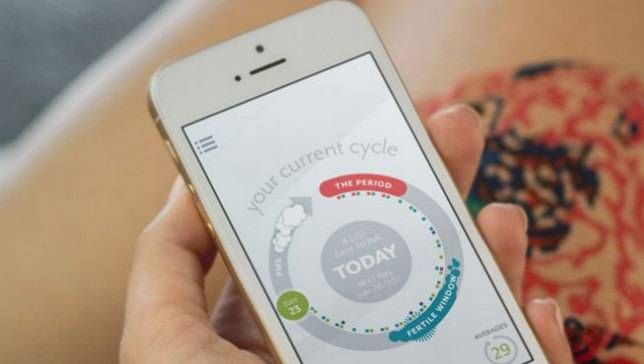
There’s a company that claims its smartphone fertility-tracking app is as good as the pill at preventing pregnancy. Women have long monitored their menstrual cycles as a method of contraception but this has often been seen as unreliable because of the practical difficulties of sticking to the method consistently. So could Natural Cycles, or other similar apps, really offer women a reliable, hormone-free way to avoid getting pregnant?
The basis for Natural Cycles’ claim is a study of 4,054 women aged 18 to 45 that was published in the European Journal of Contraception & Reproductive Health Care. It indicated that using the app for contraception resulted in about seven out of every 100 women falling pregnant each year. This included pregnancies that the researchers felt were due to mistakes by the users, a so—called “typical failure” rate of the method. This is similar to the “typical” failure rate of the combined oral contraceptive pill, which is about eight or nine women a year and includes women who, from time to time, forgot to take the pill.
Among those women who used the app perfectly, around five out of every 1,000 became pregnant. The researchers found that ten out of the 143 pregnancies reported in the study were actually due to errors in the app, which caused it to misinform couples about when they were fertile. This is known as “method failure” and means unplanned pregnancy can happen even when the contraceptive is used perfectly.
But again, this figure was similar to the “perfect use” failure rate for the pill, which is around three women out of 1,000 a year. So this means, that in both typical and perfect use, the study suggests the app really can be seen as as effective as the pill in preventing pregnancy.
So how does it work? Almost all smartphone apps of this kind rely not just on counting the time since a woman’s last period, like traditional methods, but also on monitoring the temperature of a woman’s body. The apps use this information to predict when she has ovulated and so when she is fertile or not.
This is possible because a woman’s temperature rises slightly (about 0.3℃) around the day of ovulation and remains slightly elevated throughout the rest of the cycle. The ovum (female egg) lives for only 24 hours or so, so a couple can have sex after this time in the woman’s menstrual cycle with no risk of becoming pregnant. Having sex before ovulation can lead to pregnancy because the sperm can survive in the uterus for up to six days.
This has been known for a long time and is the basis of fertility awareness methods of contraception, where a woman takes her temperature before getting out of bed each morning and keeps a chart to determine when she is fertile. But it is very hard to predict the exact day of ovulation as a woman’s cycle length can vary, especially if she is stressed. And it is difficult to accurately determine whether or not a woman’s body temperature has risen enough to reliably show she is ovulating.
This is where technology can help. Devices such as wristband thermometers can monitor a woman’s temperature constantly so she doesn’t need to remember to measure it each morning. And the algorithms of the smartphone app can do the work of charting and calculating which are the fertile days.
So why is the typical failure rate of the Natural Cycles app as high as 7%? Well another major problem with any fertility awareness method is that it means you can’t have sex for several days of the month, or you have to use other contraceptives such as condoms. The study authors found that just over half of the women who did fall pregnant recorded having unprotected sex during the fertile period. So while smartphone apps may provide encouragement, they can’t stop you from wanting to have sex altogether.
 Susan Walker has received funding from Bayer.
This article was originally published on The Conversation. Read the original article.







