


 Want to muck around with a real quantum computer? Now you can
  SoftBank Eyes $20 Billion Bond Sale to Refinance OpenAI Loan
  Nvidia Eyes Perplexity Investment at $30 Billion Valuation
  ING Says Yen Is 20% Undervalued Against Dollar
  Nvidia Revenue Soars 106% as AI Demand Hits ‘Inflection Point’
  The importance of teaching students what AI can’t do
  Trump Buys SpaceX Shares After Record IPO
  Salesforce Shares Surge as AI Demand Powers Q2 Earnings Beat
  Countries Tighten Social Media Bans for Children
  New Zealand Labour Backs Social Media Ban for Under-16s


 Add as a preferred source on Google
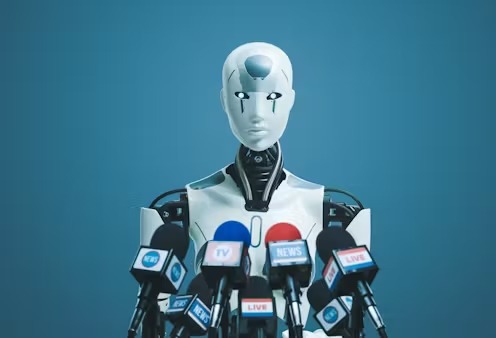

From business and public administration to daily life, artificial intelligence is reshaping the world – and politics may be next.
While the idea of AI politicians might make some people uneasy, survey results tell a different story. A poll conducted by my university in 2021, during the early surge of AI advancements, found broad public support for integrating AI into politics across many countries and regions.
A majority of Europeans said they would like to see at least some of their politicians replaced by AI. Chinese respondents were even more bullish about AI agents making public policy, while normally innovation-friendly Americans were more circumspect.
As a philosopher who researches the moral and political questions raised by AI, I see three main pathways for integrating AI into politics, each with its own mixture of promises and pitfalls.
While some of these proposals are more outlandish than others, weighing them up makes one thing certain: AI’s involvement in politics will force us to reckon with the value of human participation in politics, and with the nature of democracy itself.
Chatbots running for office?
Prior to ChatGPT’s explosive arrival in 2022, efforts to replace politicians with chatbots were already well underway in several countries. As far back as 2017, a chatbot named Alisa challenged Vladimir Putin for the Russian presidency, while a chatbot named Sam ran for office in New Zealand. Denmark and Japan have also experimented with chatbot-led political initiatives.
These efforts, while experimental, reflect a longstanding curiosity about AI’s role in governance across diverse cultural contexts.
The appeal of replacing flesh and blood politicians with chatbots is, on some levels, quite clear. Chatbots lack many of the problems and limitations typically associated with human politics. They are not easily tempted by desires for money, power, or glory. They don’t need rest, can engage virtually with everyone at once, and offer encyclopedic knowledge along with superhuman analytic abilities.
However, chatbot politicians also inherit the flaws of today’s AI systems. These chatbots, powered by large language models, are often black boxes, limiting our insight into their reasoning. They frequently generate inaccurate or fabricated responses, known as hallucinations. They face cybersecurity risks, require vast computational resources, and need constant network access. They are also shaped by biases derived from training data, societal inequalities, and programmers’ assumptions.
Additionally, chatbot politicians would be ill-suited to what we expect from elected officials. Our institutions were designed for human politicians, with human bodies and moral agency. We expect our politicians to do more than answer prompts – we also expect them to supervise staff, negotiate with colleagues, show genuine concern for their constituents, and take responsibility for their choices and actions.
Without major improvements in the technology, or a more radical reimagining of politics itself, chatbot politicians remain an uncertain prospect.
AI-powered direct democracy
Another approach seeks to completely do away with politicians, at least as we know them. Physicist César Hidalgo believes that politicians are troublesome middlemen that AI finally allows us to cut out. Instead of electing politicians, Hidalgo wants each citizen to be able to program an AI agent with their own political preferences. These agents can then negotiate with each other automatically to find common ground, resolve disagreements, and write legislation.
Hidalgo hopes that this proposal can unleash direct democracy, giving citizens more direct input into politics while overcoming the traditional barriers of time commitment and legislative expertise. The proposal seems especially attractive in light of widespread dissatisfaction with conventional representative institutions.
However, eliminating representation may be more difficult than it seems. In Hidalgo’s “avatar democracy”, the de facto kingmakers would be the experts who design the algorithms. Since the only way to legitimately authorise their power would likely be through voting, we might merely replace one form of representation with another.
The spectre of algocracy
One even more radical idea involves eliminating humans from politics altogether. The logic is simple enough: if AI technology advances to the point where it makes reliably better decisions than humans, what would be the point of human input?
An algocracy is a political regime run by algorithms. While few have argued outright for a total handover of political power to machines (and the technology for doing so is still far off), the spectre of algocracy forces us to think critically about why human participation in politics matters. What values – such as autonomy, responsibility, or deliberation – must we preserve in an age of automation, and how?
The way forward
The dramatic possibilities of integrating AI into politics make this a critical time to clarify our political values. Rather than rushing to replace human politicians with AI, we can focus today on tools that enhance human political judgement and close democratic deficits. Tools like the Habermas Machine, an AI debate mediator, have successfully helped trial groups reach consensus when voting on divisive, polarising topics. More innovations like this are needed.
From my own point of view, the future of AI in politics lies not in wholesale replacement of human decision makers, but in thoughtful integration that amplifies human capabilities and strengthens democratic institutions. If this is the future we want, we must be intentional about building it.







