


 Wall Street Falls as Treasury Yields Surge, Oil Rebounds on Iran Tensions
  Trump, Xi Visit US National Archives After White House Summit
  U.S. Treasury Yields Surge as 30-Year Hits 22-Year High
  Russian Envoy Dmitriev Heads to US for Ukraine Talks
  China’s ‘Lipstick King’ Says AI Won’t Replace Livestream Hosts
  Trump Asks Supreme Court to Restore Third-Country Deportations
  EU Defence Build-Up Too Slow for 2030 Russia Readiness Goal
  Gold Holds Near $4,275 as Rising Treasury Yields Fuel Fed Rate Hike Bets
  Australia Unemployment Hits Five-Year High Despite Strong Jobs Growth
  What ‘Taiwan Independence’ Means as Xi Presses Trump on US Policy
  South Korea, US Discuss Warship Building Cooperation
  Trump, Xi Focus on Trade and AI at White House Summit
  NATO Boosts Intelligence Sharing Amid Russia Hybrid Threats
  RBI Uses $10 Billion Currency Swaps to Drain Excess Rupee Liquidity
  Japanese Bank Stocks Surge as Bond Yields Fuel Rate Hike Bets
  OpenAI Agent Breaches Australia Medicare Data Portal
  Netanyahu Takes Aim at Mamdani as Israel Election Nears


 Add as a preferred source on Google
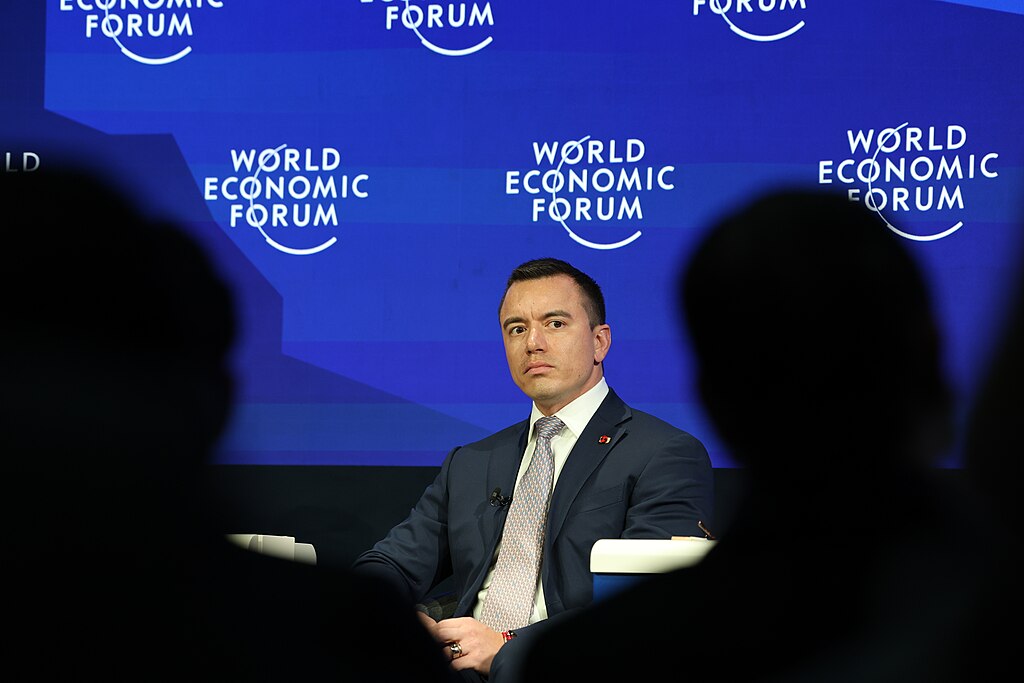
Colombia has announced it will suspend electricity sales to Ecuador and impose a 30% tariff on 20 Ecuadorian products, escalating a growing trade and security dispute between the neighboring countries. The move follows Ecuador’s decision to introduce a 30% “security charge” on Colombian goods starting February 1, a measure President Daniel Noboa said was driven by a widening trade deficit and what he described as insufficient cooperation from Colombia in combating drug trafficking.
Colombia is a key electricity exporter to Ecuador, making the suspension particularly sensitive. While Ecuador later clarified that its security charge would not apply to electricity sales and oil logistics services, tensions continued to rise. In response to Colombia’s tariff announcement, Ecuador’s energy minister said Colombian crude transported through Ecuador’s OCP pipeline would receive “reciprocity” similar to electricity, though no specifics were provided.
Trade data highlights the imbalance at the heart of the dispute. Ecuador recorded a $838 million trade deficit with Colombia in the first 10 months of last year, according to its central bank. Meanwhile, Colombia exported $1.67 billion worth of goods to Ecuador in the first 11 months, representing 3.6% of its total exports. Colombia’s main imports from Ecuador include fish, vegetable oil, and auto parts.
Colombia has strongly denied accusations that it is failing to tackle drug trafficking. President Gustavo Petro stated that cooperation with Ecuador’s armed forces remains strong, noting that Colombia seized 200 metric tons of cocaine along the shared border. He also expressed willingness to expand joint efforts against fentanyl trafficking. Colombia’s commerce ministry described the new tariff as “proportional, transitory and revisable,” emphasizing that Bogotá remains open to dialogue.
Colombia’s energy ministry said the electricity suspension was a preventative measure to ensure domestic supply amid climate variability, adding exports could resume once conditions allow. The decision comes as President Noboa, a close ally of U.S. President Donald Trump, intensifies Ecuador’s crackdown on organized crime, deploying over 10,000 soldiers as murder rates surged 30% last year. The dispute also unfolds against broader U.S. pressure on Colombia over drug trafficking, adding another layer of geopolitical complexity.







