


 Microsoft's $10 Billion Japan Investment: AI Infrastructure and Data Sovereignty Push
  OpenAI Executive Shake-Up Ahead of Anticipated 2026 IPO
  Apple's Foldable iPhone Faces Engineering Setbacks, Mass Production Timeline at Risk
  Anthropic's Mythos AI Model Sparks Emergency Cybersecurity Meeting With Top U.S. Bank CEOs
  Rubio Directs U.S. Diplomats to Use X and Military Psyops to Counter Foreign Propaganda
  Bank of America Identifies Top Asia-Pacific Semiconductor Stocks Poised for AI-Driven Growth
  China vs. NASA: The New Moon Race and What's at Stake by 2030
  Annie Altman Amends Sexual Abuse Lawsuit Against OpenAI CEO Sam Altman
  China's AI Stocks Surge as Zhipu and MiniMax Hit Record Highs
  California's AI Executive Order Pushes Responsible Tech Use in State Contracts
  Apple Turns 50: From Garage Startup to AI Crossroads
  Australia's Social Media Ban for Under-16s Sparks Global Movement
  Anthropic Fights Pentagon Blacklisting in Dual Federal Court Battles
  U.S. Disrupts Russian Military Hackers' Global DNS Hijacking Network
  China's Push to Steal Taiwan's Chip Technology and Talent Raises Security Alarms


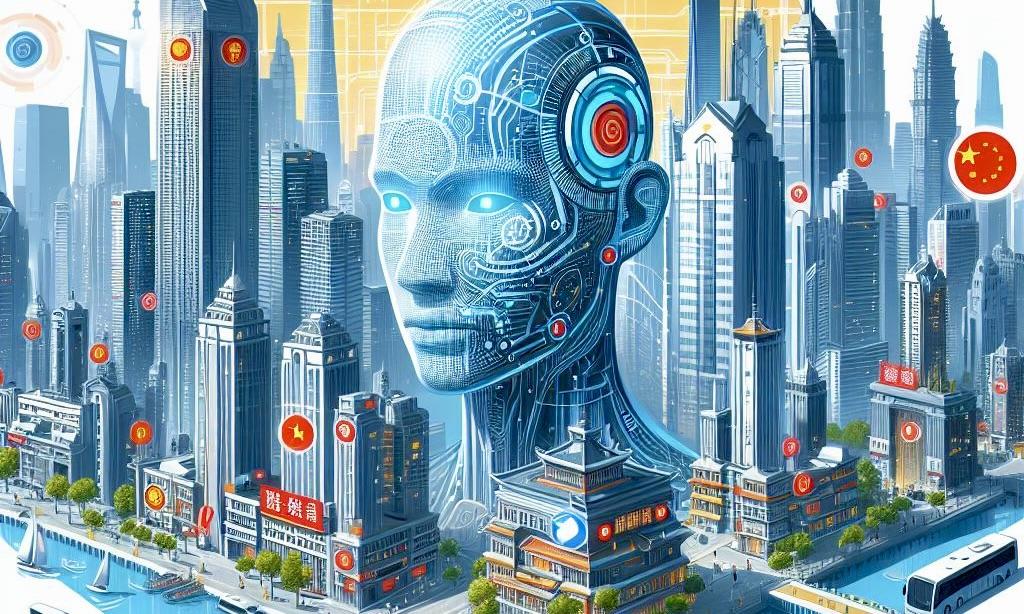
China's technology giants are actively competing in AI, but their ability to maintain their position is under increasing scrutiny.
This development aligns with the objectives of policymakers in Washington who aim to curb China's technological advancements.
Notable Progress in AI
Pony Ma, the co-founder and CEO of Tencent, recently stated that despite U.S. efforts to restrict China's access to high-tech components, his company remains competitive with leading Western peers in AI. This highlights the significant advancements made by China in generative AI, with the country now accounting for 40% of the global total of large language models.
According to Reuters, Baidu and Alibaba have also made notable strides in AI, with Baidu's Ernie 4.0 rivaling OpenAI's GPT-4 and Alibaba's Tongyi Qianwen 2.0 boasting impressive parameters. One contributing factor to China's AI progress is its strategic foresight, as Chinese firms stockpiled AI chips in anticipation of tighter U.S. restrictions.
Urgency for Domestic Alternatives
China's need to develop domestic alternatives to foreign technologies is becoming increasingly apparent. While Huawei has made strides in AI processors, it performs poorly compared to Western counterparts like Nvidia. Moreover, restrictions on chip manufacturing by companies like TSMC and Samsung Electronics pose additional challenges.
The widening gap in AI capabilities between China and the West underscores the need for domestic innovation and self-reliance. Pony Ma emphasized the importance of keeping pace with leading companies in the AI race, signaling China's determination to remain competitive in this critical technological frontier.
Challenges Ahead
However, China's efforts to maintain its position in AI face significant challenges. Despite advancements, Chinese companies rely heavily on imported technologies for critical components, leaving them vulnerable to geopolitical tensions and trade restrictions.
Moreover, China's AI ecosystem may struggle to match the level of innovation seen in the West due to restrictions on access to talent, data privacy concerns, and limited international collaboration.
According to Brookings, to overcome these challenges and sustain its momentum in AI development, China will need to invest further in research and development, foster a conducive environment for innovation, and strengthen collaboration with international partners. Only then can China hope to maintain its position as a global leader in artificial intelligence.
Photo: Microsoft Bing







